
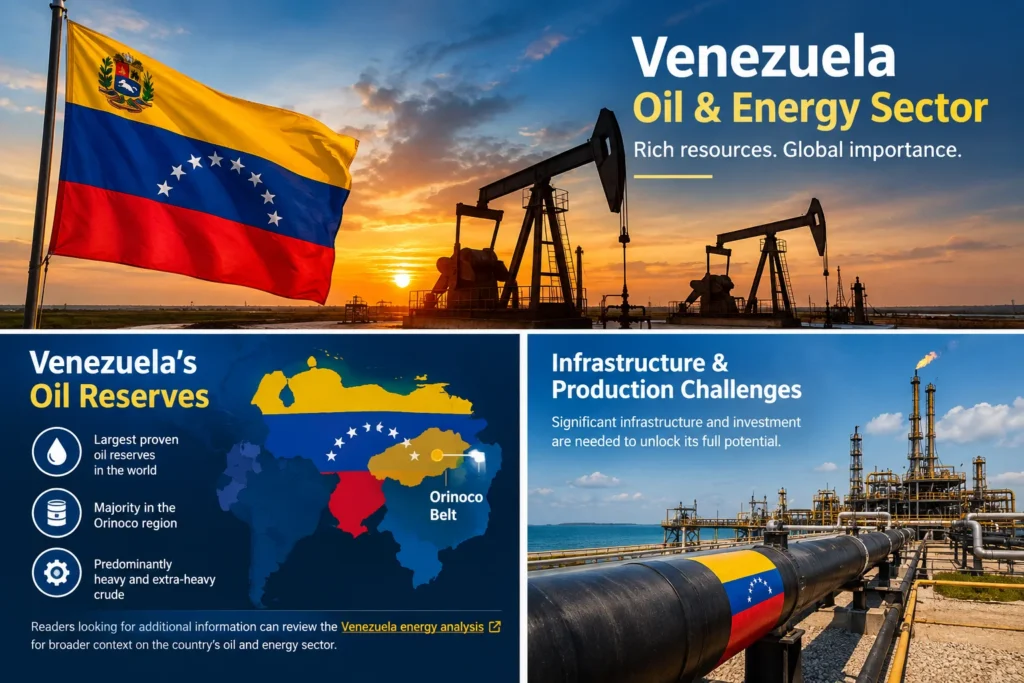
The Venezuela oil industry is entering a new investment phase as international energy companies increase their presence, major oil fields receive fresh development plans and the country’s investment framework changes.
For years, Venezuela’s oil sector was defined by a difficult combination of enormous reserves, declining production, aging infrastructure, limited investment and complex operating conditions. The country continued to hold one of the world’s largest concentrations of crude resources, yet much of that resource remained difficult to convert into stable, large-scale production.
That situation is now beginning to change.
Several developments announced during 2026 point toward a different direction for the sector. Chevron has announced plans to invest more than $7 billion over five years and target production of around 600,000 barrels per day through its Venezuelan operations. Eni has taken an expanded operating role in the Junín 5 field in the Orinoco Belt under a long-term agreement. Continental Resources has signed a preliminary agreement with PDVSA covering the Ayacucho 2 block, another major heavy-oil opportunity.
At the same time, ExxonMobil has been reported to be in discussions concerning a possible return to Venezuela, including interests connected with the Orinoco Belt.
These developments do not mean that Venezuela’s oil production will immediately return to its historical highs. They also do not remove the technical, financial, legal and infrastructure challenges that have affected the sector for years.
What they do show is that Venezuela is becoming a more active destination for upstream oil investment.
The significance of this change goes beyond the number of barrels that could eventually be produced. New investment can affect drilling activity, oilfield services, pipelines, storage, upgrading capacity, electricity supply, export infrastructure and the wider industrial economy.
The central question is therefore not simply how much oil Venezuela has.
The more important question is how much of that resource can be developed commercially, how quickly production can increase, what infrastructure is required and whether the new investment framework can support long-term projects.
For energy-market observers, the next several years could provide an important test of Venezuela’s ability to turn its enormous resource base into sustainable production.
What Is Changing in the Venezuela Oil Industry?
The most important change is the return of large-scale investment interest.
For a long period, international companies faced significant barriers when considering major Venezuelan oil projects. Existing projects continued to operate in various forms, but new development was much more difficult. Capital spending was limited, infrastructure deteriorated, and many fields operated below their potential.
The current environment is different.
Companies are now discussing projects that involve large resource bases, long development periods and significant capital requirements. That is important because Venezuela’s biggest opportunities are not simple short-cycle oil projects.
Much of the country’s crude is heavy or extra-heavy. Developing it requires specialized production systems, gathering networks, transportation infrastructure, upgrading capacity and reliable access to export markets.
As a result, the return of investment is not simply a story about drilling additional wells.
It is a story about rebuilding an entire production system.
The Venezuela oil industry depends on several connected parts:
- Oilfield development
- Drilling and well services
- Gathering systems
- Pipelines
- Storage facilities
- Oil treatment
- Upgraders
- Refineries
- Ports and terminals
- Electricity supply
- Skilled labor
- Equipment and spare parts
- Financing
- Export logistics
If one part of that system remains weak, production growth can be slower than planned.
This is why the latest investment announcements are important, but they should also be viewed as the beginning of a development process rather than the final result.
Why Is the Venezuela Oil Industry Attracting New Investment?
Venezuela’s investment appeal starts with geology.
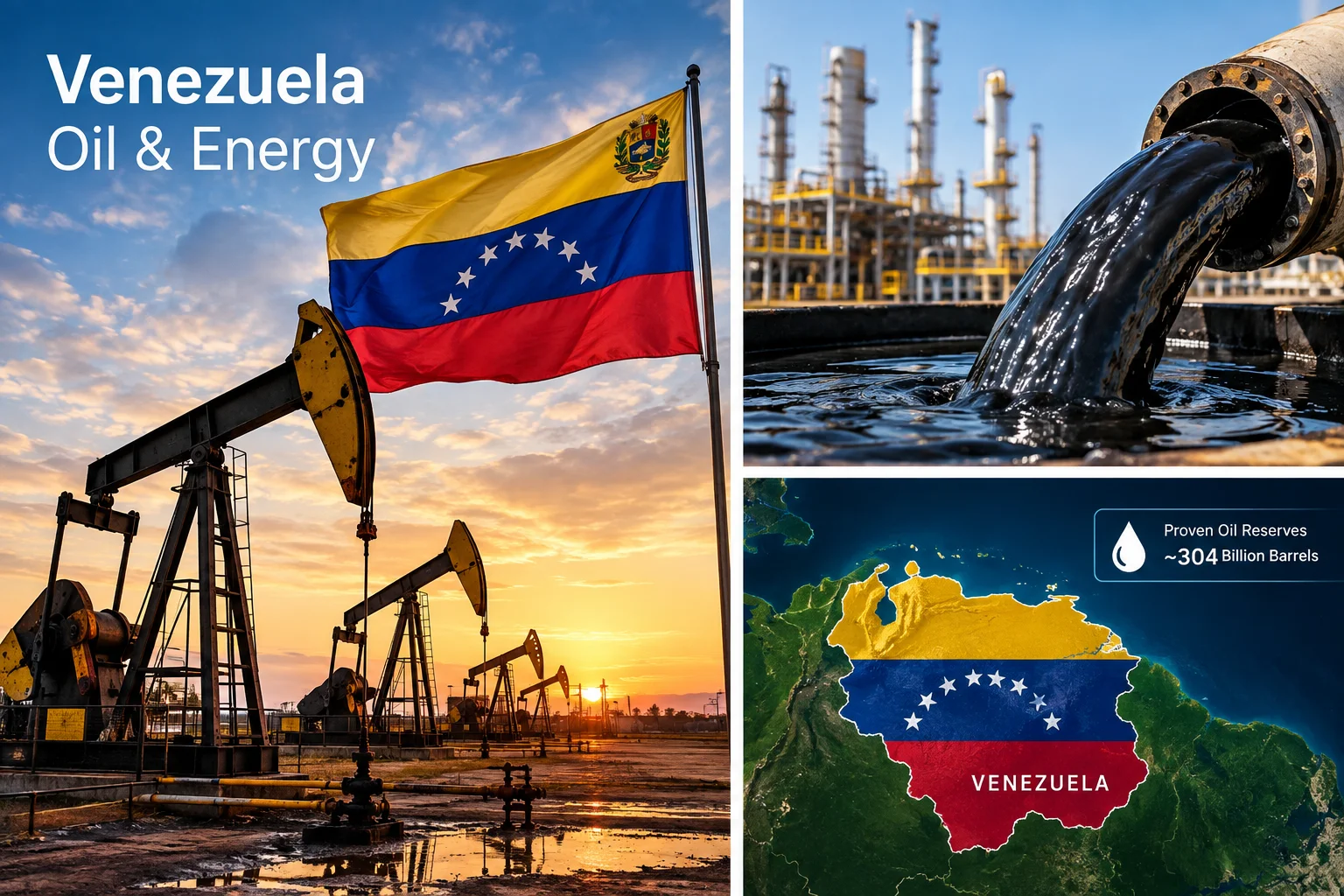
The country has an extraordinary oil resource base, particularly in the Orinoco Belt. That resource base gives international companies access to very large volumes of crude in place.
But geology alone does not create an attractive oil project.
Investors also look at contract structures, fiscal terms, operating control, access to capital, production costs, export arrangements, infrastructure and the ability to recover invested capital.
Changes in Venezuela’s hydrocarbons framework have therefore become a major part of the investment story.
The revised legal framework introduced new mechanisms for private participation in upstream activities. The structure still gives the Venezuelan state an important role, but private companies can now take greater responsibility for technical, financial and operational management under certain contractual arrangements.
That distinction is significant.
An oil company investing billions of dollars normally wants clarity over how the project will be operated, how revenues will be handled and how capital will be recovered.
Long-term contracts can provide a framework for that investment.
The latest projects suggest that international companies are increasingly willing to examine Venezuela not simply as a resource opportunity, but as a redevelopment opportunity.
That means the investment case is based on a combination of factors:
- Very large oil resources
- Existing oil infrastructure
- Established producing fields
- Significant undeveloped acreage
- Potential for production growth
- New contractual structures
- Existing export routes
- Experience from companies already operating in the country
The combination is attracting attention from both major international oil companies and independent producers.
Venezuela’s Enormous Oil Resource Base
Venezuela’s oil story begins with scale.
The country has one of the world’s largest proven crude oil reserve bases, with the majority concentrated in the Orinoco region. Much of this resource consists of heavy and extra-heavy crude.
For additional background on Venezuela’s energy sector, see the U.S. Energy Information Administration’s Venezuela energy analysis.
That creates both an advantage and a challenge.
The advantage is obvious. A huge resource base can support oil production for decades if sufficient investment and technology are available.
The challenge is that heavy crude is more complicated to produce, transport and process than lighter crude.
Oil density affects almost every stage of the value chain.
Heavy crude can require specialized production equipment. It may need dilution or upgrading before transportation or refining. It can also require refineries capable of processing high-density feedstock efficiently.
This means Venezuela cannot simply increase production by drilling thousands of additional wells.
The country needs an integrated system capable of moving crude from the reservoir to the final market.
That system requires capital.
The scale of Venezuela’s reserves is therefore most useful when combined with improvements in infrastructure, technology, field management and commercial structures.
For the Venezuela oil industry, the enormous resource base provides the foundation. Investment determines how much of that foundation can become productive capacity.
Venezuela Oil Industry and the Orinoco Oil Belt
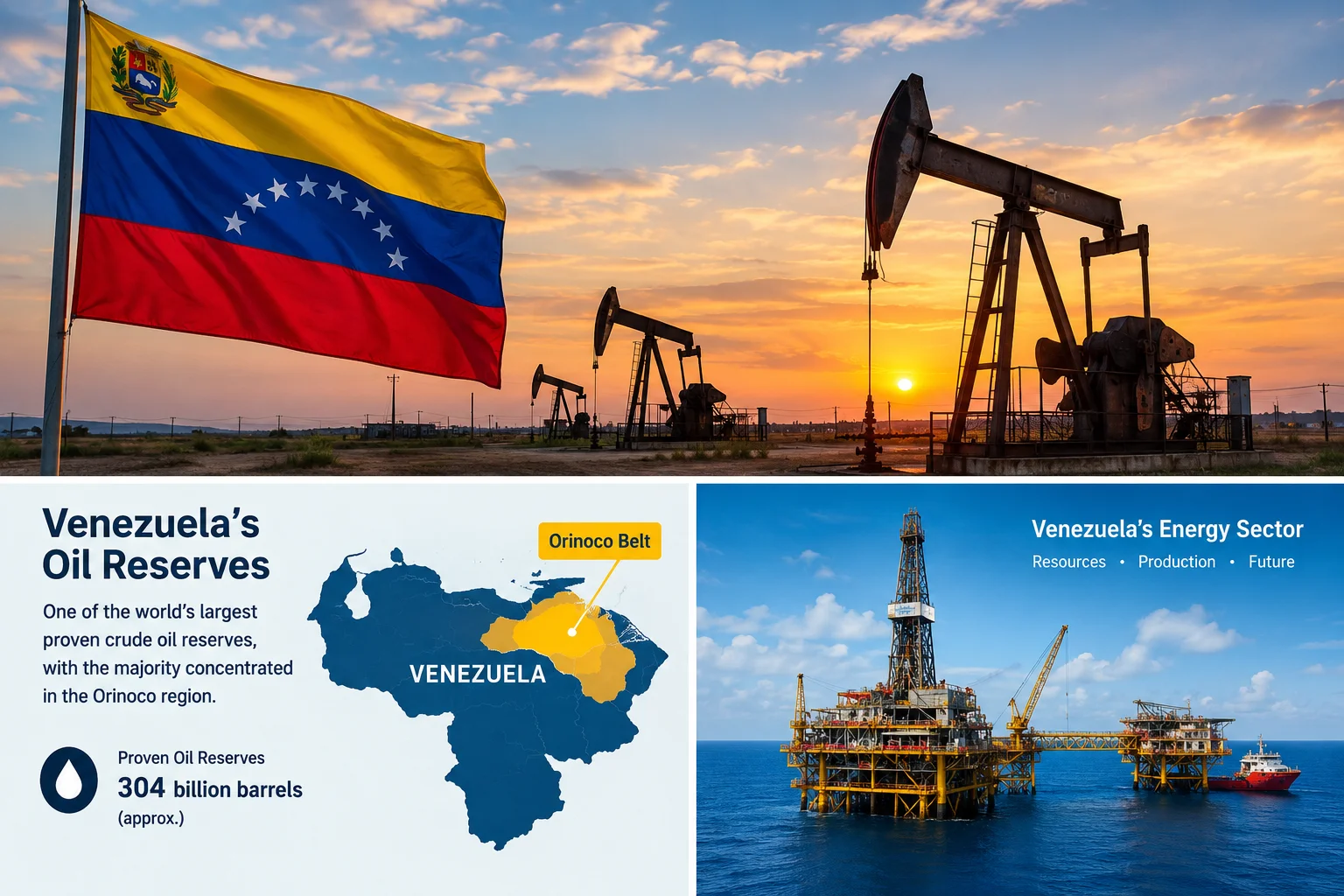
The Orinoco Oil Belt is at the center of Venezuela’s investment story.
Stretching across a large area of eastern Venezuela, the belt contains vast deposits of heavy and extra-heavy crude. Several major projects and blocks are located within the region.
The Orinoco Belt has attracted attention from international companies for decades because of its enormous resource potential.
The difficulty has always been development.
Producing heavy oil at scale requires more than reservoir access. Operators need wells, gathering systems, treatment facilities, transportation networks, storage and upgrading infrastructure.
The condition of existing infrastructure also matters.
Some facilities were built for earlier production levels and may require major rehabilitation. Others may need replacement or modernization.
New investors therefore have to consider two different tasks at the same time.
The first is increasing production.
The second is restoring the infrastructure needed to support that production.
This creates opportunities for oilfield contractors, engineering companies, equipment suppliers, pipeline operators and energy infrastructure businesses.
A successful increase in Orinoco production could therefore create a much wider industrial effect than the oil wells themselves.
Chevron’s New Investment Plans
Chevron is currently one of the most important international companies in Venezuela’s oil sector.
In September 2026, Chevron announced plans to invest more than $7 billion over five years through its Venezuelan joint ventures. The company said the investment is designed to more than double production to approximately 600,000 barrels per day compared with its 2026 production level.
The company has also received additional acreage in the Orinoco Belt as part of updated arrangements.
The scale of the planned investment is significant.
A production target of around 600,000 barrels per day would place Chevron’s Venezuelan operations among the country’s most important sources of future growth.
But reaching that level will require more than capital spending.
The company will need to expand drilling, improve field infrastructure, maintain existing production and develop additional capacity.
The investment also illustrates an important feature of the current Venezuela oil industry.
Companies are not necessarily starting from zero.
Chevron already has operating experience, personnel, relationships, infrastructure and producing assets in the country. That gives an established operator a different starting point from a company entering Venezuela for the first time.
Existing infrastructure can reduce some development costs and shorten the path from investment to production.
However, the scale of the target means substantial work will still be required.
Production growth will depend on:
- New wells
- Existing-well maintenance
- Field redevelopment
- Gathering infrastructure
- Oil treatment
- Pipeline capacity
- Storage
- Export facilities
- Reliable power
- Equipment availability
Chevron’s investment therefore represents more than an increase in drilling activity. It is part of a broader attempt to expand Venezuela’s productive oil capacity.
Eni and the Junín 5 Field
Eni’s agreement covering Junín 5 represents another important development for the Venezuela oil industry.
In September 2026, Eni and PDVSA signed a long-term production participation contract for the Junín 5 field in the Orinoco Belt.
The agreement has a 25-year term with the possibility of extension and gives Eni the role of exclusive operator, with responsibility for technical, financial and commercial management.
Junín 5 is a heavy-oil field with a very large resource base. Current production is only a small fraction of its potential development capacity.
That difference between existing production and potential is one of the central features of Venezuela’s upstream sector.
The country does not necessarily need to find enormous new oil discoveries to increase production.
A large part of the opportunity lies in developing known resources more effectively.
For Junín 5, the development challenge will involve moving from relatively limited existing production toward a much larger commercial operation.
That requires capital and time.
Heavy-oil developments normally require extensive infrastructure. Production systems must be designed around the characteristics of the crude, while transportation and processing systems must be able to handle the resulting volumes.
Eni’s role also demonstrates the growing importance of operatorship.
An investor can provide capital without necessarily controlling the daily operation of a field. Operatorship provides much greater responsibility for technical decisions, development schedules and commercial execution.
For the Venezuela oil industry, the Junín 5 model could become an example of how new contractual structures are being used to attract international technical and financial participation.
Continental Resources and Ayacucho 2
Continental Resources has added another dimension to Venezuela’s investment story.
In September 2026, the U.S. independent oil producer signed a memorandum of understanding with PDVSA concerning the Ayacucho 2 block in the Orinoco Belt.
The block covers approximately 126,000 acres and has been described as containing around 30 billion barrels of oil in place.
It is important to distinguish between oil in place and recoverable reserves.
Oil in place represents the petroleum contained within the geological formation. Only a portion can necessarily be produced economically.
That distinction is particularly important in heavy-oil projects.
The agreement is therefore an early stage in a much larger development process.
The companies intend to move toward a production participation contract under which Continental would operate the block.
If development proceeds, the project would require extensive infrastructure and capital spending before large production volumes could be reached.
Continental’s interest is significant because the company is better known for its large U.S. onshore oil portfolio.
Entering Venezuela’s heavy-oil sector represents a different type of upstream development.
The company will need to adapt its operating approach to a resource base where transportation, upgrading and infrastructure are especially important.
For the Venezuela oil industry, however, the significance extends beyond one company.
The participation of independent producers can diversify the investor base and introduce additional capital into fields that may otherwise remain underdeveloped.
ExxonMobil’s Possible Return
ExxonMobil is another company attracting attention in the Venezuela oil story.
The company has been reported to be advancing discussions concerning a possible return to the Orinoco Belt, including the Petromonagas project and nearby Carabobo opportunities.
Any return would be significant because ExxonMobil previously had a major presence in Venezuela before leaving the country after disputes surrounding the restructuring of oil projects.
The current discussions therefore represent a potential change from the investment environment that existed when ExxonMobil departed.
However, discussions are not the same as a completed investment agreement.
A potential return would still depend on commercial terms, legal arrangements, asset conditions, financing, operational considerations and other factors.
This distinction is important for investors and readers following the Venezuela oil industry.
Announcements, memorandums, negotiations and signed contracts represent different stages of project development.
A project can move through several stages before capital is actually deployed at scale.
If ExxonMobil eventually returns, its technical experience in heavy-oil operations could become relevant to the development of Venezuela’s resource base.
For now, the most important point is that the company is reportedly evaluating opportunities in a market that it previously exited.
Changes to Venezuela’s Oil Investment Framework
Investment requires rules that companies can understand.
For the Venezuela oil industry, changes to the hydrocarbons framework are therefore central to the current investment cycle.
The revised framework introduced in 2026 created additional mechanisms for private participation in primary hydrocarbons activities.
Under the new structure, private companies can participate through different contractual arrangements while the Venezuelan state retains an important ownership and oversight role.
The framework also allows certain private operators to assume greater technical, operational and financial responsibility.
That can change the economics of a project.
Under an older structure, an international company may have had less flexibility over operations, financing or commercial decisions.
A production participation structure can provide greater operational responsibility to the private partner while maintaining state participation.
For investors, several issues remain important:
- Contract duration
- Ownership structure
- Fiscal terms
- Royalties
- Taxes
- Marketing rights
- Currency arrangements
- Capital recovery
- Arbitration provisions
- Export access
- Asset security
- Regulatory stability
Oil projects have long development cycles.
A company may invest billions of dollars today and expect production over decades.
That makes long-term legal and commercial stability especially important.
The success of the new framework will therefore be measured not only by how many agreements are signed, but by whether those agreements lead to sustained capital investment and actual production growth.
The Role of PDVSA
PDVSA remains central to the Venezuela oil industry.
The company controls a major part of the country’s oil infrastructure and remains an important participant in production, transportation and refining.
Even as international companies take on larger operational roles, PDVSA remains part of the structure surrounding many projects.
This creates a hybrid model.
International companies can bring capital, technology, management expertise and access to global oil markets, while PDVSA retains an important role within the country’s national oil system.
The effectiveness of that model will depend on how clearly responsibilities are divided.
Large oil projects require quick technical decisions, disciplined budgets and consistent operational management.
They also require coordination between operators and the national infrastructure system.
For example, a company can increase field production, but that production still needs to move through gathering systems, pipelines and storage facilities.
The crude ultimately needs to reach a refinery, upgrader or export terminal.
PDVSA’s infrastructure therefore remains an important part of the equation even when international companies assume greater control over individual projects.
Aging Oil Infrastructure
Infrastructure may be the biggest practical challenge facing Venezuela’s production recovery.
Oil production is not simply a function of underground reserves.
A field needs equipment on the surface and an entire network connecting wells to markets.
Years of limited maintenance and investment have affected parts of Venezuela’s oil infrastructure.
Some equipment requires rehabilitation. Some systems may need replacement. Other facilities may need modernization to support higher production.
This creates a major investment requirement outside the drilling budget.
A production increase can put pressure on infrastructure that is already operating near its limits.
If pipeline capacity is insufficient, crude may have to wait.
If storage is limited, production can be constrained.
If electricity is unreliable, field operations can be affected.
If upgrading capacity is insufficient, heavy crude may face transportation or market limitations.
This is why infrastructure investment should be considered alongside upstream investment.
The Venezuela oil industry needs a connected production chain rather than isolated increases in well output.
Heavy and Extra-Heavy Crude
Venezuela’s crude characteristics are one of the most important factors shaping its oil industry.
A large share of the country’s resources consists of heavy and extra-heavy crude.
These grades behave differently from lighter oils.
They can be more difficult to produce and transport and may require specialized treatment.
In many cases, heavy crude must be blended with lighter hydrocarbons or other diluents so it can move efficiently through pipelines.
Upgrading can also transform heavy crude into a product that is easier to transport and process.
This creates additional costs.
It also creates additional investment opportunities.
New projects can involve:
- Production facilities
- Diluent supply
- Blending systems
- Upgrading capacity
- Pipeline modernization
- Storage expansion
- Specialized refining
The characteristics of Venezuelan crude therefore shape the entire economics of the sector.
The country has enormous resources, but the cost and complexity of bringing those resources to market must be considered carefully.
For international companies with heavy-oil experience, Venezuela’s resource base can offer a familiar technical challenge.
For companies without that experience, the operating requirements may be more demanding.
Production Challenges Facing the Venezuela Oil Industry
Increasing production is possible, but the path is not simple.
Oil wells naturally decline over time. Maintaining output requires continuous investment in drilling, workovers and field management.
Older fields can require even more intervention.
A production recovery therefore depends on both new development and maintenance of existing assets.
Some of the major challenges include:
- Aging wells
- Declining reservoir pressure
- Limited drilling activity
- Equipment shortages
- Infrastructure deterioration
- Electricity reliability
- Pipeline constraints
- Storage limitations
- Upgrader capacity
- Refinery performance
- Skilled labor requirements
- Financing
- Export logistics
These issues are interconnected.
For example, increasing drilling without expanding gathering infrastructure may create bottlenecks.
Increasing crude production without enough upgrading capacity can create transportation problems.
Increasing exports without improving port infrastructure can increase logistical pressure.
A successful recovery therefore needs coordinated investment across the entire system.
Pipeline and Storage Needs
Pipelines are the hidden infrastructure behind oil production.
A field cannot become a large commercial operation unless crude can move from the production site to processing or export facilities.
The Orinoco Belt presents a particular challenge because of its geographic scale.
Large production areas require extensive gathering systems and trunk pipelines.
As production rises, pipeline capacity must rise with it.
Storage is equally important.
Storage facilities provide flexibility between production, transportation and export schedules.
Without sufficient storage, temporary disruptions can quickly affect field operations.
New investment could therefore extend well beyond drilling rigs.
Companies developing major Venezuelan projects may need to invest in:
- Gathering lines
- Trunk pipelines
- Pumping stations
- Tank farms
- Export terminals
- Metering systems
- Loading infrastructure
- Maintenance facilities
These projects can take years to design and construct.
That means infrastructure could become one of the key limits on how quickly Venezuela’s production can grow.
Refining and Upgrading Capacity
Venezuela’s refining system is another important part of the story.
The country has historically operated a large refining network, but maintaining and operating complex refineries requires substantial investment.
For a country producing large volumes of heavy crude, upgrading capacity is especially important.
An upgrader can improve the quality and transportability of heavy crude before it enters the broader market.
Without sufficient upgrading or blending capacity, heavy oil can face additional transportation and processing constraints.
This is one reason why the future of the Venezuela oil industry cannot be measured solely by upstream production.
Refinery and upgrading investment can determine how efficiently new crude volumes are converted into marketable products.
Refinery rehabilitation can also affect domestic fuel availability.
A stronger refining system can reduce the pressure created by the gap between crude production and domestic fuel requirements.
The broader energy system therefore needs investment at several points simultaneously.
Venezuela Oil Exports and International Markets
Increasing production ultimately creates a question about markets.
Where will additional Venezuelan crude go?
Venezuela already has established relationships with international buyers and established export infrastructure.
However, larger production volumes can change the commercial balance.
Heavy Venezuelan crude is most attractive to refiners that have the equipment needed to process it efficiently.
That means refinery configuration matters.
Complex refineries with cokers and other heavy-oil processing equipment can handle grades that simpler refineries cannot process as effectively.
Geography also matters.
Venezuela’s location gives it access to the Atlantic basin and potentially important markets in the Americas.
Transportation economics will influence which buyers are most competitive.
The quality of Venezuelan crude, available export infrastructure, freight costs and refinery demand will all shape future trade flows.
If Venezuelan production increases substantially, the country could become a more visible supplier in global heavy-crude markets.
That would have implications for competing producers and refiners that currently rely on other heavy-oil sources.
What New Investment Could Mean for Venezuela
Oil investment affects more than oil production.
Large projects create demand for services, equipment, transportation, construction and engineering.
If investment expands, local businesses may see increased demand for:
- Industrial services
- Construction
- Transportation
- Equipment maintenance
- Electrical systems
- Engineering
- Logistics
- Security
- Warehousing
- Professional services
There can also be wider effects on employment and government revenue.
However, these benefits depend on projects reaching actual production.
A signed agreement does not automatically create the same economic effect as a producing field.
The investment cycle therefore needs to move through several stages:
- Contract signing
- Technical evaluation
- Financing
- Engineering
- Procurement
- Construction
- Drilling
- Initial production
- Production expansion
- Stable commercial operations
The further a project moves along this chain, the clearer its economic impact becomes.
For the Venezuela oil industry, the next few years will therefore be important for determining whether current investment announcements translate into sustained physical activity.
Global Oil Market Effects
Venezuela is a large resource holder, but its current production remains much smaller than the country’s theoretical potential.
That means even a substantial production increase would occur gradually.
Oil markets are extremely large and include producers across North America, South America, the Middle East, Africa and Eurasia.
Venezuelan production therefore needs to be considered within the wider supply system.
The most direct impact would likely be felt in markets for heavy crude.
If Venezuela increases exports of heavy oil, refiners that specialize in these grades could have more supply options.
That could affect crude differentials and refinery economics.
The timing is also important.
Oil prices influence the attractiveness of investment.
Higher prices can support larger capital budgets, while lower prices can make expensive projects more difficult to justify.
Because Venezuelan projects can require substantial upfront investment, long-term price expectations will remain important.
The global market impact will ultimately depend on how much production is added, how quickly it arrives and which markets absorb it.
Risks and Challenges
The renewed investment cycle does not eliminate risk.
Venezuela remains a complex oil market, and large projects must deal with several categories of uncertainty.
Commercial risk
Heavy-oil projects can require substantial capital before significant production begins.
Cost overruns or delays can change project economics.
Infrastructure risk
Existing pipelines, storage facilities, electricity systems and processing plants may require major investment.
Operational risk
Large-scale production increases require skilled workers, equipment and reliable field management.
Legal and regulatory risk
Long-term investors need confidence that contractual terms will remain workable throughout the life of a project.
Market risk
Oil prices can change significantly during a project’s development period.
Heavy-crude risk
Venezuelan crude requires specialized handling, transportation and refining.
Execution risk
The difference between announcing an investment and completing a large oil development can be substantial.
For these reasons, the latest agreements should be viewed as important steps rather than guaranteed production outcomes.
What to Watch Over the Next Few Years
The most useful way to follow the Venezuela oil industry is to watch physical developments rather than announcements alone.
Several indicators will provide a clearer picture of the sector’s direction.
1. Actual production growth
Production data will show whether new investment is translating into additional barrels.
2. Drilling activity
A sustained increase in drilling would indicate that companies are moving from planning toward field development.
3. Infrastructure spending
Pipeline, storage and processing projects will reveal whether the broader production system is being expanded.
4. Junín 5 development
Progress at Junín 5 will provide an important test of the new production participation framework.
5. Ayacucho 2
The movement from the preliminary agreement toward a final production contract will be important.
6. Chevron’s capital program
Actual spending and production growth will show how quickly the company’s announced investment is being deployed.
7. Potential ExxonMobil reentry
Any formal agreement would represent another major development for Venezuela’s upstream sector.
8. Refinery performance
Higher crude production will be more useful if Venezuela can also improve its refining and upgrading capacity.
9. Export volumes
Export data will show whether additional production is reaching international markets.
10. Service-sector activity
Growth in oilfield services, construction and equipment demand can provide another indication of whether the investment cycle is becoming broader and more durable.
Why the Venezuela Oil Industry Could Take Years to Transform
Oil development is a long-term business.
A major oil field cannot be transformed in a few months simply because an investment agreement has been signed.
Engineering work must be completed. Equipment must be ordered. Wells must be drilled. Pipelines must be prepared. Processing systems must be upgraded. Export routes must be organized.
That means today’s investment announcements may produce their most significant production effects several years from now.
This is especially true for Venezuela because much of the country’s resource base is heavy oil.
The investment cycle therefore needs patience.
A short-term increase in production can come from repairing existing wells and restoring idle capacity.
Longer-term growth requires new development.
The difference is important.
Restoring existing capacity may produce barrels relatively quickly.
Developing a giant heavy-oil field can take much longer.
The Venezuela oil industry is likely to experience both processes at the same time.
The Importance of Technology
Technology will play a major role in Venezuela’s production recovery.
Modern oilfield technology can improve reservoir management, drilling efficiency, well performance and production monitoring.
Digital systems can also improve maintenance and operational planning.
For heavy oil, specialized production and transportation technology is particularly important.
Operators need to manage viscosity, flow characteristics and processing requirements.
Technology can also help reduce costs.
That is important because Venezuela’s resource base is enormous, but the commercial value of that resource depends on the cost of getting crude to market.
International companies bring not only money but also technical knowledge developed through operations in other heavy-oil regions.
That experience can be valuable in the Orinoco Belt.
The Role of Oil Prices
No investment story in the oil sector can be separated from crude prices.
A project that appears attractive at one oil price may become difficult at another.
Venezuela’s heavy crude generally trades differently from lighter crude because of quality and processing characteristics.
Investors therefore look beyond the headline benchmark price.
They consider the expected price of the specific crude grade, transportation costs, upgrading requirements, production costs, fiscal terms and capital spending.
This is particularly important for long-term projects.
Companies investing billions of dollars need to evaluate conditions over many years rather than simply looking at today’s market.
For the Venezuela oil industry, sustained investment will therefore depend partly on how companies assess long-term crude demand and pricing.
How New Investment Could Change the Oilfield Services Market
A growing Venezuela oil industry could also create opportunities outside the major producers.
Oilfield services companies provide the equipment and expertise needed to operate wells and infrastructure.
As drilling activity increases, demand can grow for:
- Drilling services
- Well completion
- Workover services
- Cementing
- Logging
- Pumping
- Maintenance
- Engineering
- Electrical services
- Pipeline construction
- Equipment rental
- Industrial transportation
This secondary investment can be important because it creates a wider industrial ecosystem.
A healthy oil sector is not simply a collection of producing wells.
It is an interconnected network of companies supporting exploration, production, processing and transportation.
If Venezuela succeeds in rebuilding that ecosystem, the benefits of investment could extend well beyond the largest international operators.
Venezuela Oil Industry and Energy Infrastructure
Oil production also depends on reliable electricity.
Modern oil fields require power for pumping, processing, water handling, control systems and other operations.
If electricity infrastructure is weak, production can suffer even when the underground resource is available.
This makes energy infrastructure an important part of Venezuela’s broader recovery.
The same principle applies to roads, ports, communications and industrial facilities.
Oil companies can invest in field infrastructure, but large-scale production requires a functioning industrial environment around those assets.
For this reason, future energy investment may increasingly include projects that support both oil production and the wider electricity system.
Venezuela’s Position in the Heavy-Crude Market
The Venezuela oil industry occupies a distinctive position because of its heavy-crude resource base.
Not every refinery is designed to process heavy crude efficiently.
This limits the potential buyer pool compared with lighter grades.
At the same time, complex refineries can place significant value on reliable heavy-crude supplies.
That creates an important commercial relationship between Venezuelan producers and specialized refiners.
If Venezuela increases production, the country will need to maintain stable access to those markets.
Export logistics will therefore remain a critical issue.
The most commercially successful production growth will be growth that can reach suitable refiners at competitive transportation costs.
What Could Slow the Investment Cycle?
Several factors could slow the current momentum.
First, large projects require capital discipline.
Companies will not necessarily spend the full amount announced on day one. Investment normally increases in stages as technical and commercial milestones are achieved.
Second, infrastructure can take longer to rebuild than oil wells.
A company may be ready to increase production while pipelines or processing facilities remain constrained.
Third, heavy-oil projects are technically demanding.
Fourth, market conditions can change.
Fifth, contractual arrangements need to remain commercially workable.
These factors mean that production growth may not follow a straight line.
Some projects may advance quickly.
Others may require additional planning.
Some may change scope as market conditions evolve.
That is normal for large international oil developments.
What a Successful Development Cycle Would Look Like
A mature investment cycle would have several visible characteristics.
Oil companies would move from agreements into field development.
Drilling activity would increase.
Oilfield service companies would return.
Infrastructure spending would expand.
Production would rise gradually.
Exports would increase.
Refining and upgrading capacity would improve.
More international companies would evaluate opportunities.
The investment ecosystem would become broader.
The important point is that no single announcement can establish this pattern.
It requires several years of consistent activity.
For DailyMez readers following the Venezuela oil industry, this is one of the most important distinctions to keep in mind.
The sector should be measured through actual production, investment, infrastructure and exports rather than headlines alone.
What Investors and Energy Analysts Should Monitor
For people tracking Venezuela as an energy market, the following indicators provide a useful framework:
- Monthly crude production
- Crude export volumes
- Drilling activity
- Active oil wells
- New project approvals
- Capital expenditure
- Pipeline utilization
- Storage capacity
- Refinery utilization
- Upgrader availability
- Heavy-crude differentials
- Contract developments
- Service-sector activity
- International company participation
These indicators together provide a much clearer picture than any single investment announcement.
A large resource base is important.
A signed agreement is important.
But production is the ultimate test of whether an oil development strategy is working commercially.
FAQ About the Venezuela Oil Industry
What is happening in the Venezuela oil industry in 2026?
The Venezuela oil industry is seeing renewed international investment interest, particularly in the Orinoco Belt. Chevron has announced a multibillion-dollar investment program, Eni has taken an operating role in Junín 5, and Continental Resources has signed a preliminary agreement covering the Ayacucho 2 block.
Why is Venezuela attracting international oil companies?
Venezuela combines an exceptionally large oil resource base with significant undeveloped and underdeveloped production potential. Changes to the country’s hydrocarbons framework have also created new structures for private participation and greater operational responsibility.
What is the Orinoco Oil Belt?
The Orinoco Oil Belt is a large petroleum-producing region in eastern Venezuela containing enormous deposits of heavy and extra-heavy crude. It is the center of many of the country’s largest oil development opportunities.
Why is Venezuelan crude difficult to produce?
A large share of Venezuelan crude is heavy or extra-heavy. These grades can require specialized production systems, dilution, upgrading, transportation and refining capacity.
How much is Chevron planning to invest in Venezuela?
Chevron has announced plans to invest more than $7 billion over five years through its Venezuelan joint ventures and target production of approximately 600,000 barrels per day.
What is happening at Junín 5?
Eni has signed a 25-year production participation contract with PDVSA for Junín 5 and has taken the role of exclusive operator. The field is a major heavy-oil resource in the Orinoco Belt.
What is Ayacucho 2?
Ayacucho 2 is a large heavy-oil block in Venezuela’s Orinoco Belt. Continental Resources and PDVSA signed a memorandum covering its development, with the block estimated to contain around 30 billion barrels of oil in place.
Could ExxonMobil return to Venezuela?
ExxonMobil has reportedly been involved in discussions concerning a potential return to Venezuela, including opportunities in the Orinoco Belt. Discussions should not be treated as the same as a completed investment agreement.
What is PDVSA’s role?
PDVSA remains Venezuela’s state oil company and continues to play a central role in the country’s oil production, infrastructure and joint ventures. New investment structures can give international companies greater operational responsibility while PDVSA remains an important state participant.
Will Venezuela immediately return to its historical production levels?
There is no guarantee of an immediate return to historical production levels. Increasing output will require substantial investment, infrastructure rehabilitation, drilling, maintenance, processing capacity and reliable export systems.
Why does Venezuela need new infrastructure?
Much of the country’s oil resource is heavy crude, and producing it at scale requires extensive pipelines, storage, processing and upgrading infrastructure. Existing facilities also require maintenance and modernization.
Could Venezuelan oil affect global markets?
Higher Venezuelan production could add supply to global oil markets, particularly the heavy-crude segment. The overall impact would depend on the amount of additional production, the speed of the increase and global market conditions at the time.
The Next Chapter for the Venezuela Oil Industry
The Venezuela oil industry is moving into a period that could reshape the country’s position in global energy markets.
The foundation for that change is already visible.
International companies are discussing or committing capital to major oil projects. New contractual structures are allowing private operators to assume greater responsibility. The Orinoco Belt is once again attracting attention from companies with experience in large-scale oil development.
But the transformation will not happen simply because investment announcements have been made.
The real test will be execution.
Venezuela needs to convert resources into production, production into exports and investment into a functioning long-term energy system.
That requires capital, technology, infrastructure, skilled workers and stable commercial arrangements.
The opportunity is substantial because the underlying resource base is so large.
The challenge is equally substantial because much of that resource is heavy crude and because the physical oil system requires extensive investment.
The coming years will therefore be less about whether Venezuela has enough oil.
It clearly has enormous resources.
The more important issue is whether those resources can be developed efficiently and consistently.
Chevron’s expansion, Eni’s Junín 5 agreement, Continental’s Ayacucho 2 project and the possibility of additional international participation all point toward a more active investment environment.
For energy-market observers, the most important developments will now be measured in barrels, wells, pipelines, processing capacity and exports.
That is where the next chapter of the Venezuela oil industry will ultimately be written.