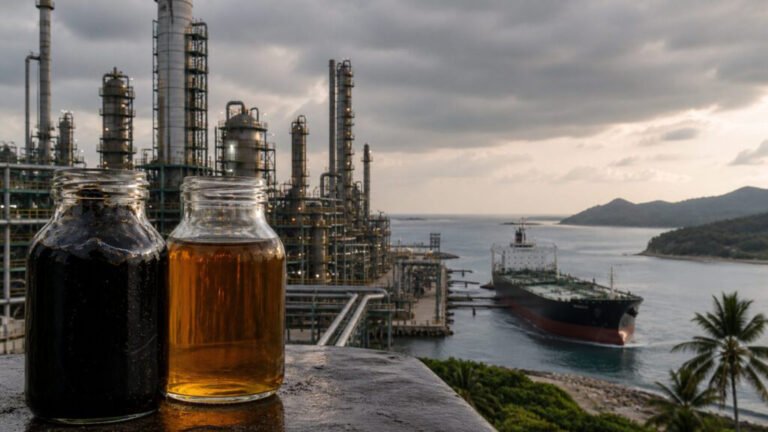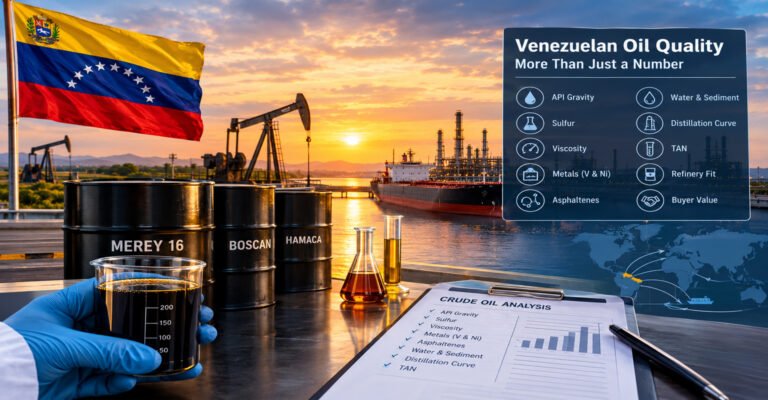

Venezuela is known for having some of the world’s largest crude oil resources, but the size of its reserves tells only part of the story. To understand the real value and practical challenges of Venezuelan petroleum, it is important to look at Venezuela crude oil quality from the reservoir all the way to the refinery.
The phrase Inside Venezuela Crude Oil Quality From Reservoir to Refinery describes a complete journey. Crude oil begins underground, where geology, pressure, temperature, source rock, maturity, and reservoir conditions influence its characteristics. After production, the crude may be blended, treated, transported, upgraded, and refined. At every stage, Venezuela crude oil quality affects how the oil can be handled and what products can eventually be made from it.
This is especially important because Venezuelan crude is not one single type of oil. Different producing areas can contain crude with very different API gravity, sulfur content, viscosity, metals, water content, and other characteristics. Research on Venezuelan petroleum has shown wide variation between heavy oils and lighter crude trends.
Understanding Venezuelan crude oil quality therefore requires more than looking at one number. API gravity matters, but so do sulfur, viscosity, asphaltenes, metals, acidity, water, sediment, and the chemical structure of the crude.
This guide explains Inside Venezuela Crude Oil Quality From Reservoir to Refinery in simple terms and follows the oil through each major stage.
What Inside Venezuela Crude Oil Quality From Reservoir to Refinery Really Means
Inside Venezuela Crude Oil Quality From Reservoir to Refinery is not only about the laboratory quality of crude oil. It is about how the characteristics of Venezuelan crude affect its entire journey through the petroleum system.
Crude quality begins underground.
A reservoir does not simply contain a liquid called oil. It contains a complex mixture of hydrocarbons and other compounds. The exact mixture depends on the geological history of the reservoir.
When crude reaches the surface, producers need to understand what they have produced.
They may need to measure:
- API gravity
- Sulfur content
- Viscosity
- Water content
- Sediment
- Metals
- Acidity
- Asphaltenes
- Resin content
- Distillation characteristics
- Gas content
- Density
- Stability
These measurements help determine how the crude should be produced, transported, stored, blended, upgraded, and refined.
That is why Venezuela crude oil quality from reservoir to refinery is a connected subject rather than a collection of separate measurements.
A crude oil that is easy to produce may not be easy to transport.
A crude oil that can be transported may still require special refining equipment.
A crude oil with a high resource volume may also require large investments before it can become useful fuel.
This is one reason why Venezuelan crude oil quality is closely connected to technology, infrastructure, refinery design, operating costs, and petroleum economics.
Venezuela Crude Oil Quality Begins Underground
The first part of Inside Venezuela Crude Oil Quality From Reservoir to Refinery begins below the surface.
Crude oil is created through long geological processes. Organic material is buried, changed by heat and pressure, and eventually transformed into petroleum. The conditions during this process influence the type of crude that forms.
Source rock characteristics are important.
Temperature history is important.
Maturity is important.
Migration history is important.
Reservoir conditions are important.
The result is that crude from one geological area may behave very differently from crude from another area.
This explains why it is difficult to describe Venezuela crude oil quality with one national number.
Venezuela contains several major petroleum regions, including the Orinoco Heavy Oil Belt and producing areas in western and eastern Venezuela. These areas do not all produce crude with the same characteristics.
Research on Venezuelan petroleum systems has documented significant differences in crude quality. Some heavy oils in the Orinoco region have very low API gravity and relatively high sulfur levels, while other Venezuelan crude trends are considerably lighter.
This variation is central to understanding Venezuelan crude quality from reservoir to refinery.
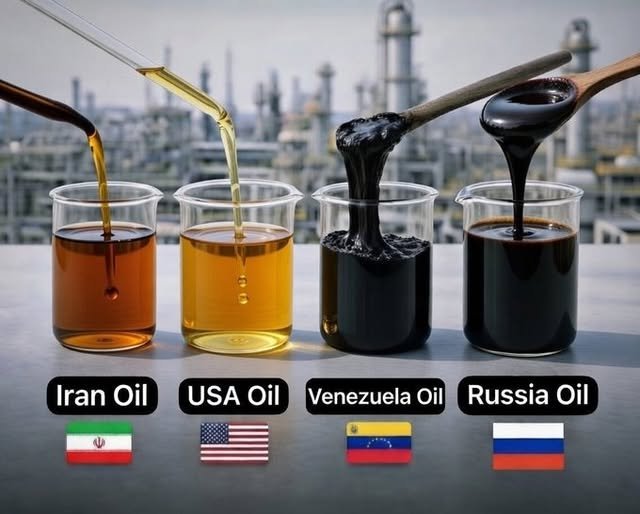
Why Venezuelan Crude Is Often Called Heavy
One of the most common questions about Venezuela crude oil quality is why so much Venezuelan crude is described as heavy or extra-heavy.
The answer is linked to density.
API gravity is commonly used by the petroleum industry to describe how heavy or light crude oil is.
A higher API gravity generally indicates lighter crude.
A lower API gravity indicates heavier crude.
Very heavy Venezuelan crude can have extremely low API gravity.
The Orinoco Heavy Oil Belt is particularly important in this discussion. Much of its petroleum resource consists of heavy and extra-heavy oil.
Some scientific studies have reported Orinoco heavy oils in the approximate range of 5 to 20 degrees API, with sulfur levels that can vary widely.
This does not mean every Venezuelan barrel has the same quality.
Instead, it shows why Inside Venezuela Crude Oil Quality From Reservoir to Refinery must consider regional and field-level differences.
API Gravity and Venezuela Crude Oil Quality
API gravity is one of the most widely used measurements in Venezuela crude oil quality.
The American Petroleum Institute gravity scale provides a way to compare the density of petroleum liquids.
The basic relationship is:
API gravity = 141.5 / specific gravity at 60°F − 131.5
The exact laboratory method matters, and crude oil samples are normally tested under controlled conditions.
For Venezuelan crude oil quality, API gravity can provide an immediate indication of how heavy or light the crude is.
Very low API gravity generally means:
- Higher density
- More difficult flow
- Greater handling challenges
- Greater need for heating or dilution in some cases
- Potentially more complex refining requirements
Higher API gravity generally means a lighter crude.
However, API gravity does not tell the whole story.
Two crude oils can have similar API gravity but behave differently in a refinery because their sulfur, metals, acidity, asphaltenes, and other chemical properties can be different.
That is why Venezuela crude oil quality from reservoir to refinery cannot be measured using API gravity alone.
Sulfur Is Another Major Part of Venezuelan Crude Quality
Sulfur is another important part of Venezuela crude oil quality.
Crude oil can contain different amounts of sulfur compounds. Petroleum with relatively low sulfur content is commonly called sweet crude, while crude with higher sulfur content is generally called sour crude.
Many Venezuelan crude streams are known for relatively high sulfur content, although the exact amount depends on the crude.
Some research on Venezuelan heavy oils has reported sulfur levels from roughly 1% to 6% in particular heavy-oil samples.
Again, these numbers should not be treated as one universal specification for all Venezuelan crude.
The quality of crude can vary significantly between reservoirs and producing areas.
Sulfur matters because refineries must manage it during processing.
Refining processes can remove sulfur from petroleum streams. This often requires hydrogen and specialized equipment.
The sulfur level can therefore influence:
- Refinery processing
- Hydrogen demand
- Equipment requirements
- Catalyst use
- Operating costs
- Product specifications
- Environmental controls
This makes sulfur an important part of Inside Venezuela Crude Oil Quality From Reservoir to Refinery.
Viscosity and Venezuelan Crude Oil Quality
Viscosity describes how strongly a fluid resists flowing.
Water has relatively low viscosity.
Honey has much higher viscosity.
Some Venezuelan heavy crude can be extremely viscous.
This is one of the biggest practical issues in Venezuela crude oil quality.
A very viscous crude may not move easily through pipelines without assistance.
Depending on the crude and operating conditions, producers may use:
- Heating
- Diluent
- Blending
- Specialized pumping systems
- Upgrading
- Other flow-improvement methods
The exact approach depends on the crude properties and infrastructure.
Viscosity also changes with temperature.
As temperature increases, many heavy crude oils become easier to flow.
As temperature decreases, they may become more difficult to move.
This is why Venezuelan crude oil quality from reservoir to refinery is closely linked to transportation engineering.
The crude may have enormous resource value underground, but the operator still needs a practical way to move it.
Asphaltenes and Venezuela Crude Oil Quality
Asphaltenes are another important part of Venezuela crude oil quality.
They are complex high-molecular-weight components found in crude oil. They can strongly influence viscosity, stability, deposits, and refining behavior.
Heavy Venezuelan crude can contain significant amounts of asphaltene-rich material.
This creates additional processing challenges.
Asphaltenes can affect:
- Crude stability
- Viscosity
- Fouling
- Separation
- Upgrading
- Refinery operations
- Product quality
The behavior of asphaltenes is also influenced by the rest of the crude.
This means laboratory analysis is important.
A refinery cannot safely assume how a crude will behave based only on its API gravity.
A detailed crude assay provides much more information.
That is why Inside Venezuela Crude Oil Quality From Reservoir to Refinery requires a broader look at crude chemistry.
Metals in Venezuelan Crude Oil
Some crude oils contain metals such as nickel and vanadium.
These metals matter because they can create problems during refining.
Heavy crude oils can contain relatively high concentrations of certain metals.
Venezuelan crude has been studied for its metal content, especially in relation to heavy oil and refinery processing.
Metals can:
- Poison catalysts
- Increase deposits
- Contribute to corrosion
- Affect refinery operations
- Increase treatment requirements
Catalysts are especially important in modern refining.
A refinery uses catalysts to help convert large hydrocarbon molecules into more useful products.
Certain metals can reduce catalyst effectiveness.
Therefore, Venezuela crude oil quality can influence not only the crude price but also refinery operating decisions.
Water and Sediment in Crude Oil
Water and sediment are also important when examining Venezuelan crude oil quality.
Freshly produced crude can contain water, salts, sand, and other unwanted material.
Before crude enters many refinery processes, these materials need to be reduced or removed.
Water can contribute to:
- Corrosion
- Processing problems
- Transportation issues
- Measurement difficulties
Sediment can create:
- Equipment problems
- Deposits
- Fouling
- Pipeline issues
This is why crude preparation is an important part of Inside Venezuela Crude Oil Quality From Reservoir to Refinery.
The crude that comes from the well is not always the same material that enters the refinery.
It may first pass through separation and treatment facilities.
Crude Oil Quality Changes During Production
An important part of Venezuela crude oil quality from reservoir to refinery is understanding that production can change the condition of the crude.
At the reservoir, oil exists under pressure.
When it reaches the surface, pressure and temperature change.
Gas may separate from the oil.
Water may be separated.
Solids may be removed.
The crude may be blended with other streams.
Diluent may be added.
These changes can affect the material that is ultimately transported.
For heavy Venezuelan crude, this stage can be especially important.
A producer may need to improve flow characteristics before the oil can travel efficiently through a pipeline.
This means Venezuelan crude oil quality is not simply a fixed label attached to the barrel.
It is a combination of natural characteristics and processing conditions.
Venezuela Crude Oil Quality and Dilution
Dilution can play an important role in transporting heavy crude.
Very heavy oil may be difficult to move by itself.
A lighter hydrocarbon stream can sometimes be mixed with heavy crude to reduce viscosity and improve flow.
The added material is commonly called diluent.
For Venezuelan heavy oil, the availability of suitable diluent can therefore influence production and transportation.
The basic goal is simple:
Make the crude easier to move without changing the economic value of the final petroleum stream more than necessary.
Dilution is another reason why Inside Venezuela Crude Oil Quality From Reservoir to Refinery cannot be understood by looking only at underground reserves.
The surface infrastructure matters too.
Upgrading Heavy Venezuelan Crude
Upgrading is one of the most important subjects in Venezuela crude oil quality.
An upgrader changes the characteristics of very heavy crude so it can become a more useful synthetic or upgraded crude stream.
Upgrading may reduce the proportion of very heavy components and improve characteristics such as API gravity.
Different upgrading technologies can be used.
The exact process depends on the crude and the facility.
Research on Venezuelan upgrading projects has documented major changes in crude characteristics after upgrading.
For example, studies of Petrocedeño-related upgrading have examined the transformation of very heavy Orinoco crude into a substantially lighter synthetic crude stream.
This illustrates the core idea of Venezuelan crude oil quality from reservoir to refinery.
The crude’s original properties are not necessarily the same properties of the material ultimately sent to a refinery.
Why Refinery Compatibility Matters
A refinery is not simply a machine that accepts any crude oil and produces the same results.
Different refineries are designed for different crude qualities.
This is one of the most important facts in Inside Venezuela Crude Oil Quality From Reservoir to Refinery.
A refinery’s equipment determines what types of crude it can process efficiently.
Refineries designed to handle heavy and sour crude may have:
- Coking units
- Hydrocrackers
- Desulfurization units
- Hydrogen systems
- Specialized distillation systems
- Heavy-oil processing equipment
A simple refinery may not be able to process very heavy crude as efficiently as a complex refinery.
Therefore, Venezuela crude oil quality and refinery design are closely connected.
Venezuela Crude Oil Quality and Refining
The refinery is where the consequences of crude quality become very visible.
Crude oil is first separated into different fractions.
This process is called distillation.
The fractions can then undergo additional processing.
The final products may include:
- Gasoline
- Diesel
- Jet fuel
- LPG
- Fuel oils
- Petrochemical feedstocks
- Other petroleum products
The exact product mix depends on refinery design and crude characteristics.
Heavy crude generally requires more complex processing if the refinery wants to produce a high share of lighter products.
This is why Inside Venezuela Crude Oil Quality From Reservoir to Refinery is also a story about refinery technology.
Heavy Crude and Refinery Complexity
Heavy crude contains more large hydrocarbon molecules than lighter crude.
These molecules can be difficult to convert into high-value transportation fuels.
A refinery may use a coker or other conversion equipment to break larger molecules into smaller ones.
This can increase the value obtained from heavy crude.
For Venezuela, refinery complexity has long been an important issue because much of the country’s crude resource is heavy or extra-heavy.
The relationship can be summarized simply:
Heavy crude → more processing needs → greater refinery complexity.
That does not mean heavy crude has no value.
It means the value depends partly on whether the producer and refiner have the right technology and infrastructure.
Venezuela Crude Oil Quality and Coking
Coking is one of the major technologies associated with heavy crude processing.
A coker converts heavy residual material into lighter hydrocarbon products and petroleum coke.
This technology can help a refinery process crude with a large heavy fraction.
For Venezuela crude oil quality, coking can be important because heavy crude may produce substantial amounts of residue after atmospheric and vacuum distillation.
The coking process helps convert some of that material into more useful products.
However, coking also creates petroleum coke that requires further handling and has its own market and environmental considerations.
Venezuela Crude Oil Quality and Hydrogen
Hydrogen is another important part of modern heavy and sour crude refining.
Hydrogen is used in processes that remove sulfur and improve petroleum streams.
It can also be used in hydrocracking and other upgrading processes.
Therefore, a refinery that processes heavy, high-sulfur Venezuelan crude may need substantial hydrogen capacity.
This creates another link between Venezuelan crude oil quality and refinery economics.
The crude quality affects:
- Hydrogen demand
- Catalyst requirements
- Energy use
- Processing time
- Equipment requirements
These factors can affect the cost of turning crude into finished fuel.
Why Venezuela Does Not Have One Crude Oil Quality
A common mistake is to treat all Venezuelan oil as one product.
That is not accurate.
Venezuela crude oil quality varies by location, reservoir, production method, blending, and processing.
The Orinoco Heavy Oil Belt is strongly associated with heavy and extra-heavy crude.
Other Venezuelan producing regions can contain lighter crude.
Eastern Venezuela has historically included lighter crude trends.
Western Venezuela also contains different crude types.
Therefore, saying simply that “Venezuelan oil is heavy” is an oversimplification.
A more accurate description is that Venezuela has a broad crude-quality range, with a very large share of its resource base concentrated in heavy and extra-heavy petroleum.
This distinction is important when studying Inside Venezuela Crude Oil Quality From Reservoir to Refinery.
Orinoco Heavy Oil Quality
The Orinoco Heavy Oil Belt is central to any discussion of Venezuelan crude oil quality.
It contains enormous quantities of heavy and extra-heavy petroleum.
The oil’s low API gravity and high viscosity create special production and transportation requirements.
The region has also been the focus of research into:
- Thermal recovery
- Dilution
- Upgrading
- Reservoir behavior
- Heavy-oil flow
- Crude chemistry
Heavy-oil recovery can require more specialized techniques than conventional light-oil production.
The quality characteristics of the crude therefore influence the entire production system.
Why Temperature Matters to Venezuelan Heavy Oil
Temperature can have a major effect on heavy-oil viscosity.
When temperature rises, heavy oil generally becomes easier to move.
When temperature falls, viscosity can increase.
This is particularly important in the Venezuela crude oil quality from reservoir to refinery journey.
Pipeline operators need to understand the relationship between temperature and flow.
Production engineers also need to consider reservoir temperature.
Thermal recovery methods can be used in some heavy-oil reservoirs to improve mobility.
These methods may involve injecting heat or steam into the reservoir.
The exact method depends on geological and economic conditions.
Venezuela Crude Oil Quality and Thermal Recovery
Thermal recovery has been studied in Venezuelan heavy-oil reservoirs.
The basic principle is straightforward.
Heat reduces the viscosity of heavy oil.
Lower viscosity can allow oil to move more easily toward production wells.
However, thermal recovery requires energy and infrastructure.
The process also depends on reservoir characteristics.
Therefore, Venezuela crude oil quality affects the type of recovery technology that may be useful.
This is another example of why crude quality begins before the oil ever reaches a refinery.
Crude Assays and Venezuela Crude Oil Quality
A crude assay is one of the most useful tools for understanding Venezuelan crude oil quality.
An assay is a detailed laboratory analysis of crude oil.
It can provide information about:
- Density
- API gravity
- Sulfur
- Distillation range
- Viscosity
- Metals
- Salt
- Water
- Sediment
- Asphaltenes
- Other chemical properties
Refiners use crude assays to understand how a crude stream may behave inside a refinery.
This makes the crude assay a bridge between Inside Venezuela Crude Oil Quality From Reservoir to Refinery.
The assay begins with the crude’s physical and chemical properties.
The refinery then uses that information to plan processing.
How API Gravity Is Tested
API gravity is normally measured using established laboratory procedures.
The measurement depends on specific gravity or density at a defined temperature.
Professional testing is important because small differences in measurement conditions can affect results.
For this reason, published API gravity values should be understood in context.
A number from one sample is not automatically a national specification.
This is especially important for Venezuela crude oil quality, where crude properties can vary significantly.
How Sulfur Is Tested
Sulfur can be measured using laboratory techniques designed for petroleum products.
The result may be reported as a percentage by weight or in another standardized form.
The measurement provides refiners with important information about how much sulfur treatment may be required.
For Venezuelan crude oil quality, sulfur testing is especially important because many heavy crude streams contain significant sulfur.
Why Viscosity Testing Matters
Viscosity testing helps engineers understand how easily crude can flow.
The result can be reported under defined temperature conditions.
Because heavy crude viscosity can change strongly with temperature, the test conditions must be stated clearly.
This is one reason a good crude assay contains more than a single viscosity number.
Understanding viscosity is essential to Inside Venezuela Crude Oil Quality From Reservoir to Refinery because transportation and processing depend on flow behavior.
Venezuela Crude Oil Quality and SARA Analysis
SARA analysis divides crude components into four broad groups:
- Saturates
- Aromatics
- Resins
- Asphaltenes
This type of analysis can help researchers and refiners understand crude structure.
The balance between these components can influence stability, viscosity, upgrading behavior, and refining performance.
For heavy Venezuelan crude, SARA characteristics can be especially useful because heavy fractions and asphaltene behavior are major processing considerations.
Venezuela Crude Oil Quality and Corrosion
Corrosion is another refinery concern.
Sulfur compounds, acids, salts, water, and other materials can contribute to corrosion under certain processing conditions.
The exact risk depends on the crude and the refinery process.
Therefore, crude quality testing helps operators understand potential corrosion risks before processing.
This is another practical reason Venezuela crude oil quality matters beyond the selling price of crude.
Venezuela Crude Oil Quality and Fouling
Fouling occurs when unwanted material accumulates on equipment surfaces.
Heavy crude can create fouling challenges because of its complex chemical composition.
Asphaltenes, heavy hydrocarbons, metals, salts, and other compounds can contribute to deposits.
Fouling can reduce heat-transfer efficiency.
It can increase maintenance requirements.
It can also reduce refinery operating efficiency.
Therefore, Venezuelan crude oil quality from reservoir to refinery includes a strong operational component.
Why Heavy Venezuelan Crude Can Need More Processing
Heavy crude can contain more material that remains in the heavier fractions after distillation.
If a refinery wants to produce large quantities of gasoline or diesel, additional conversion may be required.
This is why complex refineries can have an advantage when processing heavy crude.
They can use additional equipment to convert heavy molecules into lighter products.
The process can increase the usefulness of heavy crude, but it also requires investment and energy.
This is a central part of Inside Venezuela Crude Oil Quality From Reservoir to Refinery.
Venezuela Crude Oil Quality and Product Yield
Crude quality affects product yield.
A lighter crude may naturally produce more light fractions during distillation.
A heavier crude may produce more residue and heavy fractions.
However, refinery conversion units can change the final product mix.
Therefore, crude quality and refinery configuration must be considered together.
A refinery processing Venezuelan heavy crude may use specialized conversion technologies to produce transportation fuels.
The same crude could produce a different product mix at a less complex refinery.
Venezuela Crude Oil Quality and Fuel Production
Gasoline and diesel production depend on the refinery’s ability to convert crude into suitable fuel streams.
Heavy crude can require more processing before those products meet specifications.
Sulfur removal is one important step.
Octane improvement is another consideration for gasoline.
Cetane and other quality properties matter for diesel.
Therefore, Venezuela crude oil quality affects the path from crude oil to finished fuel.
From Reservoir to Storage
After crude is produced and treated, it may move into storage.
Storage tanks allow operators to manage production and transportation schedules.
Crude may also be blended during this stage.
Blending can help achieve a target quality specification.
For example, a heavier crude may be blended with a lighter stream to change the combined density and viscosity.
This means the final commercial crude stream may represent more than one production area.
Again, Inside Venezuela Crude Oil Quality From Reservoir to Refinery is a journey involving multiple stages.
Venezuela Crude Oil Quality and Blending
Blending is common in the petroleum industry.
Different crude streams can be combined to produce a mixture with desired characteristics.
The goal may be to improve:
- Flow
- API gravity
- Stability
- Refinery compatibility
- Transportation performance
- Commercial value
Blending decisions require accurate laboratory data.
A crude stream that looks acceptable on one measurement may create problems when combined with another stream.
Therefore, Venezuelan crude oil quality needs to be evaluated both before and after blending.
Venezuela Crude Oil Quality During Transportation
Transportation is another major stage in the journey.
Heavy crude can be more difficult to transport than light crude.
Pipeline operators may need to control:
- Temperature
- Pressure
- Viscosity
- Flow rate
- Water content
- Sediment
- Diluent concentration
The pipeline must also be compatible with the crude.
For Venezuela crude oil quality from reservoir to refinery, transportation is not simply a physical movement.
It is a technical process.
Pipeline Challenges for Heavy Venezuelan Crude
Heavy crude can create additional pipeline challenges.
Higher viscosity can increase pumping requirements.
Water and sediment can create additional handling issues.
Fouling can affect equipment.
Diluent can improve flow but adds cost and changes the composition of the transported stream.
These factors show why Venezuela crude oil quality has a direct connection to infrastructure.
The quality of the crude determines some of the requirements for moving it safely and efficiently.
Venezuela Crude Oil Quality and Refinery Economics
Crude quality can affect refinery economics.
Heavy and sour crude can sometimes trade at a different price from lighter and sweeter crude.
The reason is not simply that one crude is “better.”
The market value depends on the cost and ability to process the crude and the value of the products it can produce.
A complex refinery may be able to process a heavy crude efficiently.
A simple refinery may prefer a lighter crude.
This is why Venezuelan crude oil quality can influence crude pricing and refinery decisions.
Why API Gravity Alone Is Not Enough
API gravity is useful.
But API gravity is not enough to describe Inside Venezuela Crude Oil Quality From Reservoir to Refinery.
Consider two crude oils with similar API gravity.
One could have lower sulfur.
Another could have higher sulfur.
One could contain more metals.
Another could have more asphaltenes.
One could have lower viscosity under the same conditions.
The two crude oils may therefore have different refinery requirements.
This is why professional crude evaluation uses multiple measurements.
Why Sulfur Alone Is Not Enough
The same principle applies to sulfur.
Two crude oils could have similar sulfur levels but behave differently because their molecular structures differ.
Refiners need a broader picture.
That broader picture comes from a crude assay.
This is why Venezuela crude oil quality should be discussed as a group of properties rather than one score.
Venezuela Crude Oil Quality and Crude Grades
Commercial crude streams may be given names or grades.
These names help buyers and sellers identify a particular stream.
A crude grade can be associated with typical quality characteristics.
However, the actual composition can change over time depending on production, blending, field conditions, and processing.
Therefore, a grade name does not replace laboratory testing.
For Venezuelan crude oil quality, actual cargo specifications and assay data remain important.
Venezuelan Crude Oil Quality Can Change Over Time
Crude quality is not necessarily constant forever.
A producing field changes as reservoir conditions evolve.
Water production can increase.
Gas production can change.
Different wells can produce different crude.
Production from different areas can be blended.
Infrastructure can also change.
All of these factors can affect the characteristics of the commercial stream.
Therefore, current assay information is more useful for a current transaction than an old generic description.
Venezuela Crude Oil Quality and Reservoir Maturity
Reservoir maturity and geological history help explain why crude differs from one location to another.
Oil becomes more mature as it experiences certain geological conditions.
Temperature and burial history affect the hydrocarbons.
The result can be differences in molecular composition and physical properties.
Research into Venezuelan petroleum systems has shown that source facies and maturity can help explain differences in crude quality.
This provides an important scientific foundation for understanding Inside Venezuela Crude Oil Quality From Reservoir to Refinery.
Why Venezuela Has Both Heavy and Lighter Crude
Venezuela’s petroleum system is geographically and geologically diverse.
The country has large heavy-oil resources, particularly in the Orinoco region.
It also has areas with lighter crude.
This is why national statements about Venezuela crude oil quality need to be used carefully.
The country cannot be represented by one API gravity or one sulfur number.
A better approach is to ask:
Which crude?
Which field?
Which production area?
Which assay?
Which date?
Those questions make crude-quality analysis much more useful.
Inside Venezuela Crude Oil Quality From Reservoir to Refinery and the Role of Technology
Technology can change the practical value of crude.
A heavy crude that is difficult to produce and transport may become more useful when supported by appropriate recovery, dilution, upgrading, pipeline, and refinery systems.
This is why the technical side of Venezuela crude oil quality matters so much.
The same natural resource can have different economic outcomes depending on infrastructure.
Technology can influence:
- Recovery
- Flow
- Transportation
- Upgrading
- Refining
- Product yield
- Environmental performance
Venezuela Crude Oil Quality and Upgrading Technology
Upgrading technology is especially important for extra-heavy crude.
An upgrader can change the physical and chemical characteristics of the crude before it reaches a refinery.
The goal is usually to create a stream that is easier to transport and process.
Different technologies produce different results.
Some remove carbon-rich heavy material.
Others add hydrogen.
Some processes create coke.
The choice depends on the crude and the project.
This makes upgrading a major part of Inside Venezuela Crude Oil Quality From Reservoir to Refinery.
Venezuela Crude Oil Quality and Environmental Considerations
Crude quality can also affect environmental management.
Higher sulfur crude requires more sulfur removal during refining.
Heavy crude processing can require more energy.
Upgrading and transportation require infrastructure.
Petroleum coke produced during some upgrading processes also needs to be managed and marketed.
Environmental performance therefore depends on more than the crude itself.
It depends on the complete production and refining system.
Venezuela Crude Oil Quality and Refinery Maintenance
Refinery maintenance can be influenced by crude characteristics.
Heavy crude can increase fouling and deposits.
Metals can affect catalysts.
Sulfur and other compounds can affect corrosion control.
These challenges do not mean heavy crude cannot be processed.
They mean the refinery needs suitable equipment, operating procedures, monitoring, and maintenance.
For this reason, Venezuelan crude oil quality is an important input into refinery planning.
What a Buyer Looks for in Venezuelan Crude
A buyer evaluating Venezuelan crude may want detailed information about:
- API gravity
- Sulfur
- Viscosity
- Metals
- Water
- Sediment
- Acidity
- Distillation
- Asphaltenes
- Salt
- Stability
- Other assay data
The exact requirements depend on the buyer and refinery.
A refinery buying heavy Venezuelan crude needs to understand whether the stream fits its equipment and processing strategy.
That makes detailed Venezuela crude oil quality information commercially important.
What a Refinery Needs to Know
A refinery does not only ask how much crude is available.
It also asks what the crude contains.
A refinery may need to estimate:
- Distillation yields
- Residue volume
- Sulfur load
- Hydrogen requirements
- Catalyst demand
- Coke production
- Energy use
- Product yields
This is why the journey from reservoir to refinery is so important.
Inside Venezuela Crude Oil Quality From Reservoir to Refinery is ultimately about connecting geology with refinery operations.
How Venezuela Crude Oil Quality Affects Crude Pricing
Crude pricing reflects many factors.
Quality is one of them.
Location is another.
Transportation cost matters.
Market demand matters.
Refinery configuration matters.
Contract terms matter.
Therefore, it is not correct to say that one crude grade has a fixed price simply because of its API gravity.
The market evaluates the complete commercial situation.
Still, Venezuelan crude oil quality can create price differences because buyers must consider the cost of processing the crude.
Venezuela Crude Oil Quality and Heavy-Oil Discounts
Heavy and sour crude can sometimes trade at a discount to lighter and sweeter crude.
This can reflect the additional processing required.
However, the exact differential changes with market conditions.
A refinery with equipment designed for heavy crude may value a heavy stream differently from a refinery that cannot process it efficiently.
Therefore, Inside Venezuela Crude Oil Quality From Reservoir to Refinery has a direct connection to market economics.
Venezuela Crude Oil Quality Is Not the Same as Oil Reserves
Another important distinction is between reserves and quality.
Reserves tell us about the quantity of economically recoverable petroleum under defined conditions.
Quality tells us about the characteristics of that petroleum.
A country can have enormous reserves and still face technical challenges in producing and processing those reserves.
Venezuela illustrates this clearly.
Its petroleum resource is enormous, but a large portion consists of heavy and extra-heavy crude that can require specialized technology.
Therefore, understanding Venezuela crude oil quality adds an important layer to understanding the country’s petroleum resources.
Venezuela Crude Oil Quality and the Orinoco Resource
The Orinoco Heavy Oil Belt is a major example.
The resource volume is enormous.
But the crude is heavy.
Its viscosity is high.
Its API gravity is low.
Its sulfur and other chemical characteristics can create additional processing needs.
This means the value of the resource depends partly on the ability to produce, transport, upgrade, and refine it.
That is the central lesson of Inside Venezuela Crude Oil Quality From Reservoir to Refinery.
Common Mistakes When Reading Venezuelan Crude Data
There are several common mistakes when people discuss Venezuela crude oil quality.
Mistake 1: Treating all Venezuelan crude as identical
Venezuela produces different crude streams.
Mistake 2: Looking only at API gravity
API gravity is important, but it is only one measurement.
Mistake 3: Ignoring sulfur
Sulfur affects refinery processing and product treatment.
Mistake 4: Ignoring viscosity
Viscosity can be critical for heavy-oil transportation.
Mistake 5: Ignoring metals
Metals can affect refinery catalysts and equipment.
Mistake 6: Using old assay data as current data
Crude characteristics and commercial streams can change.
Mistake 7: Confusing crude oil with gasoline
Crude oil is the raw petroleum feedstock.
Gasoline is a refined product.
Mistake 8: Assuming reserves equal production
Large reserves do not automatically mean high current production.
How to Read a Venezuelan Crude Oil Quality Report
A simple way to read a crude assay is to follow several steps.
First, check API gravity.
Then check sulfur.
Next, review viscosity.
After that, look at metals.
Then review water and sediment.
Next, examine distillation characteristics.
Finally, review asphaltenes, acidity, and other available measurements.
This provides a more complete picture of Venezuelan crude oil quality.
The report should also show the test date and laboratory method where available.
A Simple Venezuela Crude Oil Quality Checklist
When studying Inside Venezuela Crude Oil Quality From Reservoir to Refinery, ask these questions:
- What is the API gravity?
- What is the sulfur content?
- What is the viscosity?
- What are the nickel and vanadium levels?
- How much water is present?
- How much sediment is present?
- What is the salt content?
- What is the acidity?
- What are the asphaltene levels?
- What does the distillation curve show?
- Has the crude been blended?
- Has it been upgraded?
- What refinery is expected to process it?
These questions provide a much stronger understanding than a single quality label.
People Also Ask About Venezuela Crude Oil Quality
What is the quality of Venezuelan crude oil?
Venezuelan crude oil quality varies significantly by region and crude stream. Much of the country’s resource base consists of heavy and extra-heavy crude, especially in the Orinoco Heavy Oil Belt, while some other producing areas contain lighter crude.
Is Venezuelan oil heavy or light?
A large share of Venezuelan petroleum resources is heavy or extra-heavy. However, Venezuela also produces lighter crude streams. Therefore, it is more accurate to describe Venezuela as having a broad range of crude qualities.
Why is Venezuelan crude oil so heavy?
The heavy nature of much Venezuelan crude is linked to the geological history and petroleum systems of the producing regions. The Orinoco Heavy Oil Belt contains particularly large quantities of heavy and extra-heavy petroleum.
What is API gravity in Venezuelan crude oil?
API gravity is a measurement related to petroleum density. Lower API values generally indicate heavier crude, while higher API values indicate lighter crude.
Does Venezuelan crude contain a lot of sulfur?
Some Venezuelan crude streams contain significant sulfur, especially certain heavy crude streams. The exact sulfur level depends on the individual crude and should be confirmed through assay data.
Why does heavy Venezuelan crude need upgrading?
Extra-heavy crude can have very high viscosity and low API gravity. Upgrading can change its characteristics and make it easier to transport or process.
Why is Venezuelan crude difficult to refine?
Some Venezuelan crude is heavy, sour, viscous, and rich in heavy molecular components and metals. Refineries processing such crude may require complex equipment and additional treatment capacity.
Is Venezuelan crude oil the same as gasoline?
No. Crude oil is the raw petroleum material produced from underground reservoirs. Gasoline is a finished petroleum product made through refining and other processing.
Why is crude oil quality important?
Crude oil quality affects transportation, refinery compatibility, processing requirements, product yields, operating costs, and the type of equipment required.
How is crude oil quality measured?
Crude quality can be measured through API gravity, sulfur, viscosity, metals, water, sediment, salt, acidity, distillation, asphaltenes, and other laboratory tests.
People Also Search For Venezuela Crude Oil Quality
People researching Venezuela crude oil quality may also search for:
- Venezuela crude oil API gravity
- Venezuelan crude oil sulfur content
- Venezuela heavy crude oil quality
- Orinoco heavy oil quality
- Venezuelan crude oil grades
- Venezuela crude oil assay
- Venezuela oil API gravity
- Venezuelan crude oil viscosity
- Venezuela extra heavy crude
- Venezuela heavy oil upgrading
- Venezuelan crude oil refining
- Venezuela crude oil characteristics
- Venezuela oil quality
- Venezuelan petroleum quality
- Orinoco crude oil properties
- heavy crude oil refining
- crude oil API gravity explained
- crude oil sulfur content explained
- heavy oil upgrading process
- crude oil quality analysis
These related searches help show the wider information need around Inside Venezuela Crude Oil Quality From Reservoir to Refinery.
NLP Keywords for Venezuela Crude Oil Quality
Important related terms include:
- crude oil
- Venezuelan crude
- heavy crude
- extra-heavy oil
- Orinoco Heavy Oil Belt
- API gravity
- sulfur
- viscosity
- density
- asphaltenes
- resins
- aromatics
- saturates
- metals
- nickel
- vanadium
- crude assay
- refinery
- upgrading
- diluent
- pipeline
- petroleum refining
- heavy oil recovery
- crude oil transportation
- refinery compatibility
- crude oil characteristics
- petroleum quality
- synthetic crude
- coking
- hydrocracking
- desulfurization
These terms naturally support the main subject without replacing the focus keyword.
Venezuela Crude Oil Quality From Reservoir to Refinery in Simple Terms
The entire process can be understood as a chain.
Reservoir → Production → Treatment → Blending or Dilution → Transportation → Upgrading → Refinery → Finished Products
At the reservoir, geology determines the basic crude characteristics.
During production, oil, gas, water, and solids may be separated.
During treatment, unwanted materials are reduced.
During blending, different crude streams may be combined.
During transportation, viscosity and flow must be managed.
During upgrading, very heavy crude may be converted into a more useful stream.
At the refinery, the crude is separated and chemically converted.
Finally, finished products such as gasoline, diesel, jet fuel, and other petroleum products are produced.
That entire chain explains Inside Venezuela Crude Oil Quality From Reservoir to Refinery.
The Difference Between Natural Quality and Processed Quality
It is important to separate natural crude quality from processed crude quality.
Natural quality refers to what comes from the reservoir.
Processed quality refers to what remains after treatment, blending, dilution, or upgrading.
For example, very heavy crude may be upgraded into a substantially lighter synthetic crude stream.
Therefore, a refinery receiving upgraded Venezuelan crude may not be processing the same material that originally came from the reservoir.
This distinction is essential for accurate Venezuela crude oil quality analysis.
Why Source Data Matters
Reliable source data is important when discussing Venezuelan petroleum.
Crude oil characteristics can differ between:
- Fields
- Reservoirs
- Wells
- Production areas
- Commercial streams
- Blended streams
- Upgraded streams
Therefore, a single number should never be presented as the quality of all Venezuelan oil unless the source clearly supports that conclusion.
Scientific studies, government energy data, laboratory assays, and refinery information can each provide different pieces of the picture.
What Scientific Research Shows
Scientific research has documented substantial variation in Venezuelan crude characteristics.
Studies of Venezuelan petroleum systems have found that crude quality can vary with source facies and maturity.
Research on Orinoco heavy oils has examined very low API gravity and relatively high sulfur levels.
Other studies have examined the metal content and chemical composition of Venezuelan crude.
Research on upgrading has also shown how processing can significantly change the properties of heavy crude.
Together, these studies support a central point:
Venezuela crude oil quality is diverse and must be evaluated by crude stream rather than by country name alone.
Why the Reservoir-to-Refinery View Is Better
Looking only at the reservoir tells us about the natural resource.
Looking only at the refinery tells us about processing.
Looking at the complete journey gives us the full picture.
That is why Inside Venezuela Crude Oil Quality From Reservoir to Refinery is a useful way to understand Venezuelan petroleum.
The quality of the crude influences every stage.
A heavy crude may require special production technology.
Its viscosity may affect transportation.
Its sulfur may affect refining.
Its metals may affect catalysts.
Its asphaltenes may affect stability and fouling.
Its API gravity may affect product yields.
Its final value may depend on the refinery receiving it.
Venezuela Crude Oil Quality and Future Development
Future development of Venezuelan petroleum resources will depend on more than underground reserves.
Technology will matter.
Infrastructure will matter.
Refinery capacity will matter.
Transportation will matter.
Investment will matter.
Environmental requirements will matter.
Crude quality will matter throughout the process.
Heavy and extra-heavy crude resources can be technically challenging, but they can also be processed when suitable technology and infrastructure are available.
This makes Venezuelan crude oil quality from reservoir to refinery an important subject for anyone studying Venezuela’s energy system.
Final Thoughts on Inside Venezuela Crude Oil Quality From Reservoir to Refinery
Inside Venezuela Crude Oil Quality From Reservoir to Refinery is ultimately a story about how the natural characteristics of petroleum shape the entire energy chain.
Venezuela has enormous petroleum resources, but those resources are not uniform.
A large part of the resource base consists of heavy and extra-heavy crude, especially in the Orinoco Heavy Oil Belt.
That crude can have:
- Low API gravity
- High viscosity
- Significant sulfur
- Heavy molecular components
- Asphaltenes
- Metals
- Complex refining requirements
Other Venezuelan crude streams can be much lighter.
This variation is why Venezuela crude oil quality must always be studied with field, stream, assay, and date in mind.
API gravity gives an important first clue.
Sulfur tells us more about treatment needs.
Viscosity helps explain transportation challenges.
Metals and asphaltenes help explain refining problems.
Distillation data helps show how the crude may separate.
Upgrading can change the characteristics of very heavy oil.
Refinery configuration determines how effectively the crude can be converted into useful products.
The most important lesson is simple.
Venezuelan crude oil quality is not one number. It is a complete set of physical and chemical characteristics that follow the petroleum from reservoir to refinery.
Understanding those characteristics makes it easier to understand Venezuela’s oil production, transportation, upgrading, refining, product output, and petroleum economics.
That is the real meaning of Inside Venezuela Crude Oil Quality From Reservoir to Refinery.
Sources and Further Reading
For technical and factual background on Venezuela crude oil quality, the following sources are useful:
- U.S. Energy Information Administration, Venezuela country analysis
- U.S. Energy Information Administration, crude oil quality definitions
- U.S. Energy Information Administration, crude oil refining and refinery inputs
- U.S. Geological Survey, API gravity testing methodology
- Peer-reviewed research on Venezuelan petroleum systems
- Peer-reviewed research on Venezuelan crude oil metals and chemical composition
- Peer-reviewed research on Venezuelan heavy-oil upgrading
- Peer-reviewed research on Orinoco Heavy Oil Belt production and recovery
The EIA provides country-level energy information and explanations of crude oil quality and refining. The USGS provides technical information on API gravity measurement. Peer-reviewed petroleum research provides more detailed information about Venezuelan crude characteristics, heavy oil chemistry, reservoir behavior, and upgrading.
Quick Answer
Inside Venezuela Crude Oil Quality From Reservoir to Refinery means understanding Venezuelan crude through its complete petroleum journey.
The basic chain is:
Reservoir → Production → Treatment → Blending → Transportation → Upgrading → Refining → Finished Fuel
Venezuela’s crude is not one uniform product. Much of the country’s resource base consists of heavy and extra-heavy oil, while other regions contain lighter crude.
For a complete quality assessment, look at API gravity, sulfur, viscosity, metals, asphaltenes, water, sediment, acidity, and distillation characteristics.
That broader approach gives a much more accurate picture of Venezuela crude oil quality than using a single number or general label.