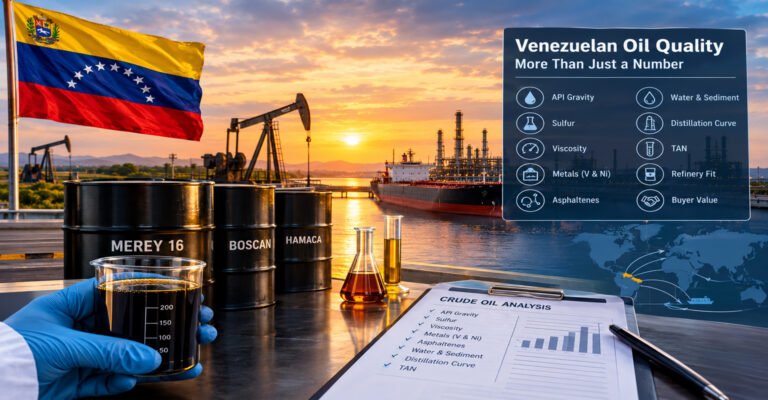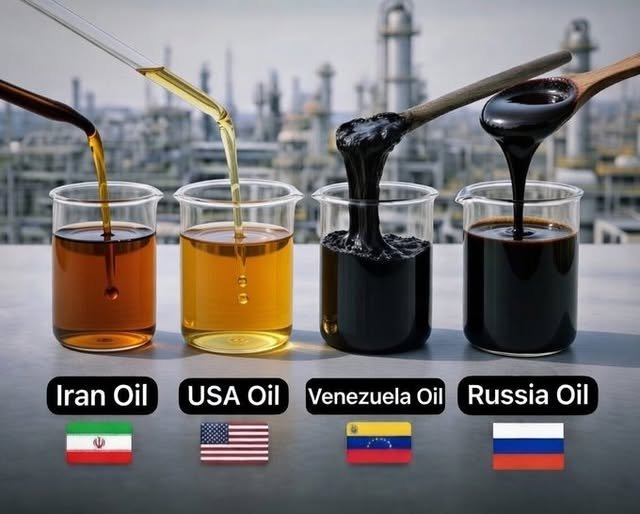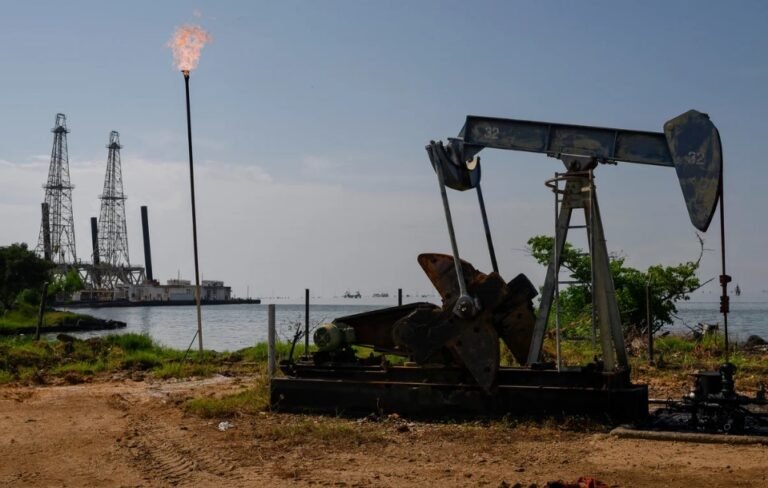
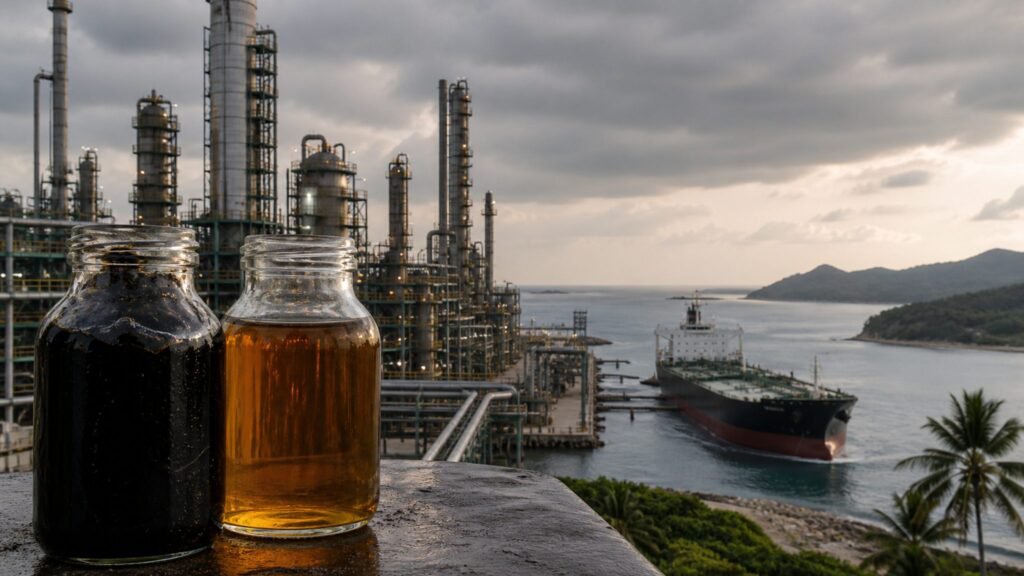
Venezuela Oil Quality Explained begins with a key question: why does Venezuela have enormous oil reserves when much of its crude is thick, heavy, and difficult to process? The answer comes from the science of petroleum. Crude oil quality depends on density, viscosity, sulfur content, chemical composition, and the amount of work needed to turn the oil into useful products. Venezuela holds vast oil resources, especially in the Orinoco Oil Belt, but much of this oil is extra-heavy crude. It can provide valuable fuel and industrial products, yet it requires special equipment and careful planning.
Understanding Venezuela Oil Quality Explained helps explain why large oil reserves do not always lead to easy production or high profits. Heavy crude may need special pumps, lighter liquids for blending, advanced refinery equipment, and extra treatment to remove unwanted compounds. These steps can increase costs and affect the price buyers are willing to pay.
Venezuelan oil is not all the same. Different fields and commercial grades have different properties. Some are very heavy, while others have different density and sulfur levels. A proper assessment must look at the exact grade rather than treating all Venezuelan crude as one product.
This guide explores Venezuela Oil Quality Explained through simple science and practical examples. It explains API gravity, viscosity, sulfur, crude oil testing, upgrading, refining, transport, price differences, environmental concerns, and the future of Venezuelan oil. It also answers common questions about heavy crude and explains why oil quality matters to producers, refiners, buyers, and the global energy market.
What Is Venezuelan Crude Oil?
Crude oil is a natural liquid found in underground rock formations. It formed over millions of years from ancient organic matter that changed under heat and pressure. It contains many chemical compounds, most of which are made from hydrogen and carbon. These compounds are called hydrocarbons.
Some hydrocarbons are small and light. Others have larger, more complex structures. These differences affect the way oil flows, the temperature at which it boils, and the products that can be made from it.
When people discuss Venezuela Oil Quality Explained, they often focus on heavy crude from the Orinoco Oil Belt. This region contains extensive deposits of extra-heavy oil. Some of this oil is so thick that it cannot move easily through ordinary pipelines without special handling.
However, Venezuela also produces other crude grades. Their properties can differ based on the reservoir, chemical composition, and blending process. The country should not be described as producing only one type of oil.
Why Venezuela Is Known for Heavy Crude
Venezuela has one of the world’s largest reported proven crude oil reserve bases. A large share consists of heavy and extra-heavy oil.
Heavy crude contains a greater share of dense, high-boiling compounds than many light crude oils. These compounds can make the oil thick and difficult to pump. Some heavy oils also contain high levels of sulfur, metals, and other substances that require additional treatment.
The main features of Venezuelan heavy crude can include:
- Low API gravity compared with light crude.
- High viscosity, especially in extra-heavy grades.
- A need for suitable pumps and transport systems.
- Possible requirements for diluent or upgrading.
- A need for refineries equipped to process heavy feedstocks.
- Chemical properties that vary between crude grades.
These features explain why a large oil resource can still be technically challenging to develop.
The key lesson in Venezuela Oil Quality Explained is that heavy does not mean worthless. Heavy describes the oil’s physical properties. Its commercial value depends on production costs, transport needs, refinery capacity, and the value of the final products.
What Is the Orinoco Oil Belt?
The Orinoco Oil Belt is a large petroleum region in eastern Venezuela. It contains extensive deposits of extra-heavy crude and is central to the country’s oil industry.
The oil in this region is often very dense and viscous. It may not flow easily under normal conditions. Producers must consider how to bring it to the surface, move it through field equipment, prepare it for transport, and deliver it to a refinery or export terminal.
These steps require equipment designed for heavy oil. Depending on the project, operators may use specialized pumps, lighter blending liquids, upgrading facilities, or other methods to improve handling.
The region has enormous petroleum resources, but resources and current production are not the same thing. Producing oil commercially requires technology, infrastructure, investment, and access to buyers.
The Orinoco Oil Belt is therefore both a major natural resource and a major engineering challenge. Its value depends on how safely and economically the oil can be developed.
How Geological History Affects Oil Quality
Crude oil’s properties are partly shaped by its geological history. Temperature, pressure, water, and other underground conditions can change the chemical makeup of petroleum over long periods.
In some deposits, natural processes remove lighter compounds or change the original hydrocarbons. The remaining oil may become denser and more viscous. These changes help explain why some reservoirs contain light oil while others hold heavy or extra-heavy crude.
Geology is an important starting point for Venezuela Oil Quality Explained because it helps explain why the Orinoco region contains so much extra-heavy oil. The oil’s properties developed underground long before it was produced.
Venezuela Oil Quality Explained: The Main Properties of Crude Oil
Oil experts do not judge crude quality by color or thickness alone. They use laboratory tests to measure properties that affect production, transport, and refining.
The most important measurements include API gravity, viscosity, sulfur content, chemical composition, metals, and distillation characteristics. Each measurement answers a different question.
API gravity describes density compared with water. Viscosity measures resistance to flow. Sulfur content helps determine whether a crude is sweet or sour. A crude oil assay provides a wider picture of the oil’s chemical and physical properties.
These measurements matter because two crude oils can have similar density but different sulfur levels. They can also have similar sulfur levels but behave differently in a refinery.
What Is API Gravity?
API gravity is a standard measurement used by the petroleum industry to describe how light or heavy an oil is compared with water.
The scale can seem confusing because a higher API gravity means lighter oil, while a lower API gravity means heavier oil.
As a general guide, light crude often has an API gravity above 31 degrees. Heavy crude is commonly associated with values below about 22 degrees. Extra-heavy oil is often associated with values around 10 degrees API or lower, although definitions can vary.
| Crude category | General API gravity |
|---|---|
| Light crude | Above 31° |
| Medium crude | Around 22°–31° |
| Heavy crude | Below about 22° |
| Extra-heavy crude | Around 10° or lower |
API gravity is calculated using specific gravity:
API gravity = (141.5 ÷ specific gravity at 60°F) − 131.5
Specific gravity compares the density of a liquid with the density of water under defined conditions.
For Venezuela Oil Quality Explained, API gravity is especially important because much of the Orinoco resource has low API values. This helps explain why the oil may require additional handling and processing.
However, API gravity does not measure sulfur, viscosity, or every other property. It is one part of a complete quality assessment.
Why Is Venezuelan Oil Called Extra-Heavy Crude?
Some Venezuelan crude from the Orinoco region has an API gravity close to or below 10 degrees. Such oil is commonly described as extra-heavy crude.
It contains a large share of dense, complex hydrocarbons. These can include resins and asphaltenes, which may affect the oil’s flow, stability, and refining behavior.
Extra-heavy oil can be difficult to pump because its viscosity creates resistance. The problem may become worse when the oil cools. Suitable pumps, heating, blending, or other methods may be needed to move it safely.
The best method depends on the oil and the conditions at the production site. Not every field requires the same solution.
Extra-heavy crude can still be turned into useful petroleum products. The challenge is that it may need more processing than light crude before it becomes a suitable feedstock for a refinery.
What Is Viscosity?
Viscosity measures how strongly a liquid resists flowing. Water has low viscosity and pours easily. Honey has higher viscosity and moves more slowly.
Many heavy crude oils have much higher viscosity than light crude. Some extra-heavy oils can be very difficult to pump unless their flow properties are improved.
Viscosity affects several parts of petroleum production:
- Underground flow: Thick oil may move slowly through small spaces in reservoir rock.
- Pumping: Equipment may need more power to move the oil.
- Pipelines: Operators may need heat, diluent, or suitable pressure.
- Storage: Temperature and blending can change how the oil behaves.
- Refining: Flow properties affect how crude enters and moves through equipment.
Temperature can make a major difference because many heavy oils become less viscous when heated. However, heating uses energy and requires suitable facilities.
Diluent offers another option. This lighter hydrocarbon liquid mixes with heavy crude and reduces its resistance to flow.
This link between viscosity and transport is central to Venezuela Oil Quality Explained. The oil’s physical properties directly affect the equipment and costs needed to move it from the field to the buyer.
Is Venezuelan Oil Sour or Sweet?
Crude oil is often described as sweet or sour according to its sulfur content.
Sweet crude has relatively low sulfur content. Sour crude contains more sulfur. A common reference point is 0.5% sulfur by weight, although specific standards and commercial specifications can differ.
Sulfur matters because it can contribute to air pollution when fuels are burned. It can also cause corrosion and increase the treatment required during refining.
Much of Venezuela’s heavy crude is described as sour, but sulfur levels vary between grades. It would be inaccurate to assign one sulfur value to every Venezuelan crude stream.
A refinery must consider both API gravity and sulfur content. Heavy, sour crude may need a different processing plan from heavy crude with lower sulfur.
Does Heavy Crude Always Contain More Sulfur?
No. Heavy and sour describe two different properties.
Heavy refers to density, while sour refers to sulfur content. Many heavy oils contain substantial sulfur, but not every heavy crude is sour. Light crude can also have high sulfur content.
This distinction matters because density and sulfur create different processing needs. Density affects the types of hydrocarbons produced during distillation. Sulfur affects the amount of treatment needed to meet fuel standards.
For Venezuela Oil Quality Explained, this means that one measurement cannot tell the whole story. A detailed assay is needed to assess a specific grade properly.
Other Properties That Affect Oil Quality
Crude oil may contain metals, nitrogen compounds, salts, water, and other materials that affect refinery performance.
Some substances can damage equipment or reduce the effectiveness of catalysts. Others need to be removed to protect refinery systems and help products meet required standards.
Important properties include:
- Nickel and vanadium: Metals that can interfere with some refinery catalysts.
- Nitrogen: Compounds that may need to be removed during processing.
- Salt and water: Materials that can contribute to corrosion or operating problems.
- Carbon residue: A measure that helps indicate the tendency to leave carbon-rich material.
- Asphaltenes: Complex compounds that can affect stability and handling.
- Distillation range: Information about how much material boils at different temperatures.
These measurements help explain why two heavy crude grades may have different commercial values. One may be easier to process or produce a more useful mix of products.
How Crude Oil Quality Is Tested
Crude oil quality is measured in laboratories using standard testing methods. A detailed report of these measurements is called a crude oil assay.
An assay helps buyers and refiners understand how an oil may behave during transport and processing. It may include API gravity, sulfur content, viscosity, distillation data, metals, and other characteristics.
The purpose is practical. A refinery needs to know what it is buying before deciding how to blend it, which processing units to use, and what products it may produce.
What Is a Crude Oil Assay?
A crude oil assay is a technical profile of an oil sample. It describes properties that affect production, transport, and refining.
A basic assay may report density and sulfur content. A more detailed assay can provide information about boiling ranges, heavy residue, metals, and other chemical characteristics.
For heavy Venezuelan crude, this information is particularly useful because a large amount of the oil may boil at high temperatures and remain as residue after basic distillation.
Refiners use assay data to estimate:
- The likely yield of light and middle petroleum fractions.
- The amount of heavy residue left after distillation.
- The need for sulfur removal and other treatment.
- The suitability of the crude for upgrading.
- Possible problems related to metals and contaminants.
- How the crude compares with other available grades.
An assay cannot guarantee the exact final yield from a refinery. Results depend on equipment, operating conditions, and blending choices. Still, it provides a strong technical starting point.
Why One Venezuelan Grade Can Differ From Another
Venezuela produces several crude grades from different reservoirs. Their quality varies because underground conditions and chemical composition are not the same.
Export blends can also differ because producers mix crude with lighter liquids or other streams to meet transport and commercial requirements.
Merey is one well-known Venezuelan heavy crude blend. Its properties should not be treated as the specifications for every Venezuelan oil grade.
Buyers need to check the actual cargo specification. A grade name is useful, but a current assay provides more detailed information about the oil being delivered.
This is a key principle of Venezuela Oil Quality Explained: assess the specific crude grade, rather than making assumptions about the whole country.
Why Heavy Crude Needs Special Production Methods
Heavy crude can be harder to produce than light oil because it does not move as freely through underground rock and surface equipment.
Inside a reservoir, oil must pass through small spaces between rock grains before reaching a well. High viscosity can slow this movement and make recovery more difficult.
The challenge continues after the oil reaches the surface. Thick crude may require specialized pumps, suitable pipelines, and extra treatment before it can be transported.
The best production method depends on reservoir depth, temperature, pressure, rock properties, and oil viscosity. No single method works for every heavy oil field.
How Heavy Oil Is Extracted
Conventional oil production may rely on natural reservoir pressure or artificial lift to bring oil to the surface. Heavy oil can require more specialized pumping and flow-control methods.
Some fields can be developed with suitable pumps and horizontal wells. Others may use heat, gas injection, or methods designed to improve the movement of oil through reservoir rock.
The goal is to reduce resistance to flow and recover more oil at a commercially reasonable cost.
The right method depends on local conditions. A technique that works well in one reservoir may be too expensive or ineffective in another.
For Venezuela Oil Quality Explained, the main point is that production depends on both the oil’s properties and the conditions underground.
Why Is Diluent Added to Heavy Oil?
Diluent is a lighter hydrocarbon liquid mixed with heavy crude to improve its flow properties.
A simple comparison is adding a thinner liquid to a thick syrup. The mixture becomes easier to move, although the exact result depends on the materials and their proportions.
Diluent can help Venezuelan extra-heavy crude move through pipelines and surface equipment. Suitable materials may include condensate, naphtha, or other light hydrocarbon streams.
The main benefits include:
- Lower viscosity.
- Easier movement through pipelines.
- Better handling during storage and transfer.
- Improved ability to meet transport requirements.
However, diluent has a cost. It must be obtained, moved, stored, and mixed with the crude. A shortage of suitable diluent can affect production and exports.
Diluent also changes the blend’s properties. It does not automatically remove sulfur, metals, or other unwanted substances. Those may still require refinery treatment.
What Happens When Heavy Oil Cannot Flow?
If heavy crude becomes too thick for the available equipment, production and transportation can slow or stop.
Low temperatures, insufficient diluent, power interruptions, and equipment problems can all affect oil movement. In some situations, oil left in a pipeline can make restarting operations difficult.
Reliable pumping, temperature management, maintenance, and storage are therefore important parts of heavy oil production.
The crude has not necessarily lost its energy value. The problem is that the production system may no longer be able to move it safely and efficiently.
This is why Venezuela Oil Quality Explained must include infrastructure as well as chemistry. The oil’s physical properties affect nearly every step between the reservoir and the buyer.
Venezuela Oil Quality Explained: From Crude Oil to Refinery Feedstock
Producing crude oil is only the first stage of the petroleum process. The oil must be processed before it becomes gasoline, diesel, jet fuel, and other products.
A refinery separates crude into different streams and then changes some of those streams through chemical processes. The methods used depend on the crude’s properties and the refinery’s design.
Heavy Venezuelan crude can be valuable to a refinery equipped to handle it. A refinery built mainly for light crude, however, may not process large amounts of extra-heavy oil efficiently.
What Happens During Basic Oil Refining?
Most refineries begin crude processing with distillation. The crude is heated and sent into a distillation column.
Different hydrocarbons boil at different temperatures. As vapor rises through the column and cools, groups of compounds separate into different streams.
These streams may include gases, naphtha, kerosene-range material, diesel-range material, and heavier gas oils. The exact amounts depend on the crude and the refinery’s operating conditions.
Heavy crude often leaves more residue at the bottom of the distillation column than light crude does. This residue contains high-boiling material that cannot be turned into enough lighter fuels through simple distillation alone.
Distillation separates compounds according to their boiling behavior. It does not, by itself, break large molecules into smaller ones or remove all sulfur and metals.
That is why complex refineries use additional processing units.
Why Simple Distillation Is Not Enough
Imagine sorting objects by size. Sorting can separate large objects from small ones, but it does not change a large object into several smaller objects.
Distillation works in a similar way. It separates groups of hydrocarbons, but the heavy molecules remain heavy unless another process changes them.
For extra-heavy crude, basic distillation can leave a large amount of residue. If the refinery cannot process that material further, it may need to sell it as a lower-value product or reduce the amount of heavy crude it accepts.
Advanced refineries use conversion processes to break large hydrocarbon molecules into smaller ones. These processes can increase the amount of useful fuel produced from heavy crude.
What Is a Coker?
A coker is a refinery unit that converts very heavy petroleum material into lighter products and solid petroleum coke.
Delayed coking is one common method. It uses high temperatures to break large hydrocarbon molecules into smaller compounds. The resulting liquids can then be processed further.
Cokers are useful when refineries process heavy crude because they can handle some of the residue that would otherwise be difficult to use.
However, coking does not solve every processing problem. The resulting liquids may still need sulfur removal and other treatment. Petroleum coke also requires suitable handling and a market.
What Is Hydrocracking?
Hydrocracking uses hydrogen, high pressure, heat, and catalysts to break larger hydrocarbon molecules into smaller ones.
Depending on the feedstock and process, hydrocracking can produce valuable streams for diesel, jet fuel, and gasoline production.
The process can also improve product quality by supporting the removal of certain unwanted compounds. However, it requires specialized equipment, energy, hydrogen, and careful control.
Hydrocracking is different from distillation. Distillation separates compounds, while hydrocracking changes their molecular structure.
What Is Hydrotreating?
Hydrotreating uses hydrogen and a catalyst to remove unwanted substances from petroleum streams. One major purpose is to reduce sulfur.
The process can also remove certain nitrogen compounds and improve the stability of some products.
This matters because fuels must meet quality standards before they can be sold. A crude oil with high sulfur content may require more treatment than a low-sulfur crude.
Refineries need enough treatment capacity to process the chosen crude and produce fuels that meet the required specifications.
What Is an Oil Upgrader?
An upgrader processes very heavy crude to improve its properties before the oil is sent to a refinery or another destination.
Depending on the technology, upgrading can change the hydrocarbon molecules, reduce heavy material, or create a lighter synthetic crude.
Venezuela has used upgrading projects to process extra-heavy oil from the Orinoco region. The exact results depend on the feedstock, equipment, and operating conditions.
Upgrading can make transport and refining easier, but it requires investment, energy, maintenance, and reliable operation.
Producers must compare the cost of upgrading with the benefits. In some situations, blending with a lighter liquid may be more practical. In others, upgrading may offer better value.
Can Venezuelan Heavy Oil Become Gasoline and Diesel?
Yes. Heavy crude can be refined into gasoline, diesel, jet fuel components, and other products when suitable equipment is available.
The process may be more complex than refining light crude. Heavy oil can produce more residue and require additional conversion, sulfur removal, and other treatment.
The final product mix depends on:
- The oil’s density and chemical composition.
- Its sulfur content and level of contaminants.
- The refinery’s conversion capacity.
- The type of fuel the refinery is designed to produce.
- Market demand for different petroleum products.
Not every barrel produces the same amount of gasoline or diesel. Some material becomes refinery gas, petroleum coke, sulfur, heavy fuel oil, or other products.
The refinery’s goal is to find the most useful and economical way to process the crude while meeting product standards.
Why Heavy Crude Can Be Cheaper Than Light Crude
Crude oil prices depend on more than the amount of energy in a barrel. Buyers also consider production, transport, refining, and the value of the resulting products.
Heavy crude often trades at a discount to a comparable light crude because it may require more expensive processing and produce a different mix of products.
However, the discount is not fixed. It changes with supply, demand, refinery capacity, transport costs, quality, and market conditions.
How Refining Costs Affect Crude Oil Value
A refinery estimates the value of the products it can make and compares that value with the cost of buying and processing the crude.
Heavy crude may need more energy, hydrogen, and specialized equipment to produce the desired fuels. It can also leave more residue and require more sulfur treatment.
These costs can reduce the price a refinery is willing to pay.
However, a refinery designed for heavy crude may process it more efficiently than a facility built for light crude. The right heavy crude can therefore be an attractive purchase when its price reflects its processing needs.
The value depends on the match between the crude’s properties and the refinery’s capabilities.
What Is a Crude Oil Price Differential?
A price differential is the difference between the price of one crude grade and the price of a reference grade or benchmark.
For example, a heavy crude may sell for less than a light benchmark because of its density, sulfur content, transport costs, or processing needs.
The difference can change over time. If refineries need more heavy crude and supplies are limited, the discount may shrink. If heavy crude supplies rise or refinery demand falls, the discount may widen.
Freight costs, storage, contracts, and market access can also affect the final price.
It is therefore misleading to say that Venezuelan crude always sells at one fixed discount. Its price depends on the specific grade, market conditions, and the date of the transaction.
Does Heavy Crude Have Less Energy?
Heavy crude has a different chemical composition from light crude and may contain less energy per unit of volume than some lighter grades. However, density alone cannot provide an exact energy measurement for every crude oil.
The energy content depends on the oil’s chemical makeup. A barrel measures volume, not a fixed amount of energy.
Heavy crude remains an important energy resource. Its economic challenge often comes from the extra work needed to produce, transport, and refine it, rather than from an absence of useful energy.
This distinction helps explain why heavy crude can have substantial commercial value even when it trades at a discount to light crude.
Venezuela Oil Quality Explained Through Oil Blending
Blending is the process of mixing two or more petroleum streams to create a product with desired properties.
For Venezuela, blending can make extra-heavy crude easier to transport and suitable for sale. A lighter liquid may reduce viscosity and improve the flow of the mixture.
However, blending must be carefully controlled. Operators need to consider the properties of each component, the stability of the mixture, and the specifications required by buyers.
How Blending Changes Crude Oil Properties
When heavy crude is mixed with a lighter stream, the resulting blend usually has a higher API gravity and lower viscosity than the original heavy oil.
The amount of change depends on the type and quantity of each liquid. Viscosity, in particular, does not always follow a simple average.
The final blend also contains the chemical components of both materials. Adding a lighter liquid can improve handling without removing sulfur or metals from the original crude.
This is why refiners need a clear specification for the blend rather than relying only on a broad description.
Blending Versus Upgrading
Blending and upgrading solve related but different problems.
Blending combines existing liquids. It can make heavy crude easier to handle, but it does not necessarily change the structure of the original heavy molecules.
Upgrading uses physical or chemical processing to improve the crude’s properties. It may change molecular structures, reduce heavy residue, or remove certain components.
Blending can be less capital-intensive when suitable diluent is available. Upgrading can create a different product, but the facility requires investment and reliable operation.
Neither method is always better. The choice depends on the crude, market conditions, infrastructure, and total costs.
Why Diluent Supply Affects Venezuelan Oil Production
Extra-heavy crude production depends partly on access to suitable lighter liquids. If diluent is unavailable or expensive, producers may have difficulty moving the crude to processing facilities or export terminals.
This creates a connection between different parts of the oil system. A shortage of a relatively light product can limit the movement of a much larger volume of heavy oil.
The problem can affect production plans, storage, export schedules, and project economics.
Diluent availability is therefore an important part of Venezuela Oil Quality Explained. It shows that production depends not only on the crude underground but also on the materials and equipment needed to move it.
Heavy Crude Versus Light Crude
Heavy and light crude oils are both mixtures of hydrocarbons, but their properties can lead to different production and refining needs.
Light crude generally flows more easily and contains a larger share of lighter hydrocarbon components. It often produces more light fractions during basic distillation than heavy crude does.
Heavy crude contains more dense, high-boiling material. It may require additional conversion to produce a similar mix of useful fuels.
Neither type is always better. The best choice depends on the refinery’s equipment, the price of the crude, and the value of the products that can be made.
| Feature | Light crude | Heavy crude |
|---|---|---|
| API gravity | Higher | Lower |
| Density | Lower | Higher |
| Typical viscosity | Lower | Higher |
| Basic distillation | Often yields more light fractions | Often leaves more heavy residue |
| Refining needs | May require less conversion | Often needs more conversion |
| Market price | May receive a premium | May trade at a discount |
| Best buyer | Depends on the refinery | Depends on the refinery |
These are general comparisons. Actual properties differ between grades, and a particular heavy crude may be more attractive than another heavy crude.
Heavy Crude Versus Medium Crude
Medium crude sits between light and heavy crude on the API gravity scale.
It may offer a balance between easier handling and a useful range of refinery products. A refinery may be able to process some medium crude with less extensive conversion than it needs for extra-heavy oil.
However, sulfur content and other chemical properties still matter. The lightest crude is not always the most profitable feedstock.
A refinery must compare the expected product value with the total cost of purchasing and processing the oil.
Heavy Crude Versus Natural Bitumen
Extra-heavy crude and natural bitumen are related petroleum resources, but they are not identical.
Extra-heavy crude is very dense and viscous, yet it may flow under suitable conditions. Natural bitumen is generally more resistant to flow and can require more intensive recovery or handling methods.
Both may need heat, diluent, or upgrading. The appropriate method depends on their physical properties and the geology of the deposit.
Using the terms correctly makes Venezuela Oil Quality Explained more accurate. Different heavy petroleum resources can require different production and processing methods.
Venezuelan Heavy Oil Versus Canadian Heavy Oil
Venezuela and Canada both have major heavy petroleum resources, but their deposits and production methods differ.
Venezuela has extensive extra-heavy crude deposits in the Orinoco region. Canada produces heavy crude and oil sands bitumen, particularly in Alberta. Canadian resources may be developed through mining or in-situ methods, depending on the deposit.
Some Canadian heavy oil is blended with lighter liquids for transport. Some is upgraded into synthetic crude before it reaches refineries. Venezuelan extra-heavy oil also uses blending and upgrading methods, but the exact approach varies by project.
A fair comparison needs actual crude specifications. API gravity, sulfur, metals, residue, transportation requirements, and refinery compatibility all affect value.
A refinery that handles one heavy crude successfully may not achieve the same results with another. Detailed assays are essential for an accurate comparison.
Why Refineries Need the Right Equipment for Venezuelan Crude
A refinery is a connected system of processing units. Each unit has limits on the materials it can accept and the products it can produce.
Refineries designed for heavier crude may include cokers, hydrocrackers, and extensive sulfur-removal systems. These units help them process heavy feedstocks and convert more residue into useful products.
A refinery that lacks the required equipment may need to process less heavy crude, blend it with lighter oil, or accept a lower economic return.
What Is a Complex Refinery?
A complex refinery has more processing units than a simple refinery. It can perform additional conversion and treatment beyond basic distillation.
This matters because heavy crude often leaves a large amount of residue after the first processing stage. A complex refinery may convert more of that residue into useful products.
The exact design varies. Some refineries focus on gasoline, while others are better suited to diesel, jet fuel, or other products.
The key question is whether the refinery can process the particular crude efficiently and meet the standards required for its products.
Why Some U.S. Gulf Coast Refineries Can Process Heavy Crude
Some refineries along the U.S. Gulf Coast have equipment suited to heavy, sour crude. This has made the region a potential market for Venezuelan oil.
Refinery design is a long-term investment. Operators choose equipment based on expected feedstocks, product demand, and commercial conditions. A refinery that can handle heavy crude may have more flexibility when suitable grades are available at attractive prices.
However, technical compatibility does not guarantee a purchase. Sanctions, contracts, shipping costs, payment arrangements, and other commercial conditions can affect trade.
This distinction matters because crude quality explains whether a refinery can handle the oil, while market and policy conditions influence whether the oil is actually bought.
Can Every Refinery Process Venezuelan Heavy Crude?
No. Refineries differ in design, capacity, and operating limits. Extra-heavy crude may be unsuitable for some facilities without blending or other preparation.
A refinery must consider density, sulfur content, contaminants, and distillation properties. It must also have enough capacity in the units needed to process the resulting streams.
Even a refinery designed for heavy oil has limits. It may need to balance heavy feedstocks with lighter crude to maintain stable operations and meet product demand.
The important question is not simply whether a refinery can process heavy oil. It is how much it can process, which grades it can accept, and whether the economics make sense.
Venezuela Oil Quality Explained: Understanding Merey Crude
Merey is a well-known Venezuelan heavy crude blend used in international oil trade. It is commonly associated with heavy and extra-heavy oil from the Orinoco region that has been prepared to meet export requirements.
Merey should not be treated as a name for every Venezuelan oil grade. Its exact specifications should be checked against the commercial documentation for the cargo being purchased.
What Makes Merey Different?
Merey is generally known as a heavy, sour crude. Its properties make it suitable for refineries equipped to handle heavy feedstocks.
Its density, sulfur content, metals, residue, and other characteristics affect price, transport, and processing requirements. Buyers examine these details before deciding whether the grade fits their refinery.
Its value also depends on market conditions. A refinery that needs heavy crude may pay more when supplies are limited. If conversion capacity is restricted, buyers may demand a larger discount.
Why Crude Grade Names Matter
A crude grade name helps buyers identify a commercial stream, but the name alone does not reveal every detail about its current quality.
Specifications can change because of differences in blending components, production conditions, or operating practices. Buyers therefore use assays and cargo documents to confirm what they are purchasing.
This approach applies to Venezuelan oil and crude from every other producing country. A grade name is a starting point, not a replacement for laboratory data.
What Determines the Real Value of Venezuelan Heavy Oil?
The value of Venezuelan crude depends on geological, technical, economic, and market factors.
The amount of oil underground is only one part of the calculation. Producers also need to estimate how much can be recovered, how much production will cost, and how much buyers will pay.
For heavy crude, the cost of handling and processing can have a major effect on profitability.
Production Costs
Heavy oil may require specialized pumps, treatment facilities, diluent, and other equipment. These costs vary by field and production method.
Some reservoirs are easier to develop than others. Equipment reliability, electricity, maintenance, skilled workers, and access to supplies can all affect operating costs.
A project is more attractive when it can produce and transport oil consistently without excessive spending.
Transportation Costs
Heavy crude can be harder to move through pipelines than lighter oil. Producers may need to add diluent, heat the oil, or use suitable pumping systems.
The cost of obtaining diluent and moving the resulting blend can reduce the revenue left from each barrel. Shipping distance and export infrastructure also matter.
A crude that is economical to produce near a suitable refinery may be less attractive if it must travel a long distance or pass through expensive transport systems.
Refinery Demand
Refiners buy crude according to the products they need and the equipment they have available.
A refinery with a coker and enough sulfur-removal capacity may be well positioned to process heavy, sour crude. Another refinery may prefer lighter oil because it cannot handle the residue or sulfur levels efficiently.
Demand for heavy crude therefore depends on the available refining system, not just on the crude’s quality.
Political and Commercial Conditions
Sanctions, contracts, financing, insurance, shipping access, and government policy can affect Venezuelan oil exports.
These factors are separate from the oil’s physical quality, but they can have a large impact on the price received by producers.
A technically suitable barrel may still face trade restrictions or additional commercial costs. Changes in policy or market access may also create new opportunities.
Oil quality and oil market access should therefore be analyzed separately. Both affect the economic outcome, but they answer different questions.
Venezuela Oil Reserves: Why Large Resources Do Not Guarantee High Production
Venezuela is widely known for its enormous reported proven crude oil reserves. Much of this resource base consists of heavy and extra-heavy oil in the Orinoco region.
A reserve estimate, however, is not the same as current production capacity. Reserves refer to quantities that meet defined criteria for recovery under stated technical and economic conditions.
Producing that oil at a commercial scale requires wells, pipelines, processing facilities, electricity, skilled workers, investment, and buyers.
Resources, Reserves, and Production Are Different
These terms describe different things.
Resources refer broadly to oil that may exist in a geological area, including quantities that have not been shown to be commercially recoverable.
Reserves refer to quantities that meet specific technical and commercial criteria for recovery under stated conditions.
Production refers to the oil actually brought to the surface during a period of time.
A country can have very large reserves but relatively low production if it lacks the investment, infrastructure, or operating capacity needed to develop them.
This difference is especially important for extra-heavy oil because it can be more demanding to produce and process than many lighter grades.
Why Infrastructure Matters
Heavy oil production relies on connected systems. Wells deliver oil to surface facilities, where it may be treated, blended, or upgraded. The oil must then move through pipelines or other transport systems to storage, refineries, or export terminals.
A failure at one point can affect the wider system. Limited diluent can restrict pipeline movement. Power problems can interrupt pumping. Poor maintenance can reduce output or lead to outages.
A large underground resource does not automatically translate into a steady supply of export-ready crude.
How Investment Can Change Production Potential
Investment can support new wells, equipment repairs, pipeline maintenance, and improved processing facilities.
However, investment alone does not guarantee success. Projects also need effective management, technical expertise, reliable suppliers, stable operating conditions, and access to markets.
For extra-heavy crude, the cost of producing each barrel must be compared with its expected selling price. If costs are too high or infrastructure is unreliable, a project may not be commercially attractive.
Venezuela’s oil potential is therefore linked to both its geological wealth and its ability to operate the systems needed to use that wealth.
Environmental Issues Linked to Heavy Crude Oil
Oil production and refining can create environmental risks. These risks depend on the production method, equipment condition, oil properties, and the strength of safety and environmental controls.
Heavy crude creates some special challenges because it may require additional heating, pumping, diluent, and upgrading.
Oil Spills and Pipeline Risks
A pipeline leak or oil spill can damage soil, water, plants, wildlife, and nearby communities. The level of harm depends on the amount released, the location, the oil’s properties, and how quickly the spill is contained.
Heavy crude can be difficult to remove from some surfaces and may create challenging cleanup conditions. Its behavior depends on temperature, weather, and whether it has been blended with lighter liquids.
Prevention is essential. Regular inspections, maintenance, leak detection, safe operating procedures, and emergency planning can reduce risks.
No crude grade is free from spill risk. Heavy oil’s physical properties affect response and cleanup, but good management remains important for all petroleum operations.
Refining Emissions and Energy Use
Refining consumes energy. Energy is used to heat crude, operate pumps, produce hydrogen, and run chemical processing units.
Heavy crude can require more processing than light crude, especially when the refinery must convert large amounts of residue and remove sulfur. These steps can increase energy use, depending on the crude and the refinery’s design.
The full environmental impact also depends on how the energy is produced, how efficiently the refinery operates, and what happens when the final fuels are used.
It would be inaccurate to claim that every heavy crude has the same environmental footprint. A fair comparison needs clear boundaries and data for the particular oil and process.
Sulfur Removal and Waste Management
Sulfur removal is important when refining many sour crude oils. Refinery units can recover sulfur or produce streams that require proper handling.
The process helps create fuels that meet sulfur standards, but it also requires equipment, energy, and careful control.
Heavy crude may also produce petroleum coke and other residual materials. Their value and environmental effects depend on their properties and how they are managed.
Responsible refining requires attention to emissions, water use, waste, workplace safety, and product quality.
Venezuela Oil Quality Explained in the Global Energy Market
Venezuelan crude matters in the global oil market because the country has a large resource base and produces grades that can suit particular refineries.
Heavy crude is part of a wider global market. Refineries in different regions are designed to process different combinations of crude oil, and the supply of each type can affect prices.
When heavy crude supplies are limited, refiners that rely on those grades may look for alternatives. When supplies increase, buyers may have more choices.
Why Some Refineries Prefer Heavy Crude
A refinery equipped to process heavy crude may be able to buy it at a discount and turn it into valuable products.
The economics depend on the difference between the cost of the crude and the value of the products that can be made from it. The refinery must also account for energy, hydrogen, catalysts, maintenance, and other operating expenses.
If the discount is large enough to cover the additional costs, heavy crude may be attractive. If the discount is too small, another feedstock may provide a better return.
This is why the same crude can have different values for different buyers.
How Heavy Crude Supply Affects Prices
Crude oil prices respond to supply and demand, but different grades can move in different ways.
If refineries need more heavy crude than the market can supply, prices for suitable heavy grades may rise relative to other oils. If heavy crude supply grows faster than refinery demand, discounts may widen.
The relationship also depends on competing grades. Canadian heavy oil and other Latin American crudes may offer alternatives to buyers.
Price differences are shaped by refinery needs, transport costs, and the availability of competing crude oils.
Why Venezuelan Crude Is Not Interchangeable With Every Other Oil
A refinery cannot always replace one crude grade with another without making adjustments.
Different oils produce different volumes of light products and residue. They may also require different amounts of sulfur treatment or other processing.
A refinery configured for heavy, sour crude may handle another heavy grade more easily than a facility designed mainly for light, sweet crude. Even so, it must check the new feedstock’s detailed properties.
The technical fit affects the cost of changing crude supplies. That cost can influence purchasing decisions and market prices.
Common Myths About Venezuelan Oil Quality
Several common claims about Venezuelan crude oversimplify the science. Understanding the facts helps readers make better judgments about the resource.
Myth 1: Heavy Crude Is Bad Oil
Heavy crude is not automatically bad oil. The word describes density and does not mean the oil has no commercial value.
Heavy crude can be an effective refinery feedstock when its price, processing requirements, and expected products make economic sense.
The main challenge is that it may require more specialized equipment and additional processing. Those costs affect its value, but they do not erase its usefulness.
Myth 2: All Venezuelan Oil Has the Same Quality
Venezuela produces multiple crude grades with different properties. Their API gravity, sulfur content, viscosity, and chemical composition can vary.
Export blends can also differ according to the components used and the specifications required by buyers.
It is more accurate to discuss a specific grade or assay than to assign one quality description to every Venezuelan barrel.
Myth 3: High Reserves Mean Easy Production
Large reserves do not guarantee that oil can be produced cheaply or quickly.
Extra-heavy oil may need specialized pumping, blending, upgrading, and transportation. Production also depends on working infrastructure, investment, maintenance, and market access.
Reserve size describes the potential resource under defined conditions. It does not measure how many barrels can be delivered today.
Myth 4: Adding Diluent Removes Sulfur
Diluent helps heavy crude flow more easily, but it does not necessarily remove sulfur from the original oil.
Mixing crude with a lighter hydrocarbon changes the properties of the blend. It does not perform the same chemical treatment as a sulfur-removal process.
A diluted crude can still be sour and may require extensive refining before it becomes suitable for fuel production.
Myth 5: Every Refinery Can Process Extra-Heavy Oil
Refineries differ in design and capacity. Some have equipment that can convert large amounts of heavy residue, while others do not.
A refinery must check the oil’s properties and its own processing limits before accepting a crude grade.
Even a refinery designed for heavy oil may have limits on sulfur, metals, residue, or the amount of a particular grade it can process.
Myth 6: Heavy Crude Always Sells for the Same Discount
There is no permanent discount that applies to all heavy crude.
Prices change with market conditions, refinery demand, transportation costs, quality specifications, and supply availability.
A heavy crude may be attractive when its price is low enough to compensate for extra processing. If the market changes, its value relative to light crude can change too.
The Future of Venezuelan Heavy Crude
The future of Venezuela’s oil industry depends on more than the size of its reserves. It depends on whether the country can maintain and improve the systems needed to produce, transport, upgrade, and sell its crude.
Because much of the resource base is extra-heavy oil, technical capability will remain important. Producers need reliable wells, pumping equipment, pipelines, diluent supplies, and processing facilities.
Technology and Operational Improvements
Better monitoring, maintenance, and process control can help reduce interruptions and improve the use of existing equipment.
Improved reservoir management may help operators recover oil more effectively. More reliable upgrading and blending systems can also make crude easier to transport and sell.
However, technology cannot remove every economic or political challenge. Large projects still require funding, skilled people, equipment, energy, and access to customers.
The most useful improvements are those that make the entire production system more reliable and cost-effective.
Investment and Market Access
Investment can support repairs, new facilities, and improved production methods. Yet investors must consider operating costs, expected selling prices, policy conditions, contract terms, and the risks of long-term projects.
Heavy crude projects can require substantial capital because production and processing systems must work together. The project must be able to recover these costs over time.
Market access also matters. A technically suitable crude needs buyers, shipping arrangements, and refineries that can process it.
The outlook for Venezuelan oil therefore depends on a combination of technical performance, investment, policy, and global demand.
The Role of the Energy Transition
The global energy system is changing as countries develop renewable power, electric vehicles, efficiency measures, and other technologies.
Oil is still used in transportation, industry, chemicals, and many other applications. Future demand will depend on policy, technology, economic growth, and consumer choices.
For heavy crude producers, long-term planning must consider both present demand and possible changes in oil markets.
Projects with high costs and long development periods need to assess how future prices and product demand may affect their returns. This is especially important when a resource requires extensive processing before reaching customers.
Venezuela Oil Quality Explained: A Practical Guide for Readers
Readers do not need to be petroleum engineers to understand the most important facts about Venezuelan crude.
Start by separating the physical properties from the economic questions. API gravity describes density. Viscosity describes resistance to flow. Sulfur content measures how much sulfur is present. A crude oil assay provides a wider view of the oil’s properties.
Next, consider the processing system. Heavy crude may need diluent to move through pipelines, upgrading to improve its properties, and a complex refinery to turn its heavier components into useful products.
Finally, consider the market. The value of the crude depends on quality, production and transport costs, refinery capabilities, product prices, and commercial conditions.
This three-part approach—oil properties, processing requirements, and market value—provides a clear way to assess the subject.
A Simple Checklist for Understanding a Crude Oil Grade
When comparing Venezuelan crude with another oil, ask:
- What is its API gravity?
- How viscous is it under the relevant conditions?
- What is its sulfur content?
- Does it contain high levels of metals or other contaminants?
- How much heavy residue is expected during distillation?
- Does it need diluent or upgrading before transport?
- Which refinery units are required to process it?
- What products can the refinery make from it?
- How much will transport and processing cost?
- What price will the market pay for the resulting products?
These questions turn a broad discussion about oil quality into a practical technical and economic assessment.
Frequently Asked Questions About Venezuela Oil Quality Explained
What makes Venezuelan oil so heavy?
Much of Venezuela’s oil resource base comes from the Orinoco Oil Belt, where extra-heavy crude is found in large quantities. This crude has low API gravity and high density. Its high viscosity makes it harder to pump and transport than many lighter oils.
Is Venezuelan crude oil good quality?
Oil quality depends on the intended use and the buyer’s needs. Venezuelan heavy crude can be valuable to refineries with the right equipment. However, its density, sulfur content, and other properties may increase processing costs. Each grade should be judged using its own specifications rather than a general label.
What is the API gravity of Venezuelan crude oil?
There is no single API gravity for all Venezuelan crude. Some grades are much heavier than others. Extra-heavy Orinoco crude can have API gravity around 10 degrees or lower, while other Venezuelan grades have different properties. The exact value depends on the crude stream and its blend.
Why is Venezuelan oil called extra-heavy crude?
Extra-heavy crude has very low API gravity and high density. It also tends to have high viscosity, meaning it resists flowing. Some oil from the Orinoco region falls within this category. Its physical properties often require specialized production, transport, and upgrading methods.
Is Venezuelan oil sour or sweet?
Much of Venezuela’s heavy crude is described as sour because it contains relatively high sulfur levels. However, sulfur content varies between grades. The best way to determine whether a particular crude is sweet or sour is to check its measured sulfur content and commercial specification.
Why does heavy crude oil cost less than light crude?
Heavy crude often trades at a discount because it may require more expensive processing and leave more heavy residue during basic distillation. The discount depends on refinery equipment, product prices, transportation costs, and supply and demand. A refinery designed for heavy oil may find it attractive at the right price.
Can Venezuelan heavy oil be refined into gasoline and diesel?
Yes. Suitable refineries can process Venezuelan heavy crude into gasoline, diesel, jet fuel components, and other products. The process may require conversion units, sulfur removal, and other treatment. The final product mix depends on the crude’s properties and the refinery’s design.
What is the Orinoco Oil Belt?
The Orinoco Oil Belt is a large petroleum region in eastern Venezuela. It contains extensive extra-heavy crude deposits and forms a major part of Venezuela’s reported oil reserve base. Developing this resource requires production equipment, transport systems, and facilities suited to heavy oil.
Why does Venezuelan oil need upgrading?
Extra-heavy crude contains a large share of dense, high-boiling material. Upgrading can change its properties and make it easier to transport or refine. Depending on the technology, it can reduce heavy residue or produce a lighter crude stream. Upgrading requires investment, energy, maintenance, and reliable operation.
Why is diluent added to heavy crude oil?
Diluent is a lighter hydrocarbon liquid mixed with heavy crude to reduce viscosity and improve flow. It helps the crude move through pipelines and handling systems. However, diluent does not automatically remove sulfur or metals from the oil. It changes the physical properties of the blend.
Which refineries can process Venezuelan heavy crude?
Refineries with suitable equipment for heavy crude, such as cokers and adequate sulfur-removal units, may be able to process Venezuelan heavy grades. The exact fit depends on the crude’s specifications and the refinery’s capacity. Not every refinery can accept every heavy grade in large quantities.
How does Venezuelan oil compare with Canadian heavy oil?
Both countries produce heavy petroleum resources, but their crude grades and production methods differ. Venezuela has major extra-heavy crude deposits in the Orinoco region, while Canada produces heavy crude and oil sands bitumen. A fair comparison requires data on density, sulfur, contaminants, transport needs, and refinery compatibility.
What determines the value of a barrel of Venezuelan oil?
Its value depends on crude quality, production costs, diluent or upgrading requirements, transportation, refinery demand, and market prices. Political and commercial conditions can also affect the price a seller receives. A specific grade’s value is best assessed using its quality specifications and the costs faced by the buyer.
Are Venezuela’s oil reserves the same as its current production?
No. Reserves refer to quantities that meet defined recovery criteria under stated conditions. Production measures how much oil is actually brought to the surface over a period of time. A country may have very large reserves but lower production because of technical, financial, infrastructure, or market challenges.
Understanding the Science Behind Venezuelan Oil
Venezuela Oil Quality Explained shows why crude oil cannot be judged by reserve size alone. The country’s heavy and extra-heavy oil resources are significant, but their physical properties create special demands throughout the petroleum system.
API gravity helps describe how dense the oil is. Viscosity explains why it can be difficult to move. Sulfur content and other chemical properties help determine how much treatment a refinery may need. Blending can improve flow, while upgrading and conversion processes can make heavy material more useful.
These properties also affect price. A refinery must compare the cost of buying and processing crude with the value of the products it can make. The result depends on the specific grade, available equipment, transportation costs, and market conditions.
Venezuela’s oil potential is therefore both a geological opportunity and an engineering challenge. Large resources can support future production, but reliable infrastructure, suitable technology, investment, and market access must work together.
The central lesson of Venezuela Oil Quality Explained is that heavy crude is not simply good or bad oil. Its value depends on science, engineering, economics, and the ability to turn a difficult natural resource into useful products.