Oil and gas contractors are a major part of Venezuela’s energy industry. They provide the people, equipment, technology, engineering, maintenance, and field services needed to explore for oil and gas, drill wells, produce hydrocarbons, maintain facilities, and move energy products.
The role of Oil and Gas Contractors in Venezuela is especially important because the country has a huge petroleum resource base but also has large technical and infrastructure needs. Much of Venezuela’s crude is extra-heavy oil from the Orinoco Belt. Producing, handling, upgrading, and transporting this type of crude requires specialized equipment and experienced workers.
The contractor market is also changing.
In 2026, international oilfield service companies have shown renewed interest in Venezuela. SLB signed a long-term framework agreement with PDVSA covering exploration, field development, production, digital technology, and workforce development. Halliburton also announced agreements with Eneva and WESCA to support energy development opportunities in Venezuela.
These developments do not mean that every oilfield service company is operating at full scale in Venezuela. Each company has its own contracts, licenses, customers, and operating plans. However, they show why Oil and Gas Contractors in Venezuela are becoming an important topic for energy companies, workers, suppliers, and investors.
This article explains how the contractor industry works, which types of companies are involved, what services they provide, what skills are needed, where contractors operate, and what could shape the market in the years ahead.
What Are Oil and Gas Contractors in Venezuela
Oil and Gas Contractors in Venezuela are companies that provide specialized products, services, workers, equipment, or technical support to oil and gas operators.
An oil producer does not normally perform every task by itself.
A large oil project can require hundreds of different services.
These may include:
- Drilling
- Well completion
- Wireline
- Perforating
- Cementing
- Well testing
- Coiled tubing
- Artificial lift
- Equipment maintenance
- Engineering
- Reservoir studies
- Geological services
- Production optimization
- Inspection
- Construction
- Transportation
- Logistics
- HSE support
- Digital technology
- Laboratory testing
Some contractors work directly for an oil company.
Others work for another contractor.
Some provide equipment.
Others provide workers and technical expertise.
This creates a large supply chain around every major oil and gas project.
The contractor may never own the oil underground. Instead, it helps the operator safely and efficiently produce the oil.
That distinction is important.
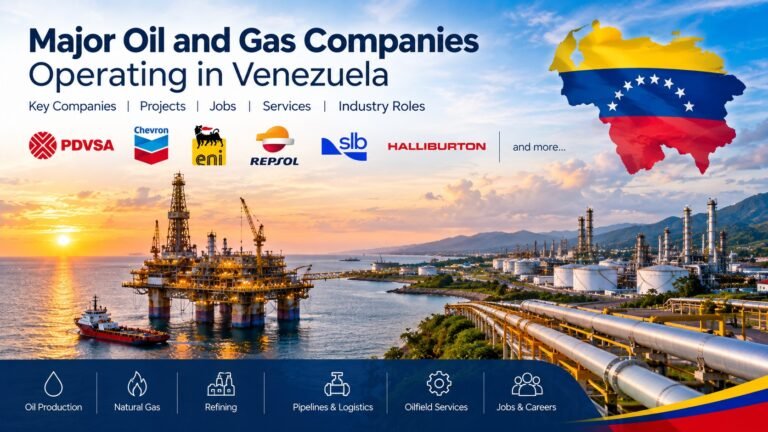
PDVSA, Chevron, Eni, Repsol, and other operators or joint-venture participants may have interests in oil and gas assets. Contractors such as SLB and Halliburton provide specialized services that help those projects operate.
Why Oil and Gas Contractors in Venezuela Matter
The importance of Oil and Gas Contractors in Venezuela comes from the technical nature of the country’s petroleum resources.
Venezuela has some of the world’s largest proven crude oil reserves. The U.S. Energy Information Administration has described most of the country’s proven reserves as extra-heavy crude located in the Orinoco Belt. It has also noted that Venezuela’s energy sector has faced years of limited investment, maintenance problems, infrastructure deterioration, and shortages of technical capacity.
This creates a large need for specialized services.
An oil company may have access to a large field but still need contractors to:
- Repair old equipment
- Drill new wells
- Complete existing wells
- Restore production
- Test reservoirs
- Maintain pumps
- Repair electrical systems
- Improve pipelines
- Upgrade digital systems
- Train workers
- Manage well interventions
In other words, contractors help turn an oil resource into an operating project.
They connect investment with field activity.
The Difference Between Operators and Contractors
A simple way to understand the Venezuelan oil industry is to separate operators from service providers.
An operator is generally responsible for developing and producing an oil or gas asset.
A contractor provides a particular service to support that work.
For example, an operator may decide to drill a new production well.
The operator may then hire several contractors.
One company may provide the drilling rig.
Another may provide drilling fluids.
Another may provide cementing services.
Another may run wireline tools.
Another may provide logging services.
Another may handle well completion.
Another may inspect equipment.
Another may provide transportation.
This means one well can involve many businesses.
The same model applies to production facilities.
A production facility may need mechanical maintenance, electrical work, instrumentation, inspection, cleaning, transportation, engineering, and environmental services.
This is why Oil and Gas Contractors in Venezuela represent a much wider market than drilling companies alone.
Main Types of Oil and Gas Contractors in Venezuela
The contractor market can be divided into several major groups.
Drilling Contractors
Drilling contractors provide rigs, crews, and drilling equipment.
Their work can include:
- Rig operations
- Well construction
- Drilling support
- Rig maintenance
- Well control
- Directional drilling support
- Drilling equipment
Drilling contractors work closely with well engineers and drilling supervisors.
The goal is to build the well safely while meeting the approved design, schedule, cost, and technical requirements.
Oilfield Service Contractors
Oilfield service companies provide specialized technical services.
Examples include:
- Cementing
- Wireline
- Perforating
- Well testing
- Coiled tubing
- Stimulation
- Production services
- Completion services
SLB and Halliburton are major examples of global oilfield service companies with long histories in Venezuela.
Engineering Contractors
Engineering companies help design and improve oil and gas facilities.
They may work on:
- Well design
- Production systems
- Processing plants
- Pipelines
- Electrical systems
- Instrumentation
- Mechanical systems
- Civil works
- Project management
Engineering contractors can work from offices, field bases, or directly at project sites.
Maintenance Contractors
Maintenance companies keep equipment working.
Their services may cover:
- Pumps
- Motors
- Compressors
- Generators
- Valves
- Electrical systems
- Instrumentation
- Production equipment
- Processing equipment
Maintenance becomes especially important when an oil field has older infrastructure.
Logistics Contractors
Oil projects need constant movement of people and materials.
Logistics contractors may provide:
- Trucks
- Warehousing
- Equipment transport
- Personnel transport
- Marine support
- Supply services
- Spare parts movement
A drilling project cannot continue if critical equipment does not reach the wellsite.
Environmental Contractors
Environmental contractors help manage environmental requirements.
Services can include:
- Waste handling
- Spill response
- Environmental monitoring
- Water management
- Site restoration
- Environmental testing
- Emissions monitoring
These services support safe and responsible operations.
Major Oilfield Service Companies in Venezuela
The market for Oil and Gas Contractors in Venezuela includes both international and local businesses.
However, it is important to distinguish between companies with a historical presence, companies with current contracts, companies evaluating opportunities, and companies that may be preparing for greater activity.
SLB in Venezuela
SLB is one of the most important international oilfield service companies connected with Venezuela.
The company has maintained a long presence in the country and announced a framework agreement with PDVSA in June 2026.
The agreement covers a broad range of areas.
These include:
- Exploration
- Field development
- Production
- Digital technology
- Artificial intelligence
- Workforce training
- Local capability
SLB said the agreement is designed to support modernization and revitalization of Venezuela’s oil and gas sector.
The company has also highlighted the role of digital systems and AI-enabled workflows.
This is important because future Oil and Gas Contractors in Venezuela will not only provide physical field services.
They will also provide data systems, digital tools, technical software, automation, and analytical support.
Halliburton in Venezuela
Halliburton has a long history in Venezuela.
In September 2026, Halliburton announced memorandums of understanding with Eneva and WESCA.
The agreement with Eneva is intended to identify and pursue energy development opportunities.
The agreement with WESCA involves field evaluation and development planning, including reservoir understanding and digital technologies.
This shows how the contractor market can expand beyond traditional well services.
A contractor can help with:
- Field evaluation
- Reservoir analysis
- Development planning
- Digital interpretation
- Technical studies
- Project execution
That wider role is likely to become more important as operators examine mature fields and new development opportunities.
Baker Hughes and Venezuela
Baker Hughes has also maintained an interest in the Venezuelan market.
In January 2026, company leadership described Venezuela as a significant potential revenue opportunity while also pointing to safety, employee conditions, and legal and regulatory clarity as important factors. The company said increasing Venezuelan production would require services related to well integrity, power generation, equipment replacement, upgrades, and other oilfield activities.
This illustrates an important point.
The growth of Oil and Gas Contractors in Venezuela depends not only on the amount of oil underground.
It also depends on the conditions under which service companies can operate.
Services Provided by Oil and Gas Contractors in Venezuela
The services offered by contractors cover almost the complete upstream oil and gas process.
Exploration Services
Before drilling begins, companies need to understand the subsurface.
Exploration contractors may provide:
- Geological studies
- Geophysical surveys
- Seismic interpretation
- Reservoir evaluation
- Petrophysical analysis
- Data management
Exploration helps companies decide where to drill.
Modern exploration can involve large amounts of data.
Engineers and geoscientists may combine:
- Well logs
- Seismic data
- Core data
- Pressure data
- Production history
- Reservoir models
Technology contractors can help organize and interpret these datasets.
Drilling Services
Drilling is one of the largest contractor segments.
A drilling project can require many specialist companies.
Services can include:
- Drilling rigs
- Directional drilling
- Mud logging
- Drilling fluids
- Cementing
- Logging while drilling
- Measurement while drilling
- Drill bits
- Well control
- Fishing services
- Inspection
Drilling contractors work under strict safety and technical procedures.
The cost of a drilling project can be high.
A problem that causes downtime can quickly increase the cost.
For this reason, drilling contractors need experienced workers and reliable equipment.
Cementing Services
Cementing is used to secure casing inside a well.
The cement creates a barrier between the casing and surrounding formation.
Contractors may design cement programs based on:
- Well depth
- Pressure
- Temperature
- Formation conditions
- Casing design
- Well type
Cementing also supports well integrity.
Poor cement placement can create serious technical problems.
This makes cementing one of the specialist services provided by Oil and Gas Contractors in Venezuela.
Wireline Services
Wireline is used to collect information from wells and perform certain downhole operations.
Wireline contractors may provide:
- Open-hole logging
- Cased-hole logging
- Formation evaluation
- Production logging
- Perforating
- Well intervention
- Downhole measurements
Wireline equipment can include complex electronic and mechanical systems.
Workers may operate from land rigs, offshore locations, or wellsites.
The work requires technical knowledge and strong safety practices.
Perforating Services
Perforating creates controlled openings through casing and cement so reservoir fluids can enter the well.
Perforating contractors use specialized tools.
The work requires careful planning.
Teams must consider:
- Formation depth
- Pressure
- Well design
- Completion design
- Safety procedures
- Tool selection
Perforating is often connected with wireline and completion operations.
Well Testing Services
Well testing helps engineers understand how a well and reservoir are performing.
Contractors may measure:
- Flow
- Pressure
- Temperature
- Fluid properties
- Production rates
Testing can support decisions about:
- Reservoir performance
- Well productivity
- Completion design
- Field development
- Production forecasts
Good well testing can reduce uncertainty.
Coiled Tubing Services
Coiled tubing involves using a continuous steel tube to perform work inside a well.
It can support:
- Well cleanouts
- Stimulation
- Circulation
- Nitrogen operations
- Production support
- Well intervention
Coiled tubing can allow certain work to be completed without using a conventional workover rig.
This can be valuable for mature fields.
Completion Services
A completion connects the well to the production system.
Completion contractors may work on:
- Completion equipment
- Packers
- Tubing
- Artificial lift
- Sand control
- Downhole valves
- Production systems
The completion design must match the reservoir and expected production conditions.
Heavy oil can create additional challenges.
Artificial Lift Services
Many mature oil wells require artificial lift.
Artificial lift helps move oil from the reservoir to the surface when natural reservoir pressure is not enough.
Common systems include:
- Electric submersible pumps
- Gas lift
- Rod pumps
- Progressive cavity pumps
Contractors may provide equipment, installation, monitoring, repair, and optimization.
For Venezuelan heavy oil fields, artificial lift can be an important part of production management.
Well Intervention Services
Existing wells may need work after they begin producing.
This can happen because of:
- Declining production
- Equipment failure
- Water production
- Sand
- Pressure changes
- Mechanical problems
- Completion issues
Contractors can provide intervention services to restore or improve production.
This can sometimes be more cost-effective than drilling an entirely new well.
Production Optimization
Production contractors help operators improve well performance.
Work may involve:
- Production monitoring
- Artificial lift optimization
- Flow analysis
- Well testing
- Reservoir data
- Equipment checks
- Digital monitoring
The goal is not simply to produce more.
The goal is to produce safely and efficiently while protecting the reservoir and equipment.
Equipment Maintenance Services
Maintenance is one of the largest potential areas for Oil and Gas Contractors in Venezuela.
Venezuela’s oil industry has experienced years of infrastructure and equipment challenges.
Maintenance contractors can support:
- Pumps
- Motors
- Compressors
- Generators
- Turbines
- Electrical equipment
- Valves
- Instrumentation
- Processing equipment
- Pipeline systems
Maintenance can be preventive or corrective.
Preventive maintenance tries to identify problems before failure.
Corrective maintenance repairs equipment after failure.
Both are important in a large oil field.
Mechanical Services
Mechanical contractors may work on:
- Rotating equipment
- Pumps
- Compressors
- Engines
- Valves
- Piping
- Pressure equipment
Mechanical workers need to understand equipment condition and operating limits.
Inspection and maintenance records are also important.
Electrical Services
Oil fields require reliable electricity.
Electrical contractors may maintain:
- Motors
- Generators
- Switchgear
- Transformers
- Electrical panels
- Power distribution systems
- Emergency systems
Power problems can stop production.
That makes electrical reliability an important part of field operations.
Instrumentation Services
Instrumentation systems measure and control processes.
Contractors may work with:
- Pressure sensors
- Temperature sensors
- Flow meters
- Control valves
- Distributed control systems
- Safety systems
Modern oil facilities depend heavily on accurate measurements.
Bad data can lead to poor decisions.
Pipeline Services
Pipelines transport oil and gas from fields to processing facilities, storage areas, refineries, and export terminals.
Pipeline contractors can provide:
- Inspection
- Maintenance
- Repair
- Coating
- Welding
- Leak detection
- Integrity management
- Pump station services
Pipeline integrity becomes especially important for older systems.
The EIA has previously described Venezuela’s pipeline network as aging and noted the added difficulty created by extra-heavy crude.
Refinery Contractor Services
Contractors are also needed downstream.
Refineries require:
- Mechanical maintenance
- Electrical maintenance
- Instrumentation
- Inspection
- Turnaround services
- Welding
- Cleaning
- Process engineering
- Safety support
A refinery turnaround can involve thousands of individual tasks.
Specialist contractors may work for weeks or months during planned maintenance.
Natural Gas Contractor Services
The Venezuelan contractor market also includes natural gas.
Services can include:
- Gas processing
- Compression
- Pipeline construction
- Well services
- Gas measurement
- Gas treatment
- Offshore services
- Engineering
- Maintenance
Venezuela has large natural gas resources, but gas development has historically been limited by infrastructure and investment challenges.
This creates another possible area of growth for contractors.
Offshore Oil and Gas Contractors in Venezuela
Offshore projects require specialized services.
Contractors may provide:
- Offshore drilling
- Marine transportation
- Platform maintenance
- Subsea inspection
- Diving services
- ROV operations
- Pipeline support
- Helicopter logistics
- Emergency response
Offshore operations can be more expensive than land operations.
They also require strict safety planning.
Weather, marine conditions, distance from shore, and emergency response all affect project design.
Heavy Oil Services
Heavy oil is one of the defining technical challenges for Oil and Gas Contractors in Venezuela.
Extra-heavy crude can be difficult to move.
Contractors may therefore provide services related to:
- Dilution
- Heating
- Pumping
- Artificial lift
- Upgrading
- Flow assurance
- Pipeline management
- Reservoir engineering
Heavy oil reservoirs can also require special recovery methods.
The Orinoco Belt therefore creates a large need for technical expertise.
Reservoir Engineering Services
Reservoir contractors help operators understand underground oil and gas.
They may work on:
- Reservoir simulation
- PVT analysis
- SCAL data
- Pressure analysis
- Well testing
- History matching
- Production forecasting
- EOR studies
- Field development plans
Reservoir engineers often work with:
- Geologists
- Geophysicists
- Petrophysicists
- Production engineers
- Drilling engineers
Their work helps operators decide how to develop a field.
Digital Oilfield Services
Digital technology is becoming a larger part of the contractor market.
SLB’s 2026 agreement with PDVSA specifically includes digital enablement and AI-supported workflows.
Digital contractors can provide:
- Data platforms
- Cloud systems
- Artificial intelligence
- Machine learning
- Predictive maintenance
- Digital twins
- Production dashboards
- Remote monitoring
- Automated workflows
Digital systems can help operators manage large amounts of field data.
They can also support faster decision-making.
Artificial Intelligence and Oilfield Contractors
Artificial intelligence may become more important in Venezuelan oil operations.
AI can help with:
- Equipment monitoring
- Production forecasting
- Data analysis
- Reservoir interpretation
- Failure prediction
- Well optimization
But AI does not replace field knowledge.
Oil and gas data can be incomplete or inconsistent.
Engineers still need to check results.
For Oil and Gas Contractors in Venezuela, the most useful approach may be a combination of AI tools and experienced technical workers.
Local Contractors in Venezuela
Local contractors are important because international companies cannot provide every service alone.
Local companies can support:
- Transportation
- Construction
- Maintenance
- Catering
- Security
- Equipment supply
- Warehousing
- Welding
- Fabrication
- Cleaning
- Environmental services
Local contractors also understand regional conditions.
They may have established relationships with workers and suppliers.
They can often respond quickly to local needs.
As oil activity increases, local contractor development could become an important part of the wider supply chain.
International Contractors and Local Partnerships
International service companies often work with local businesses.
This can provide several advantages.
International companies may bring:
- Technology
- Global standards
- Specialized equipment
- Technical training
- Engineering expertise
Local companies may provide:
- Local workers
- Transportation
- Facilities
- Local procurement
- Regional knowledge
- Existing supplier networks
The two sides can complement each other.
This model may become increasingly important as Venezuela’s energy industry develops.
Oil and Gas Contractors in Venezuela and Job Creation
The contractor sector supports many jobs.
These jobs are not limited to petroleum engineers.
Contractor companies can hire:
- Field operators
- Mechanical technicians
- Electrical technicians
- Instrument technicians
- Welders
- Engineers
- Geologists
- Drivers
- HSE professionals
- Warehouse workers
- Logistics specialists
- Project managers
- Administrative staff
Technical positions may require specific certifications.
Engineering positions may require university degrees.
Field jobs may require hands-on experience.
Some international contractors may also require English skills.
Engineering Jobs With Oil and Gas Contractors in Venezuela
Engineers can find opportunities in many contractor businesses.
Common disciplines include:
- Petroleum engineering
- Reservoir engineering
- Drilling engineering
- Production engineering
- Mechanical engineering
- Electrical engineering
- Chemical engineering
- Civil engineering
- Process engineering
- Industrial engineering
Engineering work can involve both office and field activity.
A drilling engineer may prepare well designs.
A production engineer may optimize wells.
A mechanical engineer may work on rotating equipment.
A reservoir engineer may build simulation models.
A process engineer may support a treatment facility.
Technician Jobs With Oil and Gas Contractors in Venezuela
Technicians are essential to field operations.
Typical roles include:
- Mechanical technician
- Electrical technician
- Electronics technician
- Instrument technician
- Maintenance technician
- Laboratory technician
- Equipment technician
Technicians often work directly with field equipment.
They need practical knowledge and strong safety habits.
Many technician roles also require the ability to read technical drawings and follow maintenance procedures.
HSE Jobs With Oil and Gas Contractors in Venezuela
Health, safety, and environmental professionals help protect workers and facilities.
Their responsibilities may include:
- Risk assessments
- Safety inspections
- Permit systems
- Training
- Incident reporting
- Emergency planning
- Environmental monitoring
- Compliance
HSE workers can be involved from the beginning of a project.
They may review work plans before field activity begins.
Project Management Jobs
Project managers coordinate contractors, operators, suppliers, engineers, and workers.
They may manage:
- Cost
- Schedule
- Quality
- Safety
- Procurement
- Contractors
- Equipment
Large energy projects can involve many companies.
Strong project management helps keep everyone working toward the same goal.
Skills Needed by Oil and Gas Contractors in Venezuela
The contractor industry needs a mixture of technical and practical skills.
Important skills include:
- Problem solving
- Equipment knowledge
- Safety awareness
- Communication
- Teamwork
- Computer skills
- Data analysis
- Technical writing
- Leadership
- Planning
- Maintenance
- Field operations
English can also be valuable.
Many international oilfield service companies use English for technical documentation, software, training, and corporate communication.
Certifications for Oil and Gas Contractor Jobs
The exact certification depends on the job.
Some workers may need:
- HSE training
- Well control certification
- First aid
- Equipment certification
- Electrical certification
- Welding qualifications
- Offshore safety training
- Technical licenses
Applicants should always check the employer’s current job description.
A certificate that is useful for one position may not be required for another.
Where Oil and Gas Contractors in Venezuela Operate
Oil and gas activity is spread across several regions.
Zulia
Zulia has a long history of oil production.
Lake Maracaibo and surrounding fields have been important to Venezuela’s petroleum industry for decades.
Contractors in this area may support:
- Well maintenance
- Production
- Drilling
- Equipment repair
- Logistics
- Pipeline operations
Anzoátegui
Anzoátegui is important because of its connection with the Orinoco Belt and major energy infrastructure.
Contractors may support:
- Heavy oil operations
- Production facilities
- Upgrading
- Maintenance
- Transportation
Monagas
Monagas is another major oil-producing state.
Maturín is an important base for oilfield services and technical workers.
Contractors may provide:
- Well services
- Maintenance
- Wireline
- Drilling support
- Engineering
- Production services
Orinoco Belt
The Orinoco Belt is one of the most important regions for heavy oil.
It requires large amounts of specialized technology and field services.
Maturín and Oil and Gas Contractors in Venezuela
Maturín has become an important location for oilfield service activity.
The city supports operations connected with eastern Venezuela and the Orinoco Belt.
A contractor base in Maturín may support:
- Field teams
- Equipment
- Maintenance
- Engineering
- Logistics
- Training
- Technical services
For job seekers, Maturín can therefore be an important location to monitor.
Oil and Gas Contractors in Venezuela and Equipment Supply
Equipment supply is another major part of the contractor market.
Companies may supply:
- Pumps
- Valves
- Compressors
- Motors
- Generators
- Pipes
- Casing
- Tubing
- Drilling equipment
- Safety equipment
- Electrical equipment
- Instrumentation
Spare parts are especially important.
A small missing part can stop a large machine.
For mature oil fields, equipment replacement and repair can be a major need.
Procurement and Supply Chain Services
Procurement contractors help companies obtain equipment and materials.
They may manage:
- Supplier selection
- Purchasing
- Shipping
- Warehousing
- Inventory
- Quality checks
- Documentation
Oil projects can require specialized products that are not available locally.
This makes supply chain planning important.
Oil and Gas Contractors in Venezuela and Maintenance Backlogs
Maintenance backlogs can build when companies do not have enough money, workers, parts, or equipment.
A backlog may include:
- Pump repairs
- Electrical work
- Instrument checks
- Pipeline repairs
- Vehicle maintenance
- Facility inspections
Reducing a backlog can improve reliability.
This is one reason contractor demand can rise when investment returns to a mature oil industry.
Contractors can provide additional workers and specialized skills.
Well Integrity Services
Well integrity is a key part of safe oil production.
Contractors may inspect and maintain:
- Wellheads
- Casing
- Tubing
- Valves
- Barriers
- Pressure systems
Well integrity problems can lead to:
- Production losses
- Safety risks
- Environmental incidents
- Costly repairs
For mature fields, well integrity can become increasingly important.
Oilfield Inspection Services
Inspection contractors check equipment for damage or wear.
Methods may include:
- Visual inspection
- Ultrasonic testing
- Magnetic testing
- Radiography
- Pressure testing
Inspection helps identify problems before failure.
It can also support maintenance planning.
Construction Contractors
New energy projects require construction.
Construction contractors may build:
- Processing facilities
- Pipeline systems
- Storage tanks
- Roads
- Workshops
- Electrical systems
- Buildings
Construction can involve hundreds of workers.
It also creates demand for local materials and services.
Fabrication Contractors
Fabrication companies produce or repair industrial equipment.
They may manufacture:
- Pipe sections
- Steel structures
- Pressure equipment
- Platforms
- Supports
- Tanks
- Mechanical components
Local fabrication capacity can reduce dependence on imported equipment.
Transportation Contractors
Oilfield transportation is different from normal commercial transportation.
Vehicles may need to move:
- Heavy equipment
- Drilling tools
- Chemicals
- Spare parts
- Fuel
- Personnel
Routes can be remote.
Some equipment can be very large.
Planning and safety are important.
Environmental Services
Environmental contractors can support oil projects with:
- Waste treatment
- Spill response
- Soil testing
- Water testing
- Environmental monitoring
- Site cleanup
These services help operators meet environmental requirements.
Security Services
Oil fields can operate in remote areas.
Security contractors may provide:
- Site security
- Personnel protection
- Equipment protection
- Access control
- Emergency support
Security requirements vary by location and project.
Catering and Camp Services
Large field operations can require camps.
Contractors may provide:
- Food
- Cleaning
- Accommodation
- Laundry
- Camp maintenance
These services may seem separate from oil production, but they are essential for remote field teams.
Aviation and Marine Support
Offshore and remote operations may require aviation or marine contractors.
Services can include:
- Helicopters
- Aircraft
- Boats
- Supply vessels
- Crew transportation
- Emergency evacuation
These services support worker safety and logistics.
Challenges for Oil and Gas Contractors in Venezuela
The contractor market has strong potential, but it also faces challenges.
Aging Infrastructure
Older equipment can increase maintenance needs.
Payment Risk
Contractors need clear and reliable payment structures.
Equipment Availability
Some specialized equipment may take time to obtain.
Skilled Labor
Experienced workers may be limited in some technical areas.
Regulatory Conditions
Contractors must understand current legal and licensing requirements.
Safety
Remote and industrial operations require strong safety systems.
Logistics
Moving equipment across large distances can be difficult.
Heavy Oil
Extra-heavy crude creates special production and transportation challenges.
Data Quality
Older fields may have incomplete or fragmented technical records.
Regulation and Oilfield Services
Oilfield contractors operate within a legal and regulatory environment.
This can include:
- Petroleum regulations
- Labor rules
- Environmental rules
- Import requirements
- Tax requirements
- Safety requirements
- Sanctions rules
- Licensing requirements
The rules can change.
This is especially important for international companies.
For example, the U.S. Treasury’s Office of Foreign Assets Control has issued several Venezuela-related general licenses in 2026 covering certain oil and gas activities, investment, services, and transactions. The exact authorization depends on the relevant license, parties, activities, and conditions.
Contractors should therefore obtain appropriate legal and compliance advice before entering or expanding operations.
Why Compliance Matters for Oil and Gas Contractors in Venezuela
Compliance is not only a legal issue.
It can affect:
- Contracts
- Payments
- Equipment imports
- Technology transfers
- Insurance
- Shipping
- Banking
- Joint ventures
International contractors often have their own compliance systems.
Employees may receive training on:
- Anti-corruption
- Sanctions
- Export controls
- Procurement rules
- Safety
- Environmental standards
Strong compliance systems can help reduce business risk.
Oil and Gas Contractors in Venezuela and Technology Transfer
Technology transfer can help strengthen local skills.
A large contractor may bring specialized equipment and software.
Local employees can then receive training.
Over time, this can create a stronger technical workforce.
SLB’s framework agreement with PDVSA specifically includes workforce development and local capability building.
This is important because Venezuela’s energy recovery is not only about restarting equipment.
It is also about rebuilding technical knowledge.
Workforce Training for Oil and Gas Contractors in Venezuela
Training can cover:
- Equipment operation
- Maintenance
- Well control
- HSE
- Digital systems
- Reservoir technology
- Production operations
- Electrical systems
- Instrumentation
Training may happen in:
- Classrooms
- Workshops
- Simulation centers
- Field locations
- Online platforms
Good training reduces errors and improves safety.
Oil and Gas Contractors in Venezuela and Digital Skills
Future contractors will need workers who understand digital tools.
Important skills may include:
- Data analysis
- Cloud systems
- AI tools
- Simulation software
- Equipment monitoring
- Digital reporting
Traditional field knowledge remains important.
The strongest teams may combine both.
A technician who understands equipment and digital monitoring can identify problems faster.
An engineer who understands reservoir simulation and field operations can make better development decisions.
Local Content and Venezuelan Businesses
Local content means using local workers, companies, products, and services.
For Oil and Gas Contractors in Venezuela, local content can create a larger economic benefit.
Local businesses may provide:
- Transport
- Food
- Maintenance
- Construction
- Fabrication
- Logistics
- Technical labor
International contractors can also train local suppliers.
Over time, this can improve local industrial capacity.
How Oil and Gas Contractors in Venezuela Support Operators
Contractors give operators access to specialized resources.
An operator may not want to maintain every specialist capability internally.
Instead, it can hire a contractor when needed.
This can provide:
- Specialized knowledge
- Equipment
- Experienced workers
- Flexible staffing
- New technology
- Faster project execution
The operator can focus on managing the asset while contractors handle specialist activities.
How Contractors Support Mature Oil Fields
Mature fields need different services from new fields.
They may require:
- Workovers
- Artificial lift
- Well testing
- Production optimization
- Equipment repair
- Pipeline maintenance
- Reservoir studies
These activities can help extend field life.
For Venezuela, this may be important because many oil fields have been producing for decades.
Contractors and New Oil Development
New projects require another group of services.
They may need:
- Exploration
- Seismic
- Drilling
- Engineering
- Construction
- Processing
- Pipelines
- Storage
Large development projects can create contracts for many companies.
Chevron’s September 2026 agreements, for example, included plans for more than $7 billion of investment across its Venezuelan joint ventures over five years.
Such investment plans can create demand for contractors, although actual contract awards and project schedules can change.
Oil and Gas Contractors in Venezuela and the Orinoco Belt
The Orinoco Belt is likely to remain one of the largest sources of contractor demand.
Heavy oil development requires specialized systems.
Contractors may support:
- Drilling
- Artificial lift
- Well intervention
- Diluent handling
- Production facilities
- Upgrading
- Pipelines
- Reservoir studies
- Maintenance
Eni’s 2026 Junín 5 agreement also places a major international operator in a heavy oil development in the Orinoco Belt. Under the agreement, Eni became exclusive operator and took responsibility for technical, financial, and commercial management.
More activity in such fields could create work for many contractor categories.
Oil and Gas Contractors in Venezuela and Natural Gas
Gas development can also create new contractor opportunities.
Natural gas projects require:
- Gas processing
- Compression
- Pipelines
- Offshore services
- Engineering
- Maintenance
- Measurement
- Safety systems
Gas projects can be technically different from heavy oil projects.
Workers may need different skills.
This creates a broader market for contractors.
Offshore Contractor Opportunities
Offshore gas development can require large service packages.
Contractors may support:
- Drilling
- Subsea work
- Platform services
- Marine transport
- Inspection
- Pipeline installation
- Maintenance
Offshore work often requires additional certifications.
Workers may need marine or offshore safety training.
Future Demand for Oil and Gas Contractors in Venezuela
The future demand for Oil and Gas Contractors in Venezuela will depend on how quickly energy projects move from announcements to actual field work.
Several factors could increase demand.
More Drilling
New wells require drilling and well services.
More Workovers
Existing wells need maintenance.
Infrastructure Repair
Pipelines and facilities need upgrades.
Production Growth
Higher production requires more services.
Digital Modernization
Older data systems can be upgraded.
Natural Gas Development
Gas projects require specialized contractors.
Refinery Repairs
Downstream projects create additional demand.
What Contractors Should Consider Before Entering Venezuela
Companies considering the market should study several issues.
Legal Conditions
Understand current laws and licenses.
Customer Base
Identify operators and project owners.
Payment Structure
Understand how contracts will be paid.
Equipment
Determine what equipment is available locally.
Local Partners
Find reliable suppliers and service partners.
Workforce
Check the availability of skilled workers.
Safety
Assess field and transportation risks.
Logistics
Plan equipment movement carefully.
Compliance
Review all applicable sanctions and export rules.
These factors can determine whether a project is commercially practical.
How Venezuelan Contractors Can Prepare for Growth
Local contractors can prepare by improving their capabilities.
Useful steps include:
- Upgrade equipment
- Train workers
- Improve HSE systems
- Digitize records
- Build supplier networks
- Obtain certifications
- Improve quality systems
- Develop English skills
- Create strong maintenance programs
Local companies that meet international standards may be better positioned to participate in large projects.
What Oil and Gas Contractors in Venezuela Look for in Workers
Contractors generally need workers who can operate safely and solve problems.
Important qualities include:
- Reliability
- Technical knowledge
- Safety awareness
- Teamwork
- Flexibility
- Communication
- Field experience
For international companies, English may also be important.
Workers may need to understand technical instructions from international teams.
How to Find Oil and Gas Contractor Jobs in Venezuela
Job seekers should monitor official company career pages.
Useful job categories include:
- Field specialist
- Field operator
- Maintenance technician
- Well engineer
- Reservoir engineer
- Drilling engineer
- HSE specialist
- Wireline specialist
- Completion specialist
- Equipment technician
Applicants should keep an updated CV.
The CV should clearly show:
- Education
- Work experience
- Technical skills
- Certifications
- Software knowledge
- Languages
- Field experience
Applicants should also check whether a position requires travel or wellsite work.
What Education Helps With Contractor Careers
Different contractor jobs require different education.
Engineering jobs commonly require degrees in:
- Petroleum engineering
- Mechanical engineering
- Electrical engineering
- Chemical engineering
- Civil engineering
- Geology
- Geophysics
Technician jobs may require:
- Technical diplomas
- Vocational education
- Specialized certifications
Field operator roles may focus more on technical training and experience.
Why Experience Matters
Oilfield work can be complex.
An experienced worker may recognize a problem before it becomes serious.
Experience can help with:
- Equipment faults
- Well conditions
- Safety risks
- Field logistics
- Production problems
This is why many contractor positions ask for several years of industry experience.
Oil and Gas Contractors in Venezuela and Safety Culture
A strong safety culture is essential.
Contractors may have their own safety systems, but they also need to follow the operator’s site requirements.
Workers may participate in:
- Toolbox talks
- Job safety meetings
- Risk assessments
- Permit reviews
- Equipment checks
- Emergency drills
Safety should be part of every job.
Contractor Performance and Service Quality
Operators expect contractors to meet agreed standards.
Performance may be measured through:
- Safety
- Quality
- Cost
- Schedule
- Equipment uptime
- Service delivery
- Production impact
Poor contractor performance can delay a project.
Strong performance can help build long-term relationships.
How Digital Tools May Change Contractor Services
Digital tools can change how contractors work.
For example, a maintenance contractor may monitor equipment remotely.
A reservoir contractor may use cloud-based models.
A drilling contractor may provide real-time drilling data.
A wireline contractor may deliver digital well logs.
A project manager may monitor cost and schedule through a shared platform.
This creates opportunities for technology-focused contractors.
Data Management in Venezuela’s Oil Industry
Data is especially important because oil fields can have decades of technical history.
Information may include:
- Well records
- Production data
- Pressure measurements
- Geological studies
- Seismic information
- Maintenance records
- Equipment history
SLB’s 2026 work with PDVSA places strong emphasis on digital transformation and data-driven workflows.
Better data can help contractors and operators make better decisions.
Oil and Gas Contractors in Venezuela and Artificial Intelligence
AI can help process large datasets.
Possible uses include:
- Production forecasts
- Equipment failure prediction
- Reservoir analysis
- Well optimization
- Document analysis
- Automated reporting
However, AI systems require good data.
Poor data can produce poor results.
Human review remains important.
Environmental Challenges for Contractors
Contractors may encounter environmental risks related to:
- Oil spills
- Gas emissions
- Waste
- Produced water
- Chemicals
- Soil contamination
- Equipment leaks
Contractors should have clear environmental procedures.
They should also train workers to respond to incidents.
Contractors and Energy Efficiency
Energy efficiency can reduce operating costs.
Contractors can help by improving:
- Pump efficiency
- Compressor performance
- Power systems
- Process controls
- Equipment maintenance
Small efficiency improvements can add up across a large field.
Contractors and Production Recovery
Production recovery is one of the biggest goals for Venezuela’s energy sector.
Contractors can support this through:
- Well repairs
- Drilling
- Artificial lift
- Reservoir studies
- Maintenance
- Digital monitoring
- Production optimization
The contractor does not control the entire production system.
But its work can affect the performance of individual wells and facilities.
Oil and Gas Contractors in Venezuela and Investment
Investment creates demand for contractor services.
When an operator approves a new field project, contractors may receive work orders for:
- Engineering
- Drilling
- Equipment
- Construction
- Maintenance
- Transportation
Investment can therefore move through the supply chain.
A major project can support many businesses.
What the Current 2026 Market Shows
The 2026 market provides several examples of renewed contractor activity.
SLB has a framework agreement with PDVSA focused on modernization, field development, production, digital technology, and workforce development.
Halliburton has announced agreements with Eneva and WESCA covering development opportunities, field evaluation, development planning, reservoir understanding, and digital technologies.
Baker Hughes has publicly described Venezuela as a significant potential opportunity while emphasizing the importance of operating conditions and regulatory clarity.
At the same time, Chevron and Eni have announced major investment and development agreements that could increase the need for supporting services.
These developments should be viewed as evidence of activity and planned investment, not as proof that every contractor segment will immediately expand.
The Role of PDVSA in the Contractor Market
PDVSA remains central to Venezuela’s oil industry.
Contractors often depend on operators for:
- Contracts
- Work scopes
- Field access
- Equipment coordination
- Payment
- Project schedules
PDVSA can therefore have a major effect on contractor activity.
When PDVSA increases field work, contractors can see more demand.
When projects are delayed, contractor activity can also slow.
Joint Ventures and Contractor Demand
Joint ventures can create additional contractor opportunities.
International companies may bring capital and technology.
PDVSA provides local infrastructure and operating knowledge.
Contractors then support the joint venture.
This creates a three-part structure.
- Asset owner or state partner
- International operator or partner
- Contractor and supplier network
The contractor network can include hundreds of companies.
Why Contractor Services Are Important for Mature Fields
Mature fields cannot rely only on new drilling.
They need continuous maintenance.
A mature well may need:
- Pump replacement
- Workover
- Logging
- Perforation
- Stimulation
- Pressure testing
- Production optimization
This creates recurring demand for contractors.
For Venezuela, mature-field services could therefore remain important even when large new projects are not being developed.
Oil and Gas Contractors in Venezuela and Long-Term Opportunities
Long-term opportunities may come from several parts of the industry.
Upstream
- Drilling
- Completion
- Workover
- Production
- Reservoir management
Midstream
- Pipelines
- Storage
- Transportation
- Pump stations
Downstream
- Refinery maintenance
- Process engineering
- Equipment repair
- Turnarounds
Gas
- Processing
- Compression
- Offshore services
- Pipelines
Digital
- Data management
- AI
- Automation
- Monitoring
This wide range makes the contractor industry important to the entire energy system.
Frequently Asked Questions About Oil and Gas Contractors in Venezuela
What are Oil and Gas Contractors in Venezuela
Oil and Gas Contractors in Venezuela are companies that provide specialized services, equipment, technology, engineering, maintenance, labor, and technical support to oil and gas operators.
Who are the major oilfield service companies in Venezuela
SLB and Halliburton are major international oilfield service companies with established histories in Venezuela. Baker Hughes has also maintained an interest in the market and has evaluated opportunities connected with future activity. Current contracts and operating status can vary by company and project.
What services do oil and gas contractors provide
Services can include:
- Drilling
- Cementing
- Wireline
- Perforating
- Well testing
- Completions
- Coiled tubing
- Maintenance
- Engineering
- Reservoir studies
- Digital technology
- Logistics
Are oil and gas contractors important for Venezuela
Yes. Contractors provide many of the specialized services required to maintain wells, facilities, pipelines, equipment, and production systems.
Do contractors produce oil
Usually, no.
The operator or joint venture is normally responsible for the asset.
Contractors provide specialized services that support production.
Where do contractors operate in Venezuela
Important oil and gas regions include:
- Zulia
- Anzoátegui
- Monagas
- Orinoco Belt
- Offshore areas
Maturín is also an important base for oilfield service activity.
What jobs are available with oil and gas contractors
Possible jobs include:
- Field specialist
- Field operator
- Engineer
- Technician
- Drilling specialist
- Wireline specialist
- HSE professional
- Maintenance worker
- Project manager
- Logistics specialist
What education is needed
Requirements depend on the position.
Engineering roles usually require a relevant university degree.
Technical roles may require a diploma, vocational qualification, or practical experience.
Is English required
Some international contractor jobs require English.
Other local positions may not.
Applicants should check the specific job description.
Do contractors hire local workers
Yes. Local workers are important in field operations, maintenance, logistics, construction, engineering, and support services.
What is the Orinoco Belt
The Orinoco Belt is a major heavy and extra-heavy oil region in Venezuela.
It is one of the most important areas for future oil development and contractor activity.
Why does heavy oil need specialized contractors
Heavy oil can be difficult to produce and transport.
It may require specialized artificial lift, flow systems, diluent, processing, upgrading, and reservoir techniques.
Are there natural gas contractors in Venezuela
Yes.
Gas projects can require contractors for drilling, processing, compression, pipelines, offshore work, engineering, maintenance, and digital systems.
What is the future of Oil and Gas Contractors in Venezuela
The future depends on investment, project development, operating conditions, infrastructure, regulation, workforce availability, and the ability of operators and contractors to execute projects safely.
Current 2026 agreements involving SLB, Halliburton, Chevron, Eni, and others indicate renewed interest in different parts of Venezuela’s energy sector.
How Oil and Gas Contractors in Venezuela Can Support Energy Recovery
Energy recovery is not a single project.
It is a process.
Old wells need attention.
New wells need drilling.
Facilities need maintenance.
Pipelines need inspection.
Refineries need repairs.
Workers need training.
Data needs to be organized.
Technology needs to be modernized.
This is where Oil and Gas Contractors in Venezuela can play a major role.
Contractors can bring specialist skills to individual problems.
One company may repair a pump.
Another may drill a well.
Another may perform a reservoir study.
Another may install digital monitoring.
Another may transport equipment.
Together, these services support the wider energy system.
The Growing Need for Reliable Maintenance
Maintenance may be one of the most important contractor services in a recovering oil industry.
Production equipment that has been operating for years requires inspection and repair.
A maintenance program may include:
- Scheduled inspections
- Equipment testing
- Spare parts
- Preventive repairs
- Emergency repairs
- Reliability analysis
Good maintenance can reduce unexpected shutdowns.
It can also improve worker safety.
For Oil and Gas Contractors in Venezuela, maintenance therefore offers both immediate and long-term opportunities.
The Importance of Local Technical Expertise
Venezuela has a large history of petroleum production.
Experienced local workers can understand field conditions that cannot always be learned from a manual.
Local technical knowledge can help with:
- Equipment
- Wells
- Infrastructure
- Logistics
- Suppliers
- Field conditions
International contractors can combine this local knowledge with modern technology and global experience.
That combination can be valuable for future projects.
Building a Stronger Contractor Supply Chain
A stronger supply chain can support higher production.
The supply chain needs reliable:
- Equipment
- Parts
- Transport
- Warehousing
- Engineering
- Maintenance
- Skilled workers
If one part fails, the whole project can slow.
For example, a drilling program may have a rig available but still wait for a critical component.
A production facility may have workers but lack a replacement pump.
A refinery may have a maintenance plan but lack a specialized valve.
Contractor coordination can help reduce these delays.
The Role of Quality Management
Oil and gas equipment must meet technical standards.
Quality management helps ensure that:
- Parts meet specifications
- Work is documented
- Equipment is inspected
- Procedures are followed
- Repairs are verified
Quality systems are especially important for critical equipment.
Poor-quality work can lead to equipment failure or safety problems.
The Role of HSE Management
HSE remains one of the most important areas for Oil and Gas Contractors in Venezuela.
Contractor employees may work around:
- High pressure
- Heavy equipment
- Flammable fluids
- Chemicals
- Electrical systems
- Remote locations
Good HSE systems can reduce risk.
Workers should understand the hazards before starting a task.
Contractors and Emergency Response
Oil and gas projects need emergency plans.
Contractors may support:
- Fire response
- Spill response
- Medical evacuation
- Equipment recovery
- Well control
- Emergency repairs
Emergency response capability is particularly important in remote locations.
The Future of Oilfield Technology in Venezuela
Technology will likely play a growing role.
Future projects may use:
- AI
- Cloud computing
- Digital twins
- Remote operations
- Automated equipment
- Advanced sensors
- Predictive maintenance
SLB’s agreement with PDVSA specifically points toward digital transformation and AI-enabled workflows.
This suggests that the future contractor market will involve both physical field services and digital technology.
Oil and Gas Contractors in Venezuela and Sustainability
Sustainability is becoming more important in energy projects.
Contractors may help reduce environmental impact through:
- Leak detection
- Energy efficiency
- Waste reduction
- Better equipment
- Emissions monitoring
- Water management
Sustainability does not remove the need for oil and gas.
Instead, it focuses on how energy is produced and managed.
The Link Between Contractors and Production Growth
Production growth requires more than drilling.
A new well needs:
- Drilling
- Completion
- Production equipment
- Gathering
- Processing
- Transportation
An existing well may need:
- Workover
- Artificial lift
- Testing
- Maintenance
A field may need:
- Reservoir studies
- Infrastructure
- Power
- Pipelines
Contractors support all of these areas.
That is why Oil and Gas Contractors in Venezuela are closely connected with production growth.
What Could Slow Contractor Growth
Not every announced project will move at the same speed.
Potential obstacles include:
- Financing
- Equipment availability
- Regulatory changes
- Contract negotiations
- Infrastructure problems
- Skilled labor shortages
- Safety concerns
- Logistics
- Market conditions
Contractor companies therefore need flexible plans.
What Could Increase Contractor Growth
Growth could be supported by:
- More drilling
- More workovers
- Higher production
- Infrastructure investment
- Refinery repairs
- Gas development
- Digital modernization
- Local supplier development
Several of these areas are already appearing in 2026 company announcements.
Oil and Gas Contractors in Venezuela and the Global Energy Market
Venezuela is connected to global energy markets.
Higher Venezuelan production can create more demand for:
- Oilfield equipment
- Drilling services
- Reservoir technology
- Heavy oil technology
- Refining services
- Transportation
International contractors can therefore become part of Venezuela’s connection to the wider oil market.
Why the Contractor Market Deserves Attention
Venezuela’s energy story is often told through oil reserves and production.
But the contractor market tells another part of the story.
Oil does not move from a reservoir to a refinery by itself.
People and equipment are required at every stage.
Contractors provide that support.
They are the technical workforce behind many oilfield activities.
They maintain machines.
They repair wells.
They analyze reservoirs.
They drill.
They test.
They transport.
They inspect.
They build.
They digitize.
This makes the contractor sector one of the most important supporting parts of the energy industry.
Final Thoughts on Oil and Gas Contractors in Venezuela
Oil and Gas Contractors in Venezuela are an essential part of the country’s petroleum system.
They support operators through drilling, well completion, maintenance, engineering, production optimization, reservoir analysis, digital technology, logistics, construction, inspection, and environmental services.
The contractor market includes large international oilfield service companies as well as local suppliers and specialized businesses.
SLB’s 2026 framework agreement with PDVSA shows the growing importance of technology, digital systems, AI, field development, and workforce training. Halliburton’s 2026 agreements with Eneva and WESCA show another path, with contractor services connected to field evaluation, development planning, reservoir understanding, and digital technologies.
At the same time, Baker Hughes has described Venezuela as a significant potential market while stressing the importance of safety and clear legal and regulatory conditions.
The wider oil industry is also seeing major project announcements.
Chevron announced updated terms for its Venezuelan joint ventures and plans for more than $7 billion of investment over five years, while Eni became exclusive operator of the Junín 5 project under a new 25-year agreement.
These developments could increase demand for contractors, but the exact size and timing of that demand will depend on project execution, contracts, regulations, financing, infrastructure, and operating conditions.
The biggest opportunity may not come from one service.
It may come from the full contractor ecosystem.
Venezuela needs drilling.
It needs well maintenance.
It needs equipment.
It needs engineering.
It needs digital systems.
It needs reliable pipelines.
It needs skilled workers.
It needs safe operations.
It needs better data.
It needs local suppliers.
Each of these needs creates space for contractors.
For workers, the contractor industry can offer careers across engineering, field operations, maintenance, HSE, logistics, technology, and project management.
For local businesses, it can create opportunities to supply equipment and services.
For international service companies, it can provide access to a large but technically demanding petroleum market.
For operators, contractors can provide the specialist skills needed to develop and maintain oil and gas assets.
The future of Oil and Gas Contractors in Venezuela will therefore be closely linked to the future of Venezuela’s energy industry itself.
If investment increases, contractor demand can expand.
If production grows, more wells and facilities will require services.
If digital modernization continues, technology contractors can gain a larger role.
If mature fields receive more attention, workover, maintenance, artificial lift, reservoir engineering, and production optimization can become more important.
If natural gas projects advance, offshore, processing, compression, pipeline, and gas-service contractors may see new opportunities.
The contractor industry is therefore more than a supporting business.
It is part of the machinery that allows the energy sector to function.
Venezuela’s resource base provides the starting point.
Operators provide project direction.
Contractors provide specialized execution.
Workers provide technical knowledge.
Local suppliers provide regional support.
Technology provides new tools.
Together, these parts can determine how effectively Venezuela turns its large hydrocarbon resources into safe, reliable, and economically useful energy production.