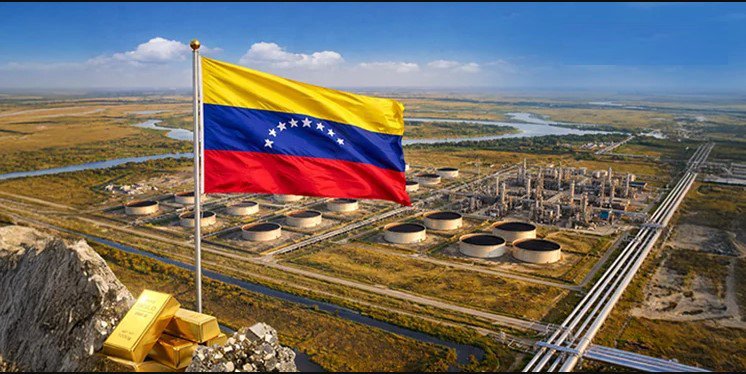
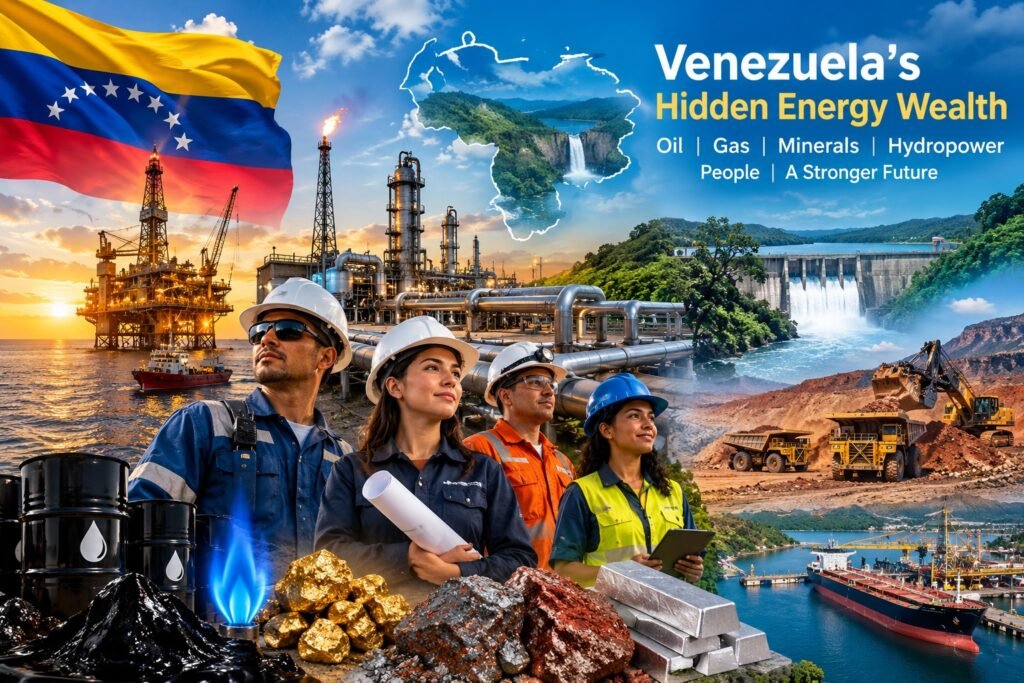
Venezuela has one of the largest natural resource bases in the world. The country is best known for its huge oil reserves, but its natural wealth goes much further. Venezuela also has major natural gas reserves, gold, iron ore, bauxite, aluminum, hydropower, and other mineral resources.
This combination gives Venezuela an unusual position in the global energy and resource market. Its underground resources are large enough to support oil production, gas development, mining, power generation, refining, manufacturing, and other industries.
Yet having large reserves does not automatically create economic wealth. Resources must be developed, transported, processed, and sold. That requires infrastructure, investment, technology, skilled workers, reliable electricity, and access to markets.
This is the broader meaning of Venezuela’s Hidden Energy Wealth. The wealth is not hidden because nobody knows the resources exist. It is hidden in the sense that a large part of the country’s potential value remains dependent on future development.
Understanding Venezuela’s Hidden Energy Wealth
Venezuela’s Hidden Energy Wealth begins with geology. Over millions of years, geological processes created large petroleum systems and mineral deposits across different parts of the country.
Oil is the largest part of this resource base. Natural gas is another major resource. Minerals add an important industrial dimension, while hydropower provides a major source of electricity.
These resources are also spread across different regions. The Orinoco area is especially important for heavy oil. The Guayana region is known for iron ore, gold, bauxite, aluminum, and hydropower. Offshore areas provide additional natural gas opportunities.
The main resource groups include:
- Crude oil and heavy oil
- Natural gas
- Gold
- Iron ore
- Bauxite and aluminum
- Hydropower
- Other industrial minerals
Each resource needs a different development system. Oil needs wells, gathering systems, pipelines, storage, and refineries. Gas needs processing plants and pipelines. Mining needs roads, railways, electricity, processing facilities, and ports.
That is why Venezuela’s Hidden Energy Wealth is not simply a story about what lies underground. It is also a story about the systems needed to bring those resources into the economy.
Venezuela’s Hidden Energy Wealth and Oil Reserves
Oil sits at the centre of Venezuela’s Hidden Energy Wealth.
The U.S. Energy Information Administration reported that Venezuela had about 303 billion barrels of proven crude oil reserves in 2023. EIA also described Venezuela as having the world’s largest proven crude oil reserves at that time. OPEC later reported about 303.221 billion barrels of proven crude oil reserves at the end of 2024.
These numbers are extremely large, but reserve size should not be confused with production.
Reserves describe oil classified as economically recoverable under defined conditions. Production measures how much oil is actually being produced during a particular period.
A country can therefore have enormous reserves while producing much less oil each day.
That distinction is important when looking at Venezuela’s Hidden Energy Wealth. Venezuela has a very large reserve base, but turning that base into stable production requires functioning wells, equipment, pipelines, processing facilities, skilled workers, and investment.
Why Venezuela Has So Much Oil
Venezuela’s oil wealth comes from its geological history.
For millions of years, organic material accumulated in sedimentary environments. Heat and pressure changed this material into hydrocarbons. Geological structures then trapped the oil underground.
Over long periods, large petroleum systems developed.
The result is a huge petroleum resource base.
Geology, however, is only the first step. Extracting oil requires modern wells and production equipment. Transporting it requires pipelines and storage. Processing it requires refineries or other facilities that can handle the crude.
This is especially important for Venezuela because much of its oil is heavy or extra-heavy.
Venezuela’s Hidden Energy Wealth in the Orinoco Oil Belt
The Orinoco Oil Belt is one of the most important parts of Venezuela’s Hidden Energy Wealth.
The region contains enormous quantities of heavy and extra-heavy crude. The U.S. Geological Survey assessed the Orinoco Oil Belt as covering about 50,000 square kilometres of the East Venezuela Basin Province.
USGS estimated more than 1 trillion barrels of heavy oil in place within the assessment area. Its mean estimate for technically recoverable heavy oil was 513 billion barrels, with a range of 380 to 652 billion barrels.
These figures describe different resource categories. Heavy oil in place is not the same as technically recoverable oil. Technically recoverable oil is also not automatically the same as proved reserves.
That distinction matters.
The Orinoco Belt shows the extraordinary geological scale of Venezuela’s petroleum resources. It also shows why technology is so important to Venezuela’s Hidden Energy Wealth.
Heavy Oil and Venezuela’s Hidden Energy Wealth
Heavy oil is different from lighter crude.
It is thicker and usually more difficult to produce and transport. Some heavy crude may need dilution, blending, or upgrading before it can move efficiently through pipelines or enter certain refineries.
This creates additional technical requirements.
Heavy oil development can require:
- Specialized wells and pumps
- Gathering systems
- Diluent supplies
- Pipelines
- Storage facilities
- Upgrading capacity
- Suitable refining capacity
These parts must work together.
If pipelines are unavailable, production can be limited. If processing capacity is weak, crude may become harder to market. If equipment is not maintained, wells can lose output.
For this reason, heavy oil technology is a major part of Venezuela’s Hidden Energy Wealth.
Venezuela’s Hidden Energy Wealth and Oil Production
Venezuela’s production history shows why reserve numbers should be interpreted carefully.
The country has an enormous reserve base, but production has been much lower than the size of those reserves might suggest.
Production depends on many factors. Mature fields require maintenance. Wells need work. Pumps and other equipment must be replaced. Pipelines need inspection and repair. Processing facilities need reliable operations.
Investment is another important factor.
Large oil projects can require significant capital over many years. Heavy oil projects can require additional equipment and infrastructure.
Skilled workers are also essential. Engineers, geologists, technicians, operators, electricians, mechanics, and other specialists are needed across the production system.
The future of Venezuela’s Hidden Energy Wealth therefore depends partly on the ability to maintain and improve the systems that support production.
Venezuela’s Hidden Energy Wealth and Oil Infrastructure
Infrastructure connects the oil field with the final customer.
A functioning oil system needs gathering pipelines, long-distance pipelines, pumping stations, storage tanks, terminals, refineries, and other facilities.
The U.S. Energy Information Administration has identified Venezuela’s oil infrastructure as a major part of the country’s petroleum system.
Each part has a different purpose. Gathering systems move crude from wells. Pipelines transport it over longer distances. Storage provides flexibility. Refineries convert crude into useful products.
When these systems work together, underground resources can become commercial products.
When one part fails, the entire chain can be affected.
That is why infrastructure is one of the foundations of Venezuela’s Hidden Energy Wealth.
Venezuela’s Hidden Energy Wealth and Oil Refining
Crude oil becomes more useful after refining.
Refineries can produce gasoline, diesel, jet fuel, fuel oil, asphalt, and other petroleum products.
Venezuela has a long history of refining crude oil. Its refining system was built around its large petroleum industry.
But refinery capacity is not the same as refinery output.
Refineries require maintenance, spare parts, electricity, trained workers, and suitable crude feedstock. Heavy Venezuelan crude can also create additional processing requirements.
This means refining is a major part of Venezuela’s Hidden Energy Wealth.
The country can have huge reserves, but the economic value of those reserves depends partly on the ability to process the crude into products that customers need.
Venezuela’s Hidden Energy Wealth and Oil Exports
Oil has historically played a major role in Venezuela’s exports.
The U.S. Geological Survey reported that crude petroleum represented about 80% of Venezuela’s total exports in 2024.
This shows how closely the country’s international trade is connected to hydrocarbons.
Oil exports can generate foreign exchange and support many related businesses. Transport companies, service providers, equipment suppliers, ports, refineries, and other industries can all be connected to the petroleum sector.
At the same time, heavy reliance on one major export creates exposure to changes in production and international prices.
This is one reason diversification is important when discussing Venezuela’s Hidden Energy Wealth.
Venezuela’s Hidden Energy Wealth and Natural Gas
Natural gas is another major part of Venezuela’s Hidden Energy Wealth.
The EIA reported about 195 trillion cubic feet of natural gas reserves in Venezuela in 2023. It also reported that Venezuela held about 73% of South America’s natural gas reserves at that time.
Natural gas can support several parts of the economy.
It can be used for electricity generation, industrial heating, fertilizer production, petrochemicals, oil-field operations, and domestic energy supply.
This makes gas valuable even when it is not exported.
The main challenge is moving gas from the reservoir to the customer.
Venezuela’s Hidden Energy Wealth and Associated Gas
A large share of Venezuela’s natural gas is associated with crude oil.
Associated gas is produced together with oil. The EIA reported that around 80% of Venezuela’s produced natural gas was associated gas. It also reported that around 30% of natural gas production was reinjected into oil fields to help support crude production.
This creates a strong connection between the oil and gas industries.
Gas can be reinjected to support oil production. It can also be processed for domestic use, electricity generation, industrial applications, or other markets.
Better use of associated gas could therefore increase the practical value of Venezuela’s Hidden Energy Wealth.
Venezuela’s Hidden Energy Wealth and Gas Infrastructure
Gas needs its own infrastructure.
Gathering pipelines move gas from production areas. Processing plants remove unwanted components. Compression systems maintain pressure. Transmission pipelines move gas to larger markets.
The EIA has identified infrastructure limitations as an important challenge for Venezuela’s natural gas sector, including limitations involving storage, distribution, and reinjection.
The main infrastructure needs include:
- Gathering pipelines
- Processing plants
- Compression stations
- Transmission pipelines
- Storage systems
- Distribution networks
Without these systems, large gas reserves can remain underused.
Venezuela’s Hidden Energy Wealth and Offshore Gas
Venezuela also has offshore natural gas opportunities.
Offshore development can open new sources of supply and create opportunities for regional trade. But these projects can be technically demanding.
They may require offshore drilling equipment, subsea systems, pipelines, support vessels, specialized workers, and large amounts of capital.
The Cocuina-Manakin project is one example. Reuters reported in 2024 that Venezuela granted BP and Trinidad and Tobago’s National Gas Company a 20-year license to jointly develop the offshore field. Reuters reported an estimated 1 trillion cubic feet of proven reserves on the Venezuelan side.
Offshore gas could therefore become another part of Venezuela’s Hidden Energy Wealth, although development depends on investment, infrastructure, commercial agreements, and market conditions.
Venezuela’s Hidden Energy Wealth and Mineral Resources
Venezuela’s natural wealth extends far beyond hydrocarbons.
USGS reported production of several mineral commodities in 2024, including gold, iron ore, bauxite, aluminum, steel, phosphate rock, cement, clay, lead, lime, and ammonia.
These resources serve different industries.
Iron ore supports steel production. Bauxite supports aluminum production. Phosphate rock can support fertilizer production. Construction minerals support buildings and infrastructure.
Gold has a different role because it is both an industrial and financial commodity.
Together, these resources add another layer to Venezuela’s Hidden Energy Wealth.
Venezuela’s Hidden Energy Wealth and Gold
Gold has an important place in Venezuela’s mineral sector.
The Guayana region is particularly important for gold mining.
USGS estimated Venezuelan mine gold production at about 30,600 kilograms in 2024. The agency reported that gold was produced by artisanal and small-scale miners as well as government-owned companies.
Gold mining can support local employment and businesses.
It also requires careful management.
Water, forests, land, worker safety, and waste are important concerns in mining areas. Long-term value depends not only on how much gold is produced, but also on how mining affects surrounding communities and environments.
Venezuela’s Hidden Energy Wealth and Iron Ore
Iron ore is another important mineral resource.
It is the main raw material used to make iron and steel. Steel is essential for buildings, bridges, transport systems, machinery, pipelines, and many industrial products.
USGS estimated Venezuelan iron ore mine production at about 2.4 million metric tons in 2024.
The value of iron ore can increase when more processing takes place domestically.
The industrial chain can include mining, crushing, processing, iron production, steel production, and manufacturing.
Each stage can create additional economic activity.
Venezuela’s Hidden Energy Wealth and Bauxite
Bauxite is the main ore used to produce aluminum.
Aluminum is used in transportation, construction, electrical equipment, packaging, and manufacturing.
Venezuela has an established bauxite and aluminum industry. USGS reported estimated Venezuelan bauxite production of 250,000 metric tons in 2024 and primary aluminum production of about 8,000 metric tons. The agency also reported that the Bauxilum alumina refinery became nonoperational in November 2024 after a breakdown.
This example shows the difference between resources and production.
Bauxite can exist underground, but the industry also needs functioning refineries, electricity, equipment, workers, and transport.
Venezuela’s Hidden Energy Wealth and Hydropower
Energy wealth is not limited to fossil fuels.
Venezuela has major hydropower resources, supported by its large river systems.
Hydropower can provide electricity for homes, businesses, mines, factories, and energy-intensive industries.
This is particularly important for industrial activity in the Guayana region.
The relationship is straightforward. Reliable electricity supports factories. Factories create products. Products create jobs and economic activity.
Hydropower is therefore an important part of Venezuela’s Hidden Energy Wealth.
Venezuela’s Hidden Energy Wealth and the Guayana Region
The Guayana region brings several resources together.
It has important deposits of iron ore, gold, and bauxite. It also has major hydropower resources and industries connected to aluminum and steel.
This creates the possibility of an integrated industrial system.
Energy can support mining. Mining can supply raw materials. Processing can create industrial products. Manufacturing can add further value.
The region therefore shows how different parts of Venezuela’s Hidden Energy Wealth can connect with one another.
Venezuela’s Hidden Energy Wealth and Industrial Development
Natural resources become more valuable when they support wider industries.
Oil can support refining and petrochemicals. Gas can support electricity, fertilizer, and industrial production. Iron ore can support steel. Bauxite can support aluminum.
Electricity connects many of these industries.
This creates an economic network rather than a single commodity chain.
Industrial development can also create more types of employment. A mine needs workers, but it also needs transport companies, equipment suppliers, mechanics, engineers, electricians, and service businesses.
This wider activity is an important part of Venezuela’s Hidden Energy Wealth.
Venezuela’s Hidden Energy Wealth and Petrochemicals
Oil and gas can be used as industrial feedstocks, not only as fuels.
Petrochemicals support products such as plastics, fertilizers, solvents, synthetic materials, and many industrial chemicals.
This creates another way to use Venezuela’s hydrocarbon resources.
A strong petrochemical sector can add value before products reach international markets.
It can also create connections between energy production, manufacturing, agriculture, transport, and consumer industries.
Venezuela’s Hidden Energy Wealth and Fertilizer
Natural gas can also support fertilizer production.
Gas can provide feedstock for ammonia. Ammonia can then be used in nitrogen fertilizers.
This creates a direct link between the energy sector and agriculture.
The basic chain is simple:
- Natural gas provides feedstock.
- Industrial plants produce ammonia.
- Fertilizer supports agriculture.
- Agriculture supports food production.
USGS reported ammonia production in Venezuela in 2024.
This shows how natural gas can support economic activity outside the traditional fuel market.
Venezuela’s Hidden Energy Wealth and Employment
The value of natural resources is not measured only in barrels, cubic feet, or tonnes.
Resource industries create employment across many levels of the economy. Oil and gas companies need technical staff. Mines need operators and engineers. Factories need workers. Transport companies need drivers. Local businesses provide goods and services.
A large resource project can therefore affect many businesses that are not directly involved in extraction.
The people who work across these industries are an important part of Venezuela’s Hidden Energy Wealth.
Venezuela’s Hidden Energy Wealth and Local Communities
Resource projects can have a major effect on nearby communities.
They can create jobs and increase demand for local services. Roads, electricity, water systems, and other infrastructure may also improve when development expands.
But resource projects can also create pressure on land and water.
This means communities need to be considered in development planning.
Important priorities include:
- Worker safety
- Clean water
- Environmental protection
- Local employment
- Community consultation
- Reliable public services
The long-term value of a resource project depends partly on how well it fits into the surrounding community.
Venezuela’s Hidden Energy Wealth and the Environment
Natural resources can create economic benefits, but development can also create environmental risks.
Oil production requires spill prevention and waste management. Gas projects require emissions management. Mining requires careful treatment of land, water, and waste. Hydropower projects require environmental planning.
Good resource development therefore needs monitoring and clear environmental standards.
This is especially important because Venezuela’s resources are a long-term asset.
Protecting land and water helps protect the country’s ability to benefit from its resources in the future.
Venezuela’s Hidden Energy Wealth and Infrastructure
Infrastructure connects almost every part of the resource economy.
Oil needs pipelines. Gas needs pipelines. Mines need roads and railways. Factories need electricity. Exports need ports and terminals. Workers need transport.
The EIA has identified infrastructure limitations as an important challenge for Venezuela’s oil and gas sectors.
Infrastructure is therefore more than a supporting service.
It is part of the resource system itself.
A large oil field has limited commercial value if crude cannot be transported. A gas field has limited value if customers cannot receive the gas. A mine needs transport before its products can reach a processing plant or port.
This is why infrastructure is central to Venezuela’s Hidden Energy Wealth.
Venezuela’s Hidden Energy Wealth and Investment
Large resource projects require long-term investment.
Oil fields need drilling programs and equipment. Gas projects need pipelines and processing facilities. Mines need machinery and transport. Refineries need maintenance and modernization. Power systems need generation and transmission investment.
Investment decisions depend on many factors.
Companies consider production costs, market access, infrastructure, technology, regulations, and expected returns.
The size of Venezuela’s resource base is therefore only one part of the investment question.
Venezuela’s Hidden Energy Wealth and Technology
Technology can help turn resources into production.
Modern drilling can improve well performance. Digital systems can monitor equipment. Better recovery methods can increase oil output. Improved gas processing can increase usable supply. Modern mining equipment can improve productivity.
Technology can also improve safety and environmental monitoring.
For Venezuela, this means technology can help unlock parts of Venezuela’s Hidden Energy Wealth that are technically difficult or expensive to develop.
Venezuela’s Hidden Energy Wealth and Skilled Workers
Technology needs people.
Oil and gas operations require engineers, geologists, technicians, operators, electricians, mechanics, and safety specialists.
Mining and manufacturing need many of the same technical skills.
Training is therefore a long-term part of resource development.
A modern resource economy cannot depend only on machines and capital. It also needs people who understand how complex systems work.
Venezuela’s Hidden Energy Wealth and Foreign Partnerships
Large energy and mining projects can involve international partnerships.
Foreign companies can provide capital, technology, equipment, project experience, and access to international markets.
Domestic companies and workers can provide local knowledge and services.
Partnerships can therefore combine different strengths.
However, major projects also require clear commercial terms, technical standards, environmental rules, and long-term planning.
The success of a project depends on whether the complete system is workable.
Venezuela’s Hidden Energy Wealth and Energy Security
Energy security means having reliable access to energy.
Venezuela has the natural resources needed to support a large energy system. But resources alone do not guarantee reliable supply.
Oil must be produced and refined. Gas must be processed and transported. Electricity must be generated and transmitted. Fuel must reach consumers.
This is why energy security depends on infrastructure as much as reserves.
Venezuela’s Hidden Energy Wealth and the Future of Oil
Oil will remain an important part of Venezuela’s resource economy.
The reserve base is extremely large, especially in the Orinoco Belt. However, future development will take place in a changing global energy market.
Electric vehicles are expanding. Renewable energy is growing. Energy efficiency is improving.
Oil will still have important uses in transportation, chemicals, manufacturing, aviation, and other sectors.
For Venezuela, the challenge is to make effective use of its existing oil resources while preparing for changes in global demand.
Venezuela’s Hidden Energy Wealth and the Future of Natural Gas
Natural gas could become a larger part of Venezuela’s energy system.
The country has a very large reserve base, but infrastructure and investment remain important factors.
Better gas systems could support electricity generation, industry, fertilizer production, petrochemicals, and regional trade.
Offshore projects could also create new opportunities.
The future of Venezuelan gas will depend on whether these resources can be connected to customers through reliable infrastructure.
Venezuela’s Hidden Energy Wealth and the Energy Transition
The global energy system is becoming more diverse.
Solar power is expanding. Wind power is expanding. Electric vehicles are becoming more common. Battery technology is developing.
These changes do not remove the importance of oil and gas overnight.
Oil remains important for many industrial and transport uses. Natural gas remains important in electricity and industry in many markets.
Venezuela therefore has an opportunity to use its existing resources while also preparing for a more diverse energy system.
Venezuela’s Hidden Energy Wealth and Renewable Energy
Venezuela already has major hydropower resources.
It also has opportunities for solar and wind development in suitable areas.
Renewable energy can add diversity to the power system. It can also support remote communities and reduce pressure on conventional fuels in some applications.
A broader energy system could combine:
- Hydropower
- Natural gas
- Oil
- Solar power
- Wind power
- Energy efficiency
This could make Venezuela’s Hidden Energy Wealth more diverse and resilient.
Venezuela’s Hidden Energy Wealth and Electricity
Electricity is a common requirement across many industries.
Oil production needs power. Gas processing needs power. Mining needs power. Aluminum production needs large amounts of electricity. Steel production also depends on reliable energy.
This means the electricity system affects the wider resource economy.
Venezuela’s hydropower resources provide an important foundation, but power plants and transmission networks require maintenance and investment.
Reliable electricity can therefore increase the value of other natural resources.
Venezuela’s Hidden Energy Wealth and Economic Diversification
Resource-rich economies can become heavily dependent on one major commodity.
Venezuela has historically relied heavily on oil.
Diversification can create additional sources of economic activity.
Natural gas can support industry. Mining can support manufacturing. Petrochemicals can create processed products. Agriculture and services can add further economic activity.
The goal does not have to be abandoning oil.
It can mean building more industries around and beyond the country’s petroleum sector.
Venezuela’s Hidden Energy Wealth and Mineral Processing
Processing minerals domestically can create more value than exporting raw material alone.
Iron ore can become steel. Bauxite can become alumina and aluminum. Phosphate rock can support fertilizer production.
Processing also creates demand for electricity, transport, equipment, and skilled labor.
However, processing plants need reliable operations.
The Bauxilum refinery example shows this clearly. USGS reported that the alumina refinery became nonoperational after a breakdown in 2024.
The resource existed, but the processing system faced a major operational problem.
This is another example of why resources and production should not be treated as the same thing.
Venezuela’s Hidden Energy Wealth and Manufacturing
Manufacturing can increase the value of natural resources.
Steel can become construction products and machinery. Aluminum can become finished components. Petrochemicals can become plastics and chemicals.
This creates more economic activity and can create more skilled jobs.
A stronger manufacturing base can also reduce reliance on exporting raw materials.
For Venezuela, this is another possible pathway for turning Venezuela’s Hidden Energy Wealth into broader economic value.
Venezuela’s Hidden Energy Wealth and Export Opportunities
Oil remains Venezuela’s main export resource.
Natural gas could become more important.
Minerals can also support exports.
Processed products could create additional opportunities.
But export growth requires more than resources.
It requires reliable production, transportation, ports, storage, commercial partners, and access to international markets.
A resource cannot become a successful export simply because it exists underground.
The supply chain has to work.
Venezuela’s Hidden Energy Wealth and Global Markets
Venezuela’s resources compete in global markets.
Oil buyers consider crude quality, price, transportation costs, and refinery requirements.
Gas projects depend on regional demand and infrastructure.
Mineral exports depend on international industrial demand and commodity prices.
This means the market value of Venezuela’s resources can change over time.
The resource base provides the foundation, but global conditions influence the commercial opportunity.
Venezuela’s Hidden Energy Wealth and Oil Quality
Crude oil differs from one field to another.
Some crude is light. Some is heavy. Sulfur levels can also vary.
Heavy crude can require more complex processing and transportation systems.
This matters because much of Venezuela’s oil reserve base is extra-heavy crude associated with the Orinoco Belt.
Oil quality therefore affects production costs, transportation, refining requirements, and market access.
It is another important part of Venezuela’s Hidden Energy Wealth.
Venezuela’s Hidden Energy Wealth and Domestic Fuel
Venezuela’s oil resources can support domestic fuel production.
Refineries can produce gasoline, diesel, jet fuel, and other petroleum products.
These fuels support everyday economic activity.
Cars need gasoline. Trucks need diesel. Aircraft need jet fuel. Factories need energy. Agriculture also depends on fuel for machinery and transportation.
This creates a direct connection between petroleum resources and daily life.
Venezuela’s Hidden Energy Wealth and the Cost of Development
Resource development can be expensive.
Oil projects need drilling equipment. Gas projects may require offshore infrastructure. Mines need machinery and transport. Refineries may require major repairs.
These costs affect whether a project can be developed commercially.
A resource can be technically recoverable but still expensive to produce.
Market prices can also change.
Technology can change.
Operating costs can change.
This is why the amount of oil, gas, or minerals underground does not tell us exactly how much will be produced in the future.
Venezuela’s Hidden Energy Wealth and Long-Term Planning
Large resource projects often operate for many years.
Oil fields can produce for decades. Mines can have long operating lives. Gas pipelines and power facilities can also serve markets for many years.
Long-term planning is therefore important.
Planning should consider production, infrastructure, markets, environmental impacts, worker skills, and technology.
Decisions made today can affect future workers and communities.
Venezuela’s Hidden Energy Wealth and Resource Management
Resource management is more than extraction.
It includes decisions about production, infrastructure, investment, environmental protection, worker safety, and long-term economic value.
A large reserve base creates an opportunity.
But that opportunity must be managed carefully.
Resources can support development for many years when production and investment are planned around long-term needs.
Venezuela’s Hidden Energy Wealth and the Difference Between Resources and Reserves
“Resources” and “reserves” are not identical terms.
A resource can describe material known or believed to exist.
A reserve is a more specific category based on geological information and economic recovery conditions.
Reserve estimates can change.
New drilling can improve geological knowledge. New technology can improve recovery. Commodity prices can change economic conditions.
For this reason, reserve numbers should always be connected to a date and source.
This distinction is especially important when discussing Venezuela’s Hidden Energy Wealth.
Venezuela’s Hidden Energy Wealth and Technically Recoverable Oil
Technically recoverable resources are different from proved reserves.
USGS estimated a mean of 513 billion barrels of technically recoverable heavy oil in its Orinoco assessment area. The estimated range was 380 to 652 billion barrels.
This does not mean Venezuela has another 513 billion barrels of proved reserves.
It represents a different resource category based on geological and technical assumptions.
Understanding this distinction helps prevent misleading comparisons.
Venezuela’s Hidden Energy Wealth and Oil Recovery
Not every barrel underground can be produced.
Some oil remains trapped in rock. Some formations are difficult to reach. Some production methods may be too expensive under certain market conditions.
Improved technology can sometimes increase recovery.
Better drilling can access difficult areas. Improved recovery methods can help move more oil toward production wells.
For heavy oil, specialized technology can be especially important.
This means technology can influence the practical value of Venezuela’s Hidden Energy Wealth.
Venezuela’s Hidden Energy Wealth and Global Oil Demand
Future oil demand will affect Venezuela’s opportunities.
Oil remains important in transportation, chemicals, manufacturing, aviation, construction, and many other industries.
At the same time, electric vehicles, renewable energy, and energy efficiency are changing the global energy system.
The long-term market will therefore depend on many factors.
Venezuela’s large reserve base gives it a significant resource foundation, but future production will also depend on demand and market conditions.
Venezuela’s Hidden Energy Wealth and Natural Gas Demand
Natural gas can benefit from several types of demand.
It can support power generation.
It can support industrial production.
It can provide feedstock for chemicals and fertilizer.
It can also support oil-field operations.
Regional demand will matter, as will infrastructure and investment.
The size of Venezuela’s gas reserves provides an opportunity, but commercial production depends on development.
Venezuela’s Hidden Energy Wealth and Regional Energy Trade
Venezuela’s location creates regional opportunities.
Its oil can reach international markets.
Its gas resources could serve nearby Caribbean markets.
Mineral products can also be exported.
Regional trade can encourage investment in pipelines, ports, storage, and transport systems.
A regional energy project can therefore affect more than one resource field.
Venezuela’s Hidden Energy Wealth and Infrastructure Investment
Infrastructure investment can support several industries at once.
A pipeline can serve multiple production areas.
A road can support mines and communities.
A transmission line can support factories.
A port can handle different types of exports.
This creates a multiplier effect.
Shared infrastructure can connect different parts of the resource economy and make development more practical.
Venezuela’s Hidden Energy Wealth and Education
Education is a long-term resource.
Energy companies need engineers and technicians.
Mining companies need technical workers.
Manufacturing needs operators and specialists.
Power systems need electricians and engineers.
Universities and technical schools can help prepare this workforce.
Training can also help workers use newer technology.
A modern resource economy therefore depends on both natural resources and human knowledge.
Venezuela’s Hidden Energy Wealth and Small Businesses
Large resource projects can create opportunities for smaller businesses.
Local companies can provide transport, food services, maintenance, construction, cleaning, technical services, spare parts, and other support.
These businesses can benefit when major energy or mining projects expand.
The effect can therefore reach beyond the large companies directly operating the fields or mines.
Venezuela’s Hidden Energy Wealth and Communities
Communities are often closest to resource projects.
Their needs should be considered during planning and development.
People need safe roads, clean water, reliable electricity, employment opportunities, and access to basic services.
Resource projects can help support these needs, but they can also create pressure on land and natural resources.
Responsible development should therefore include local communities in the wider economic picture.
Venezuela’s Hidden Energy Wealth and Responsible Development
Responsible development requires balance.
The country needs productive industries.
Workers need jobs.
Businesses need markets.
Communities need reliable services.
At the same time, forests, rivers, land, and wildlife need protection.
The objective should be long-term value rather than short-term extraction alone.
This matters because Venezuela’s Hidden Energy Wealth is large enough to influence the country for generations.
Venezuela’s Hidden Energy Wealth and the Next Generation
Venezuela’s natural resources can affect future generations.
Oil reserves are measured in hundreds of billions of barrels. Natural gas reserves are measured in trillions of cubic feet. Mineral resources are spread across several regions.
But future generations will not judge these resources only by what remains underground.
They will also look at what those resources created.
They may ask whether resource development created jobs, improved infrastructure, supported industries, strengthened communities, and protected the environment.
That is part of the real meaning of Venezuela’s Hidden Energy Wealth.
What Makes Venezuela’s Hidden Energy Wealth Different?
Several features make Venezuela unusual.
The country has a very large proven crude oil reserve base. Much of that crude is heavy or extra-heavy. It also has major natural gas reserves, mineral resources, and hydropower potential.
These resources can support one another.
Oil can support petrochemicals. Gas can support fertilizer. Hydropower can support mining and manufacturing. Iron ore can support steel. Bauxite can support aluminum.
The result is the potential for a connected resource economy.
The Main Challenges Facing Venezuela’s Hidden Energy Wealth
Venezuela has major opportunities, but development also faces significant challenges.
The main issues include:
- Infrastructure requirements
- Production capacity
- Investment needs
- Technical skills
- Refinery performance
- Gas distribution
- Processing capacity
- Environmental management
- Market access
These issues are connected.
Weak infrastructure can limit production. Lower production can reduce revenue. Lower revenue can restrict investment. Limited investment can delay infrastructure improvements.
Long-term development therefore requires coordinated planning.
Venezuela’s Hidden Energy Wealth and Economic Resilience
A broader resource economy can provide more sources of economic activity.
Oil can remain important.
Natural gas can support industry.
Minerals can support manufacturing.
Hydropower can support electricity.
Renewables can add another energy source.
The goal does not have to be replacing one resource with another.
It can be building an economy where several sectors contribute to production, employment, exports, and domestic development.
Venezuela’s Hidden Energy Wealth and the Future of Mining
Mining can remain an important part of Venezuela’s resource economy.
Gold, iron ore, bauxite, and other minerals provide different opportunities.
But future mining requires more than geological resources.
It needs equipment, roads, electricity, processing facilities, skilled workers, and responsible environmental management.
USGS reported production of several mineral commodities in Venezuela in 2024, but the country was not a globally significant producer of most mineral commodities that year.
This shows the difference between having resources and operating a large mining industry.
Venezuela’s Hidden Energy Wealth and Future Industrial Growth
Industrial growth can increase the value of natural resources.
Oil can support chemicals.
Gas can support fertilizer.
Iron ore can support steel.
Bauxite can support aluminum.
Electricity can support many of these industries.
The more connections that exist between sectors, the greater the potential for wider economic activity.
But these connections require investment, infrastructure, skills, and markets.
Venezuela’s Hidden Energy Wealth and Energy Security
Venezuela has the natural resources needed to support a large energy system.
The challenge is turning those resources into reliable supply.
Oil must be produced and refined.
Gas must be processed and transported.
Electricity must be generated and transmitted.
Fuel must reach consumers.
This shows why energy security cannot be measured by reserve numbers alone.
It depends on the whole system.
Venezuela’s Hidden Energy Wealth and the Role of Technology
Technology can help close the gap between resources and production.
Better drilling can improve oil recovery. Better pumps can support heavy oil operations. Improved gas processing can increase usable supply. Digital monitoring can reduce equipment failures. Modern mining equipment can improve productivity.
Technology can also improve environmental monitoring and worker safety.
It is therefore one of the main tools that could help unlock Venezuela’s Hidden Energy Wealth.
Venezuela’s Hidden Energy Wealth and Long-Term Opportunity
Venezuela’s resource base provides a major long-term opportunity.
The country has enormous oil reserves, substantial natural gas reserves, major mineral resources, and significant hydropower potential.
But opportunity is not the same as guaranteed economic output.
Resources need development.
Development needs investment.
Investment needs workable projects.
Projects need infrastructure.
Workers need skills.
Markets need reliable supply.
The future value of Venezuela’s Hidden Energy Wealth will depend on how these elements work together.
Venezuela’s Hidden Energy Wealth Explained Simply
For a simple explanation, Venezuela has three broad resource advantages.
The first is oil. The second is natural gas. The third is its wider mineral and energy base.
Oil provides the largest reserve story.
Gas provides another major energy opportunity.
Minerals provide industrial potential.
Hydropower provides electricity.
Together, these resources create a broad natural resource foundation.
The challenge is converting that foundation into reliable production and lasting economic activity.
Why Venezuela Has So Much Resource Wealth
Venezuela’s resource wealth is mainly the result of its geology.
Its sedimentary basins contain major oil and gas resources. Other geological formations contain mineral deposits. Its river systems provide hydropower potential.
The combination is unusual.
Few countries have such a large proven oil reserve base alongside major natural gas, mineral, and hydropower resources.
This geological diversity is a central feature of Venezuela’s Hidden Energy Wealth.
How Much Oil Does Venezuela Have?
Venezuela has about 303 billion barrels of proven crude oil reserves based on recent EIA and OPEC data.
OPEC reported 303.221 billion barrels at the end of 2024. EIA reported approximately 303 billion barrels for 2023.
Much of Venezuela’s reserve base consists of heavy and extra-heavy crude, particularly in the Orinoco Belt.
This makes the resource base extremely large but technically challenging.
How Much Natural Gas Does Venezuela Have?
EIA reported approximately 195 trillion cubic feet of natural gas reserves in Venezuela in 2023.
The agency also reported that Venezuela held about 73% of South America’s natural gas reserves at that time.
Much of the country’s gas is associated with oil production.
This gives Venezuela a large gas resource that could support electricity, industry, fertilizer, petrochemicals, and regional energy trade.
Why Is Venezuela’s Oil Production Lower Than Its Reserves?
Large reserves do not guarantee high production.
Production depends on wells, equipment, infrastructure, investment, technology, skilled workers, maintenance, refining, transportation, and market conditions.
Venezuela’s heavy crude also creates additional technical requirements.
The country therefore needs a functioning production chain to turn reserves into daily output.
What Is the Orinoco Oil Belt?
The Orinoco Oil Belt is a major heavy oil region in eastern Venezuela.
USGS estimated more than 1 trillion barrels of heavy oil in place in its assessment area. Its mean estimate for technically recoverable heavy oil was 513 billion barrels.
These figures describe resources, not additional proved reserves.
The Orinoco Belt is important because it represents one of the world’s largest heavy oil accumulations.
Is Venezuela’s Hidden Energy Wealth Only About Oil?
No.
Oil is the largest part, but Venezuela’s Hidden Energy Wealth is broader.
It includes natural gas, hydropower, gold, iron ore, bauxite, aluminum, steel, phosphate rock, and other resources.
This wider resource base creates opportunities beyond crude oil exports.
Can Venezuela’s Natural Gas Become More Important?
Venezuela has a large natural gas resource.
The main challenge is development.
The EIA has identified infrastructure limitations and other constraints affecting the gas sector.
Better pipelines and processing facilities could increase domestic use.
Offshore projects could also create regional opportunities.
Can Venezuela Develop More Mineral Resources?
Venezuela already produces several mineral commodities.
USGS reported production of gold, iron ore, bauxite, aluminum, steel, phosphate rock, cement, and other materials in 2024.
Future development would depend on infrastructure, investment, technology, processing capacity, market conditions, and environmental management.
Venezuela’s Hidden Energy Wealth and the Future
The future of Venezuela’s Hidden Energy Wealth will not depend on oil alone.
Oil will remain important.
Natural gas could become more useful.
Minerals can support industry.
Hydropower can support electricity.
Renewables can add diversity.
Technology can improve efficiency.
Infrastructure can connect resources with markets.
Skilled workers can operate the system.
These elements are connected.
A stronger oil industry can support petrochemicals. Gas can support fertilizer. Electricity can support mining. Minerals can support manufacturing.
The wider opportunity is therefore much larger than the reserve figures alone suggest.
People and Venezuela’s Hidden Energy Wealth
People are at the center of every resource economy.
Natural resources create potential, but workers, engineers, technicians, businesses, and communities turn that potential into real economic activity.
Important roles include:
- Workers develop and maintain energy and mining projects.
- Engineers design and manage infrastructure.
- Technicians operate complex equipment.
- Drivers transport workers, materials, and products.
- Local businesses provide goods and services.
- Communities support and participate in local economic activity.
These roles connect natural resources with the wider economy.
Jobs, skills, businesses, and public services are therefore an important part of Venezuela’s Hidden Energy Wealth.
Venezuela has an extraordinary natural resource base.
Its proven oil reserves are among the largest in the world. Its Orinoco region contains an enormous heavy oil resource. Its natural gas reserves are also substantial. Its mineral base includes gold, iron ore, bauxite, aluminum, steel, phosphate rock, and other materials.
Hydropower adds another major energy resource.
But natural wealth does not automatically become economic wealth.
The country needs working infrastructure, modern technology, investment, skilled workers, processing capacity, reliable energy systems, and access to markets.
It also needs responsible environmental and community management.
This is the central lesson of Venezuela’s Hidden Energy Wealth.
The resources are already there.
The larger question is how effectively they can be developed and connected to the wider economy.
Venezuela’s resource story is therefore about more than oil reserves.
It is about turning geological potential into productive industries.
It is about connecting oil, gas, minerals, electricity, manufacturing, businesses, workers, and communities.
And it is about creating lasting value from resources that could influence Venezuela’s economy for generations.
People Also Ask About Venezuela’s Hidden Energy Wealth
How much oil does Venezuela have?
Venezuela has about 303 billion barrels of proven crude oil reserves according to recent EIA and OPEC data. OPEC reported 303.221 billion barrels at the end of 2024.
Why does Venezuela have so much oil?
Venezuela’s large oil reserves are the result of its geological history. Long periods of sedimentation, organic material accumulation, heat, pressure, and geological trapping created large petroleum systems.
Does Venezuela have the world’s largest oil reserves?
EIA reported Venezuela as having the world’s largest proven crude oil reserves in 2023, at approximately 303 billion barrels.
What is the Orinoco Oil Belt?
The Orinoco Oil Belt is a major heavy and extra-heavy oil region in eastern Venezuela. USGS estimated more than 1 trillion barrels of heavy oil in place in its assessment area and a mean of 513 billion barrels of technically recoverable heavy oil.
How much natural gas does Venezuela have?
EIA reported approximately 195 trillion cubic feet of natural gas reserves in 2023.
Why is Venezuela’s oil production lower than its reserves?
Production depends on infrastructure, investment, technology, equipment, maintenance, skilled workers, refining, transportation, and market conditions. Large reserves alone do not guarantee high production.
What minerals does Venezuela have?
Venezuela has important mineral resources and production in areas such as gold, iron ore, bauxite, aluminum, steel, phosphate rock, cement, clay, lead, lime, and ammonia. USGS reported production of several of these commodities in 2024.
Is Venezuela’s energy wealth only oil?
No. Venezuela’s Hidden Energy Wealth includes oil, natural gas, hydropower, and a broad range of mineral resources.
People Also Search For
Readers researching Venezuela’s Hidden Energy Wealth may also search for:
- Venezuela oil reserves
- Venezuela proven oil reserves
- Venezuela oil production
- Venezuela natural gas reserves
- Orinoco Belt reserves
- Venezuela heavy oil
- Venezuela energy resources
- Venezuela mineral resources
- Venezuela gold reserves
- Venezuela iron ore
- Venezuela bauxite
- Venezuela oil and gas
- Venezuela energy future
- Venezuela crude oil reserves
- Venezuela resource wealth
- Venezuela petroleum reserves
- Venezuela gas resources
- Venezuela energy infrastructure
Sources and Data Notes
The reserve and production figures used in this article are based mainly on OPEC and the U.S. Energy Information Administration. Mineral information comes from the U.S. Geological Survey. The Orinoco heavy oil resource figures come from a USGS petroleum resource assessment.
Reserve estimates should always be connected to a reference year. Proven reserves, resources in place, and technically recoverable resources are different categories and should not be added together.
The main figures discussed in this article include:
- About 303.2 billion barrels of proven crude reserves reported by OPEC at the end of 2024.
- About 303 billion barrels of proven crude reserves reported by EIA for 2023.
- About 195 trillion cubic feet of natural gas reserves reported by EIA for 2023.
- A USGS mean estimate of 513 billion barrels of technically recoverable heavy oil in the Orinoco assessment.
- More than 1 trillion barrels of heavy oil in place in the USGS Orinoco assessment area.
- Production of several mineral commodities reported by USGS for 2024.
These figures explain the scale of Venezuela’s Hidden Energy Wealth, but they are not a prediction of future production.
The future depends on geology, technology, infrastructure, investment, markets, environmental management, and people.
Venezuela’s resource story is therefore not simply about how much oil, gas, or minerals are underground.
It is about how those resources can be developed, connected, processed, and turned into lasting economic value.